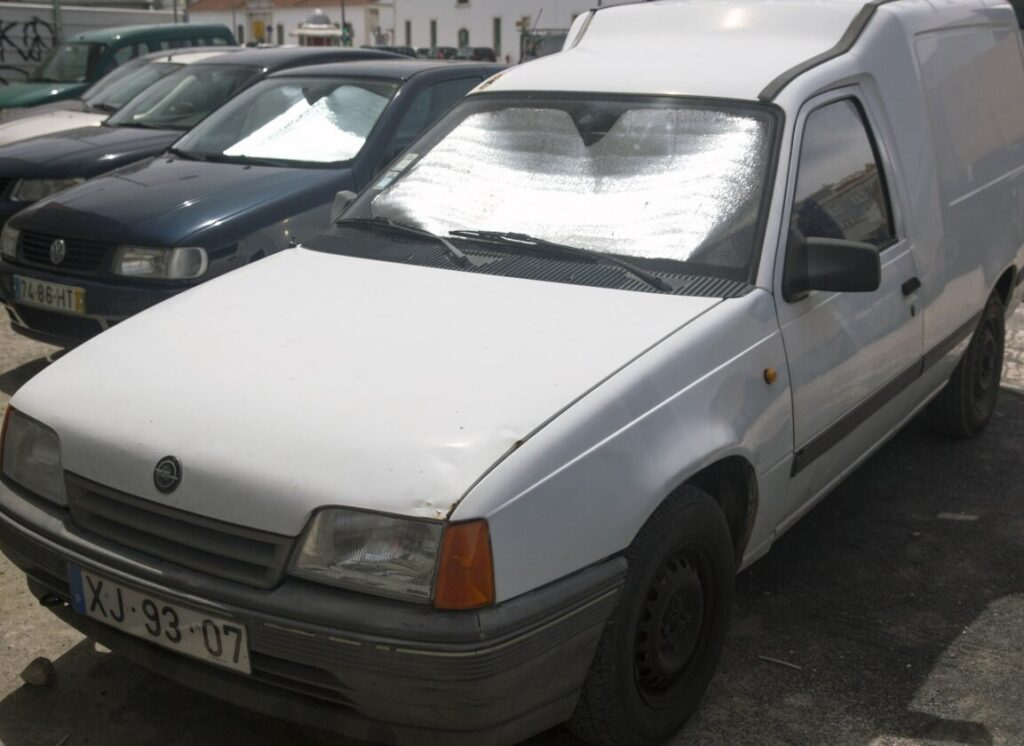
The Opel Kadett E Combo 1.6 D, produced between January 1986 and August 1988, represents a utilitarian variant of the popular Kadett E range. Positioned as a commercial vehicle, the Combo offered a spacious cargo area within a compact footprint, making it a popular choice for small businesses and tradespeople in Europe. This particular version, equipped with the 16DA 1.6-liter diesel engine producing 54 horsepower, was designed for economy and durability rather than outright performance. It served as the entry-level workhorse within the Combo lineup, differing significantly from the gasoline-powered variants aimed at private buyers.
Technical Specifications
| Brand | Opel |
| Model | Kadett |
| Generation | Kadett E Combo |
| Type (Engine) | 1.6 D (54 Hp) |
| Start of production | January, 1986 |
| End of production | August, 1988 |
| Powertrain Architecture | Internal Combustion engine |
| Body type | Station wagon (estate) |
| Seats | 2 |
| Doors | 3 |
| Fuel Type | Diesel |
| Power | 54 Hp @ 4600 rpm |
| Power per litre | 33.8 Hp/l |
| Torque | 96 Nm @ 2400 rpm / 70.81 lb.-ft. @ 2400 rpm |
| Engine layout | Front, Transverse |
| Engine Model/Code | 16DA |
| Engine displacement | 1598 cm3 / 97.52 cu. in. |
| Number of cylinders | 4 |
| Engine configuration | Inline |
| Cylinder Bore | 80 mm / 3.15 in. |
| Piston Stroke | 79.5 mm / 3.13 in. |
| Compression ratio | 23:1 |
| Number of valves per cylinder | 2 |
| Engine aspiration | Naturally aspirated engine |
| Valvetrain | SOHC |
| Engine oil capacity | 5 l / 5.28 US qt | 4.4 UK qt |
| Coolant | 7.5 l / 7.93 US qt | 6.6 UK qt |
| Trunk (boot) space – maximum | 2450 l / 86.52 cu. ft. |
| Length | 4221 mm / 166.18 in. |
| Width | 1674 mm / 65.91 in. |
| Height | 1670 mm / 65.75 in. |
| Wheelbase | 2530 mm / 99.61 in. |
| Drivetrain Architecture | The Internal combustion engine (ICE) drives the front wheels of the vehicle. |
| Drive wheel | Front wheel drive |
| Number of gears and type of gearbox | 5 gears, manual transmission |
Powertrain & Engine Architecture
The heart of the Kadett E Combo 1.6 D is the Opel 16DA engine, a 1.6-liter inline-four diesel. This engine is a naturally aspirated, indirect injection diesel, utilizing a Bosch mechanical fuel injection system. The single overhead camshaft (SOHC) operates two valves per cylinder. The 16DA was known for its robustness and relatively simple design, prioritizing reliability over high output. The engine’s 23:1 compression ratio is typical for indirect injection diesels of the era, contributing to its fuel efficiency but also resulting in a characteristic diesel clatter. The engine’s modest 54 horsepower and 96 Nm (70.81 lb-ft) of torque were sufficient for light commercial duties, but it was not designed for rapid acceleration. The engine was mated to a five-speed manual transmission, providing a reasonable spread of gears for optimizing fuel economy and managing the engine’s narrow power band.
Driving Characteristics
The Kadett E Combo 1.6 D offered a utilitarian driving experience. Acceleration was slow, and the engine required frequent gear changes to maintain momentum, especially when laden with cargo. The five-speed manual transmission helped to mitigate this somewhat, allowing the driver to keep the engine within its optimal operating range. The suspension, tuned for carrying loads, provided a firm but acceptable ride quality, even when the vehicle was unladen. Steering was relatively direct, but lacked the refinement found in more passenger-oriented Kadett E models. Compared to the gasoline-powered Kadett E Combos, the 1.6 D offered significantly lower running costs, but at the expense of performance and refinement. The diesel’s torque delivery was concentrated at lower engine speeds, making it suitable for hauling loads, but it lacked the responsiveness of the gasoline engines.
Equipment & Trim Levels
The Kadett E Combo 1.6 D was deliberately spartan in its equipment levels, reflecting its commercial vehicle status. Standard features were minimal, typically including basic steel wheels, vinyl upholstery, and a simple dashboard layout. Power steering, central locking, and electric windows were generally not available, or offered as extremely rare options. The interior focused on practicality and durability, with hard-wearing materials used throughout. The rear cargo area was the primary focus, offering a large, flat load floor and minimal interior trim. Optional extras were limited to items such as a basic radio and upgraded seating.
Chassis & Braking
The Kadett E Combo utilized a front-wheel-drive chassis with a MacPherson strut front suspension and a twist-beam rear axle. The rear suspension was typically equipped with drum brakes, while the front brakes were disc brakes. Stabilizer bars were often omitted to maximize suspension travel and load-carrying capacity. The braking system was adequate for the vehicle’s weight and performance, but lacked the sophistication of more modern systems. The chassis was reinforced to handle the stresses of commercial use, providing a robust and durable platform.
Market Reception & Comparison
The Kadett E Combo 1.6 D was well-received in its target market – small businesses and tradespeople. Critics praised its practicality, fuel efficiency, and low running costs. However, it was often criticized for its lack of refinement and slow performance. Compared to the gasoline-powered Kadett E Combos, the 1.6 D offered significantly better fuel economy, but at the cost of performance and comfort. Against competitors such as the Volkswagen Caddy and Citroën C15, the Kadett E Combo offered a competitive combination of price, practicality, and reliability. The diesel engine’s longevity was a key selling point, making it a popular choice for businesses that relied on their vehicles for extended periods.
Legacy
The Opel Kadett E Combo 1.6 D has proven to be a remarkably durable vehicle. Many examples are still in use today, testament to the robustness of the 16DA engine and the overall build quality of the Kadett E. While not highly sought after by collectors, well-maintained examples are appreciated by enthusiasts who value their simplicity and practicality. The 16DA engine, while not particularly powerful, is known for its reliability and relatively low maintenance costs. In the used car market, the Kadett E Combo 1.6 D remains an affordable and practical option for those seeking a simple, utilitarian vehicle. Its legacy lies in its role as a dependable workhorse for small businesses and tradespeople across Europe.