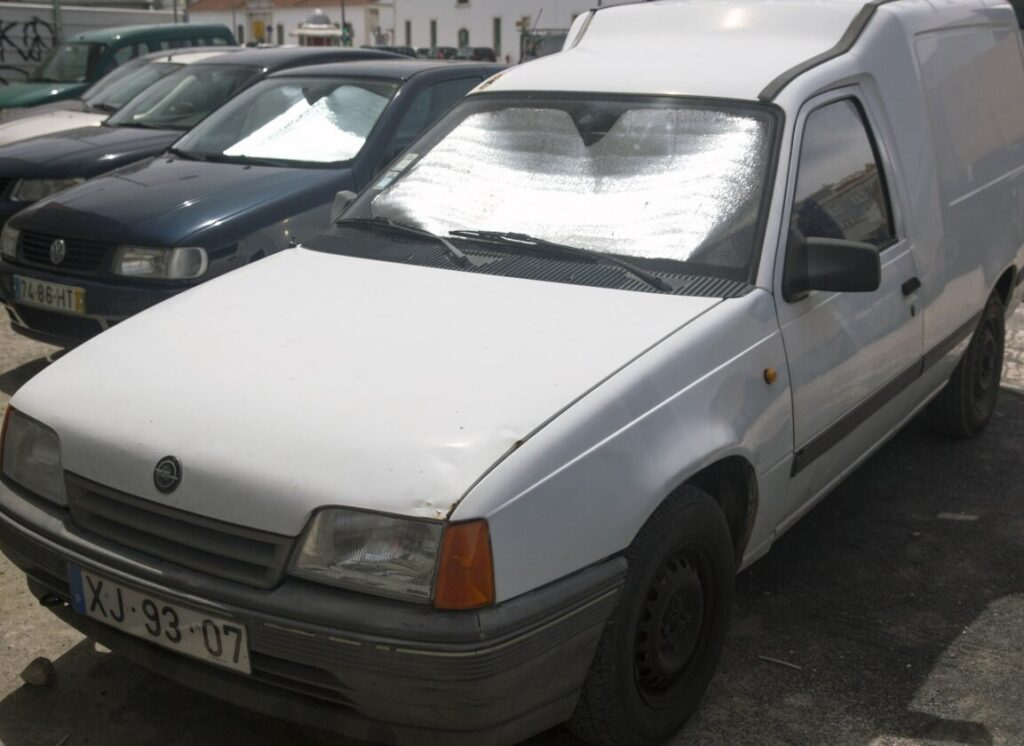
The Opel Kadett E Combo 1.7 D, produced between April 1989 and July 1992, represented a utilitarian and economical offering within the broader Kadett E range. Positioned as a commercial-oriented variant, the Combo was essentially a panel van version of the Kadett estate, designed for light-duty cargo transport. It served as a popular choice for small businesses and tradespeople in Europe, offering a practical and affordable solution for their transportation needs. The 1.7 D engine, while modest in power, prioritized fuel efficiency and durability, characteristics valued by its target demographic. This model falls within the Kadett E generation (1986-1993), which was a significant update to the long-running Kadett line, incorporating more modern styling and engineering.
Technical Specifications
| Brand | Opel |
| Model | Kadett |
| Generation | Kadett E Combo |
| Type (Engine) | 1.7 D (57 Hp) |
| Start of production | April, 1989 |
| End of production | July, 1992 |
| Powertrain Architecture | Internal Combustion engine |
| Body type | Station wagon (estate) |
| Seats | 2 |
| Doors | 3 |
| Fuel Type | Diesel |
| Power | 57 Hp @ 4600 rpm |
| Power per litre | 33.5 Hp/l |
| Torque | 105 Nm @ 2400-2600 rpm / 77.44 lb.-ft. @ 2400-2600 rpm |
| Engine layout | Front, Transverse |
| Engine Model/Code | 17D |
| Engine displacement | 1700 cm3 / 103.74 cu. in. |
| Number of cylinders | 4 |
| Engine configuration | Inline |
| Cylinder Bore | 82.5 mm / 3.25 in. |
| Piston Stroke | 79.5 mm / 3.13 in. |
| Compression ratio | 23:1 |
| Number of valves per cylinder | 2 |
| Engine aspiration | Naturally aspirated engine |
| Engine oil capacity | 5 l / 5.28 US qt | 4.4 UK qt |
| Coolant | 9.1 l / 9.62 US qt | 8.01 UK qt |
| Trunk (boot) space – maximum | 2450 l / 86.52 cu. ft. |
| Length | 4221 mm / 166.18 in. |
| Width | 1674 mm / 65.91 in. |
| Height | 1670 mm / 65.75 in. |
| Wheelbase | 2530 mm / 99.61 in. |
| Drivetrain Architecture | The Internal combustion engine (ICE) drives the front wheels of the vehicle. |
| Drive wheel | Front wheel drive |
| Number of gears and type of gearbox | 5 gears, manual transmission |
Powertrain & Engine Architecture
The heart of the Kadett E Combo 1.7 D was the 17D engine, a naturally aspirated, indirect injection diesel engine. This engine was a workhorse, known for its robustness and relatively simple design. Indirect injection, common for diesels of this era, involved injecting fuel into a pre-chamber where it partially combusted before entering the main cylinder. This resulted in quieter operation compared to direct injection systems, but at the cost of some efficiency. The engine featured a two-valve per cylinder configuration and a relatively low compression ratio of 23:1, contributing to its durability. The 17D engine was not known for its performance; its 57 horsepower at 4600 rpm and 105 Nm (77.44 lb-ft) of torque between 2400-2600 rpm were sufficient for light commercial duties but didn’t offer much in the way of spirited driving. The engine was paired exclusively with a five-speed manual transmission, optimized for fuel economy and load-carrying capability.
Driving Characteristics
The driving experience in the Kadett E Combo 1.7 D was decidedly utilitarian. The engine’s limited power meant acceleration was slow, and overtaking required careful planning. The five-speed manual transmission helped to keep the engine within its optimal operating range, but even then, it wasn’t a particularly refined experience. The focus was on practicality and economy rather than driving pleasure. The gear ratios were relatively long, prioritizing fuel efficiency at cruising speeds. Compared to the gasoline-powered Kadett E variants, the 1.7 D offered significantly less power but considerably better fuel economy. It was a far cry from the more powerful Kadett E GSi models, which were aimed at enthusiasts.
Equipment & Trim Levels
The Kadett E Combo 1.7 D was sparsely equipped, reflecting its commercial vehicle status. Standard features were minimal, typically including basic steel wheels, vinyl upholstery, and a simple dashboard layout. Power steering and central locking were generally not standard, though they could be specified as optional extras. The interior was designed for durability and ease of cleaning, rather than luxury. The focus was on providing a functional workspace for drivers. Optional extras were limited, often including things like a basic radio, upgraded seating, or a load area lining.
Chassis & Braking
The Kadett E Combo utilized a relatively simple chassis design. It featured a MacPherson strut front suspension and a twist-beam rear suspension. The rear brakes were typically drum brakes, while the front brakes were disc brakes. The suspension was tuned for load-carrying capability rather than sporty handling. Stabilizer bars were often omitted or were smaller in diameter compared to passenger car variants. The steering was a recirculating ball system, providing a direct but not particularly precise feel. The chassis was reinforced to handle the increased weight of cargo.
Market Reception & Comparison
The Kadett E Combo 1.7 D was well-received in its target market as a practical and affordable light commercial vehicle. Critics acknowledged its fuel efficiency and durability, but also noted its lack of power and refinement. Compared to other small vans and panel vans of the era, such as the Renault Extra or Citroën C15, the Kadett Combo offered a competitive price point and a reputation for reliability. The 1.7 D engine, while not the most powerful, was generally considered more reliable than the gasoline engines offered in the Kadett E range. Fuel economy was a key selling point, making it an attractive option for businesses looking to minimize operating costs.
Legacy
The Opel Kadett E Combo 1.7 D, while not a glamorous vehicle, has earned a reputation as a dependable and long-lasting workhorse. Many examples are still on the road today, testament to the robustness of the 17D engine and the overall build quality of the Kadett E. In the used car market, these vehicles are often sought after by those looking for a simple, affordable, and reliable van for light commercial duties or as a project vehicle. Parts availability can be a challenge, but many components are still available through specialist suppliers. The 17D engine, while simple, is relatively easy to maintain and repair, making it a popular choice for those with mechanical skills. The Kadett E Combo 1.7 D represents a practical and enduring example of 1980s and early 1990s European commercial vehicle design.