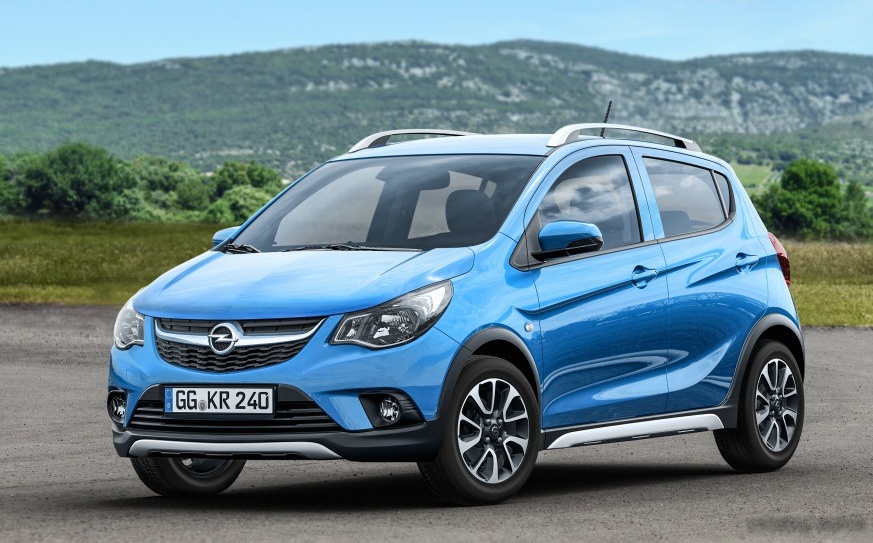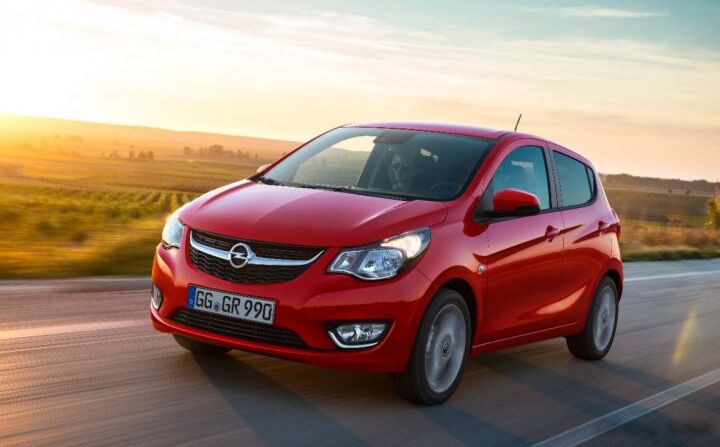
The Opel Karl 1.0 (75 hp) was a subcompact hatchback produced from June 2015 to March 2018. Positioned as the entry-level model in the Karl lineup, it aimed to provide affordable transportation within the European market. The Karl, internally designated as the ‘A05’ project, represented Opel’s attempt to compete in the increasingly popular city car segment, challenging rivals like the Fiat Panda and Volkswagen up!. This particular 1.0-liter variant, with its modest power output, was designed for fuel efficiency and ease of driving, primarily targeting urban commuters and first-time car buyers.
Technical Specifications
| Brand | Opel |
| Model | Karl |
| Generation | Karl |
| Type (Engine) | 1.0 (75 Hp) |
| Start of production | June, 2015 |
| End of production | March, 2018 |
| Powertrain Architecture | Internal Combustion engine |
| Body type | Hatchback |
| Seats | 5 |
| Doors | 5 |
| Fuel consumption (urban) | 5.6-5.4 l/100 km (42 – 43.6 US mpg) |
| Fuel consumption (extra urban) | 3.9-3.7 l/100 km (60.3 – 63.6 US mpg) |
| Fuel consumption (combined) | 4.5-4.3 l/100 km (52.3 – 54.7 US mpg) |
| CO2 emissions | 104-99 g/km |
| Fuel Type | Petrol (Gasoline) |
| Acceleration 0 – 100 km/h | 13.9 sec |
| Acceleration 0 – 62 mph | 13.9 sec |
| Acceleration 0 – 60 mph | 13.2 sec |
| Maximum speed | 170 km/h (105.63 mph) |
| Emission standard | Euro 6 |
| Weight-to-power ratio | 11.5 kg/Hp |
| Weight-to-torque ratio | 9.1 kg/Nm |
| Power | 75 Hp @ 6500 rpm |
| Torque | 95 Nm @ 4500 rpm (70.07 lb.-ft. @ 4500 rpm) |
| Engine layout | Front, Transverse |
| Engine Model/Code | B10XE |
| Engine displacement | 999 cm3 (60.96 cu. in.) |
| Number of cylinders | 3 |
| Engine configuration | Inline |
| Compression ratio | 10.5:1 |
| Fuel injection system | Multi-port manifold injection |
| Engine aspiration | Naturally aspirated engine |
| Engine oil capacity | 3.5 l (3.7 US qt | 3.08 UK qt) |
| Coolant capacity | 4.2 l (4.44 US qt | 3.7 UK qt) |
| Kerb Weight | 864 kg (1904.79 lbs) |
| Max. weight | 1353 kg (2982.85 lbs) |
| Max load | 489 kg (1078.06 lbs) |
| Trunk (boot) space – minimum | 206 l (7.27 cu. ft.) |
| Trunk (boot) space – maximum | 1013 l (35.77 cu. ft.) |
| Fuel tank capacity | 32 l (8.45 US gal | 7.04 UK gal) |
| Length | 3675 mm (144.69 in.) |
| Width | 1604 mm (63.15 in.) |
| Width with mirrors folded | 1698 mm (66.85 in.) |
| Width including mirrors | 1876 mm (73.86 in.) |
| Height | 1476 mm (58.11 in.) |
| Wheelbase | 2385 mm (93.9 in.) |
| Front track | 1410 mm (55.51 in.) |
| Rear track | 1418 mm (55.83 in.) |
| Minimum turning circle | 9.8 m (32.15 ft.) |
| Drivetrain Architecture | Front wheel drive |
| Number of gears | 5 gears, manual transmission |
| Front brakes | Disc |
| Rear brakes | Disc |
| Assisting systems | ABS (Anti-lock braking system) |
| Steering type | Steering rack and pinion |
INTRODUCTION
The Opel Karl 1.0 (75 hp) debuted in June 2015 as a key component of Opel’s strategy to revitalize its presence in the microcar segment. Built on the General Motors’ global small vehicle platform, it was also sold under the Vauxhall brand in the United Kingdom. The Karl aimed to offer a practical and affordable solution for urban driving, emphasizing fuel efficiency and low running costs. This 1.0-liter version represented the base engine option, providing a balance between affordability and usability. It was positioned below the more powerful 1.2-liter variants in the Karl range.
Powertrain & Engine Architecture
The heart of the Karl 1.0 is the B10XE engine, a 999cc three-cylinder petrol engine. This engine is part of Opel’s ‘Small Engine Family’ (SEF), designed for modularity and efficiency. The B10XE utilizes a naturally aspirated configuration with multi-point fuel injection, delivering 75 horsepower at 6500 rpm and 95 Nm (70 lb-ft) of torque at 4500 rpm. The engine features a single overhead camshaft (SOHC) valvetrain with four valves per cylinder. The Karl 1.0 was exclusively offered with a five-speed manual transmission, chosen for its simplicity and contribution to fuel economy. The transmission’s gear ratios were optimized for city driving, with a relatively short final drive to provide adequate acceleration from low speeds.
Driving Characteristics
The driving experience in the Karl 1.0 is characterized by its light steering and nimble handling, making it easy to maneuver in tight urban environments. However, the 75 hp output and relatively low torque figure mean that acceleration is modest. The 0-62 mph (0-100 km/h) sprint takes around 13.9 seconds, and top speed is limited to 105.63 mph (170 km/h). Compared to the 1.2-liter Karl variants, the 1.0-liter feels noticeably slower, particularly when fully loaded or tackling inclines. The five-speed manual transmission requires frequent shifting to maintain momentum, but the gear change is generally smooth and precise. The suspension is tuned for comfort, absorbing bumps and imperfections in the road reasonably well, although it can feel slightly unsettled at higher speeds.
Equipment & Trim Levels
The Karl 1.0 typically came with a basic level of equipment, reflecting its position as the entry-level model. Standard features generally included power steering, ABS brakes, front airbags, a basic audio system with USB connectivity, and central locking. Higher trim levels, available as optional upgrades, added features such as air conditioning, electric front windows, a trip computer, and alloy wheels. Interior upholstery was typically cloth, with a functional and durable design. The dashboard layout was simple and straightforward, prioritizing ease of use. Optional extras included parking sensors and a navigation system.
Chassis & Braking
The Karl 1.0 utilizes a MacPherson strut front suspension and a torsion beam rear suspension. This setup provides a good balance between ride comfort and handling. The front brakes are ventilated discs, while the rear brakes are solid discs. ABS (Anti-lock Braking System) is standard, enhancing braking performance and stability. The steering is a rack and pinion system, providing precise and responsive control. The relatively lightweight construction of the Karl 1.0 (864 kg / 1904.79 lbs) contributes to its agility and fuel efficiency.
Market Reception & Comparison
The Opel Karl 1.0 received mixed reviews from automotive critics. It was praised for its affordability, fuel efficiency, and ease of driving in urban environments. However, it was also criticized for its lack of power and basic interior. Compared to the 1.2-liter Karl variants, the 1.0-liter offered significantly lower performance but also lower running costs. The 1.2-liter models were better suited for drivers who frequently undertake longer journeys or carry passengers and luggage. In terms of fuel economy, the Karl 1.0 achieved combined figures of around 4.5-4.3 l/100 km (52.3 – 54.7 US mpg), making it one of the most fuel-efficient cars in its class.
Legacy
The Opel Karl 1.0, while not a performance standout, proved to be a reliable and economical city car. The B10XE engine, despite its small displacement, has demonstrated reasonable long-term durability. On the used car market, the Karl 1.0 remains an affordable option for budget-conscious buyers. Maintenance costs are generally low, and spare parts are readily available. However, potential buyers should be aware of the engine’s limited power output and the basic level of equipment. The Karl, in its various forms, helped Opel regain some ground in the competitive microcar segment, paving the way for future small car offerings.