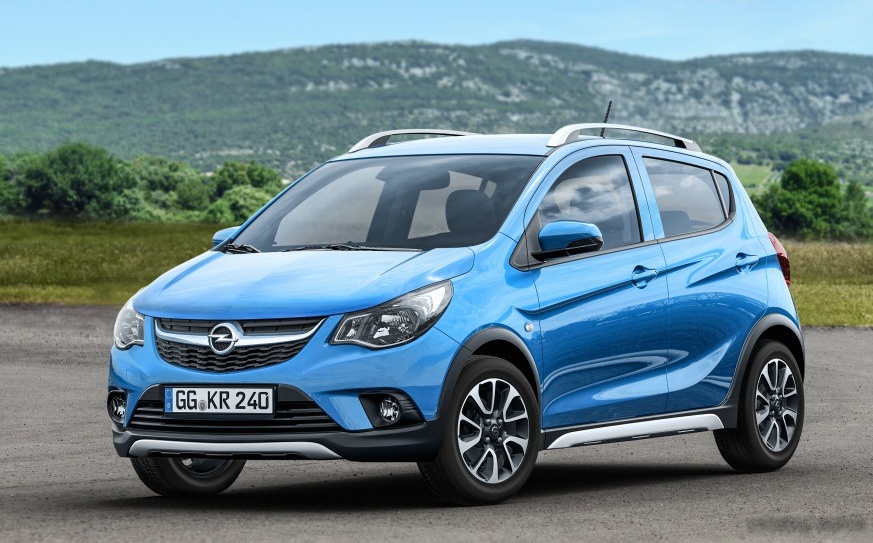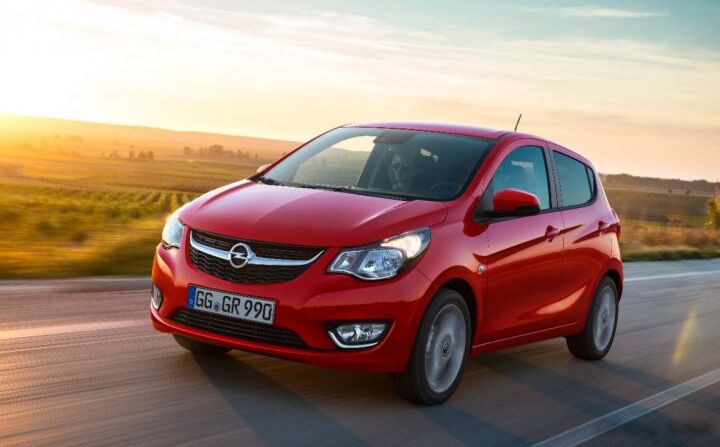
The Opel Karl 1.0 ECOTEC (73 hp) Start/Stop, marketed as the Vauxhall Viva in the United Kingdom, was a city car produced by Opel from January 2018 to March 2019. Positioned as the entry-level model in Opel’s lineup, the Karl aimed to provide affordable and efficient transportation within the European market. It represented Opel’s attempt to recapture a segment of the market previously occupied by the Corsa, offering a smaller, more economical alternative. The Karl was built on Opel’s General Motors-derived platform, sharing components with other small GM vehicles. This variant, equipped with the 1.0-liter ECOTEC engine and a five-speed manual transmission, was designed for maximizing fuel efficiency and minimizing running costs.
Technical Specifications
| Brand | Opel |
| Model | Karl |
| Generation | Karl |
| Type (Engine) | 1.0 ECOTEC (73 Hp) Start/Stop |
| Start of production | January, 2018 |
| End of production | March, 2019 |
| Powertrain Architecture | Internal Combustion engine |
| Body type | Hatchback |
| Seats | 4-5 |
| Doors | 5 |
| Combined fuel consumption (WLTP) | 5.9-6.1 l/100 km (39.9 – 38.6 US mpg, 47.9 – 46.3 UK mpg, 16.9 – 16.4 km/l) |
| CO2 emissions (WLTP) | 134-137 g/km |
| Fuel consumption (economy) – urban (NEDC) | 5.8 l/100 km (40.6 US mpg, 48.7 UK mpg, 17.2 km/l) |
| Fuel consumption (economy) – extra urban (NEDC) | 4.3 l/100 km (54.7 US mpg, 65.7 UK mpg, 23.3 km/l) |
| Fuel consumption (economy) – combined (NEDC) | 4.8 l/100 km (49 US mpg, 58.9 UK mpg, 20.8 km/l) |
| CO2 emissions (NEDC) | 110 g/km |
| Fuel Type | Petrol (Gasoline) |
| Acceleration 0 – 100 km/h | 13.9 sec |
| Acceleration 0 – 62 mph | 13.9 sec |
| Acceleration 0 – 60 mph | 13.2 sec |
| Maximum speed | 170 km/h (105.63 mph) |
| Emission standard | Euro 6d-TEMP |
| Weight-to-power ratio | 11.8 kg/Hp, 84.5 Hp/tonne |
| Weight-to-torque ratio | 9.1 kg/Nm, 110 Nm/tonne |
| Power | 73 Hp @ 6500 rpm |
| Power per litre | 73.1 Hp/l |
| Torque | 95 Nm @ 4500 rpm (70.07 lb.-ft. @ 4500 rpm) |
| Engine layout | Front, Transverse |
| Engine Model/Code | D10XE |
| Engine displacement | 999 cm3 (60.96 cu. in.) |
| Number of cylinders | 3 |
| Engine configuration | Inline |
| Cylinder Bore | 74 mm (2.91 in.) |
| Piston Stroke | 77.4 mm (3.05 in.) |
| Compression ratio | 10.5:1 |
| Number of valves per cylinder | 4 |
| Engine aspiration | Naturally aspirated engine |
| Engine oil capacity | 3.5 l (3.7 US qt | 3.08 UK qt) |
| Coolant | 4.2 l (4.44 US qt | 3.7 UK qt) |
| Kerb Weight | 864 kg (1904.79 lbs.) |
| Max. weight | 1353 kg (2982.85 lbs.) |
| Max load | 489 kg (1078.06 lbs.) |
| Trunk (boot) space – minimum | 206 l (7.27 cu. ft.) |
| Trunk (boot) space – maximum | 1013 l (35.77 cu. ft.) |
| Fuel tank capacity | 32 l (8.45 US gal | 7.04 UK gal) |
| Length | 3675 mm (144.69 in.) |
| Width | 1595 mm (62.8 in.) |
| Width with mirrors folded | 1698 mm (66.85 in.) |
| Width including mirrors | 1876 mm (73.86 in.) |
| Height | 1485 mm (58.46 in.) |
| Wheelbase | 2385 mm (93.9 in.) |
| Front track | 1410 mm (55.51 in.) |
| Rear (Back) track | 1418 mm (55.83 in.) |
| Minimum turning circle | 9.8 m (32.15 ft.) |
| Drivetrain Architecture | The Internal combustion engine (ICE) drives the front wheels of the vehicle. |
| Drive wheel | Front wheel drive |
| Number of gears and type of gearbox | 5 gears, manual transmission |
| Front brakes | Ventilated discs |
| Assisting systems | ABS (Anti-lock braking system) |
| Tires size | 165/65 R14; 185/55 R15 |
| Wheel rims size | 5J x 14; 6J x 15 |
Powertrain & Engine Architecture
The heart of this Karl variant is the D10XE, a 999cc three-cylinder petrol engine. This engine belongs to Opel’s ECOTEC family, known for its focus on efficiency. The D10XE utilizes a naturally aspirated configuration, meaning it doesn’t employ turbocharging or supercharging. Fuel is delivered via multi-point fuel injection, and the engine features four valves per cylinder, contributing to improved breathing and combustion efficiency. The engine’s relatively small displacement and three-cylinder layout result in inherent vibrations, which Opel addressed through the use of balance shafts. The five-speed manual transmission was the standard offering for this trim level, providing a direct connection between the engine and the front wheels. The transmission’s gear ratios were tuned for maximizing fuel economy and providing adequate acceleration for urban driving.
Driving Characteristics
The 73 hp output and 95 Nm of torque translate to modest performance. Acceleration from 0 to 100 km/h (0-62 mph) takes approximately 13.9 seconds, making it unsuitable for spirited driving. However, within city limits, the Karl 1.0 ECOTEC offers sufficient power for everyday commuting and maneuvering. The manual transmission allows for precise control over gear selection, enabling drivers to optimize fuel efficiency or extract the most available power. Compared to higher-output versions of the Karl, this variant feels noticeably slower, particularly when fully loaded or tackling inclines. The gear ratios are relatively long, prioritizing fuel economy over rapid acceleration. The engine is reasonably refined for a three-cylinder unit, but some vibration is noticeable at idle and during acceleration.
Equipment & Trim Levels
The Karl 1.0 ECOTEC (73 hp) Start/Stop typically came with a basic level of equipment. Standard features included power steering, ABS, front airbags, and a basic audio system with USB connectivity. Interior upholstery was typically cloth, and the dashboard featured a simple, functional design. Optional extras included air conditioning, electric front windows, and a more advanced audio system. The trim level was generally considered the base model, aimed at budget-conscious buyers. It lacked the more luxurious features found in higher-spec Karl variants.
Chassis & Braking
The Karl’s chassis is a typical front-wheel-drive configuration with MacPherson strut suspension at the front and a torsion beam axle at the rear. The front brakes are ventilated discs, providing adequate stopping power, while the rear brakes are drums. This configuration was chosen to minimize cost and weight. The suspension setup is tuned for comfort, prioritizing ride quality over sporty handling. Stabilizer bars were typically not included on the base model, contributing to a slightly more pronounced body roll during cornering.
Market Reception & Comparison
The Opel Karl 1.0 ECOTEC (73 hp) Start/Stop was generally well-received as an affordable and economical city car. Critics praised its low running costs and ease of driving, but noted its limited performance and basic interior. Compared to other trims in the Karl lineup, such as those with more powerful engines, this variant offered the lowest price point but also the least amount of performance. Its fuel economy was competitive within its segment, and its reliability was generally considered good. However, some reviewers pointed out the lack of advanced safety features compared to newer rivals.
Legacy
The Opel Karl, and specifically this 1.0-liter variant, has established a reputation as a reliable and economical used car. The D10XE engine is known for its durability, and maintenance costs are relatively low. While not a performance car, it provides a practical and affordable solution for urban transportation. As a used car, the Karl 1.0 ECOTEC (73 hp) Start/Stop remains a popular choice for first-time car buyers and those seeking a budget-friendly vehicle.