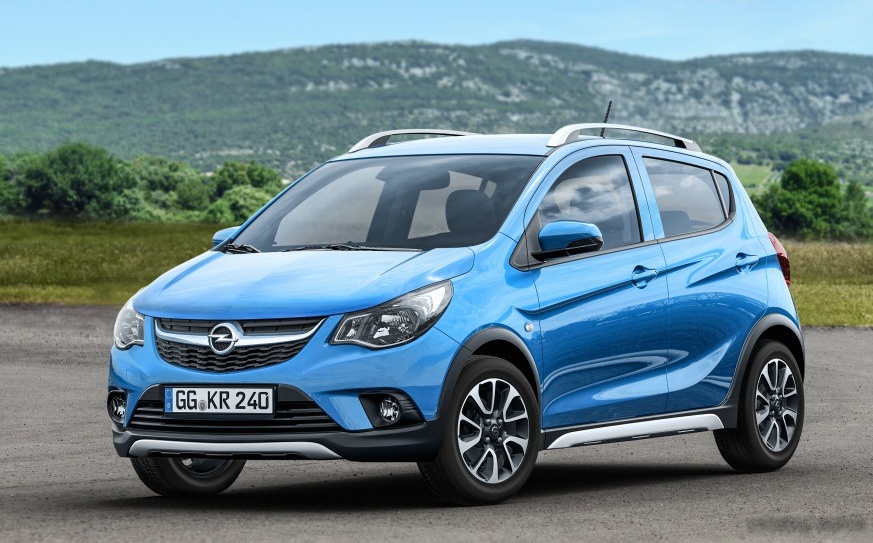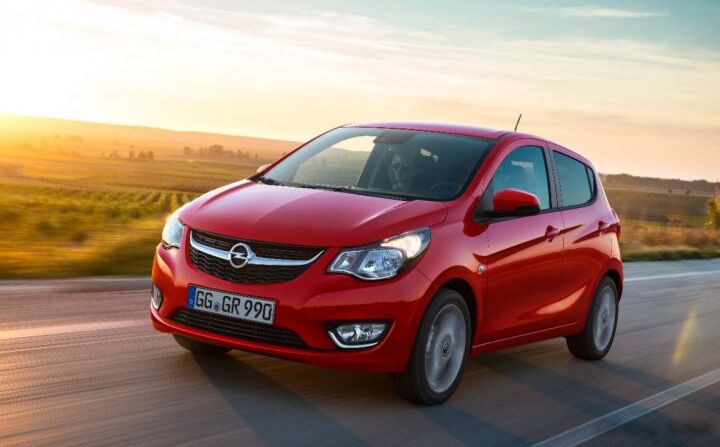
The Opel Karl 1.0 LPG (75/73 hp) ecoFLEX, marketed as the Vauxhall Viva in the United Kingdom, was a subcompact hatchback produced from January 2016 to March 2018. Positioned as an entry-level vehicle, it represented Opel/Vauxhall’s attempt to compete in the highly competitive city car segment. This particular variant, equipped with a 1.0-liter three-cylinder engine running on both petrol and liquefied petroleum gas (LPG), aimed to offer a balance of affordability, fuel efficiency, and reduced emissions. It was built on the General Motors’ global small vehicle platform, known internally as the GM Gamma. The Karl/Viva was intended to replace the aging Agila and Corsa Life models in certain markets.
Technical Specifications
| Brand | Opel |
| Model | Karl |
| Generation | Karl |
| Type (Engine) | 1.0 LPG (75/73 Hp) ecoFLEX |
| Start of production | January, 2016 |
| End of production | March, 2018 |
| Powertrain Architecture | Internal Combustion engine |
| Body type | Hatchback |
| Seats | 5 |
| Doors | 5 |
| Fuel consumption (economy) – urban | 5.7 l/100 km (41.3 US mpg, 49.6 UK mpg, 17.5 km/l) |
| Fuel consumption (economy) – urban (LPG) | 7.1 l/100 km |
| Fuel consumption (economy) – extra urban | 3.9 l/100 km (60.3 US mpg, 72.4 UK mpg, 25.6 km/l) |
| Fuel consumption (economy) – extra urban (LPG) | 4.9 l/100 km |
| Fuel consumption (economy) – combined | 4.6 l/100 km (51.1 US mpg, 61.4 UK mpg, 21.7 km/l) |
| Fuel consumption (economy) – combined (LPG) | 5.7 l/100 km |
| CO2 emissions | 106 g/km |
| CO2 emissions (LPG) | 93 g/km |
| Fuel Type | Petrol / LPG |
| Acceleration 0 – 100 km/h | 14.9 sec |
| Acceleration 0 – 62 mph | 14.9 sec |
| Acceleration 0 – 60 mph | 14.2 sec |
| Maximum speed | 170 km/h (105.63 mph) |
| Emission standard | Euro 6 |
| Weight-to-power ratio | 12.7 kg/Hp, 78.9 Hp/tonne |
| Weight-to-torque ratio | 10 kg/Nm, 100 Nm/tonne |
| Power | 75 Hp @ 6500 rpm |
| Power per litre | 75.1 Hp/l |
| Power (LPG) | 73 Hp @ 6500 rpm |
| Power per litre (LPG) | 73.1 Hp/l |
| Torque | 95 Nm @ 4500 rpm (70.07 lb.-ft. @ 4500 rpm) |
| Torque (LPG) | 92 Nm @ 4500 rpm |
| Engine layout | Front, Transverse |
| Engine Model/Code | B10XL |
| Engine displacement | 999 cm3 (60.96 cu. in.) |
| Number of cylinders | 3 |
| Engine configuration | Inline |
| Cylinder Bore | 74 mm (2.91 in.) |
| Piston Stroke | 77.4 mm (3.05 in.) |
| Compression ratio | 10.5:1 |
| Engine aspiration | Naturally aspirated engine |
| Engine oil capacity | 3.5 l (3.7 US qt | 3.08 UK qt) |
| Coolant | 4.2 l (4.44 US qt | 3.7 UK qt) |
| Kerb Weight | 950 kg (2094.39 lbs.) |
| Max. weight | 1410 kg (3108.52 lbs.) |
| Max load | 460 kg (1014.13 lbs.) |
| Trunk (boot) space – minimum | 206/151 l (7.27 cu. ft.) |
| Trunk (boot) space – maximum | 1013/958 l (35.77 cu. ft.) |
| Fuel tank capacity | 32 l (8.45 US gal | 7.04 UK gal) |
| Fuel tank capacity (LPG) | 24.8 l |
| Length | 3675 mm (144.69 in.) |
| Width | 1604 mm (63.15 in.) |
| Width with mirrors folded | 1698 mm (66.85 in.) |
| Width including mirrors | 1876 mm (73.86 in.) |
| Height | 1476 mm (58.11 in.) |
| Wheelbase | 2385 mm (93.9 in.) |
| Front track | 1410 mm (55.51 in.) |
| Rear (Back) track | 1418 mm (55.83 in.) |
| Minimum turning circle | 9.8 m (32.15 ft.) |
| Drivetrain Architecture | The Internal combustion engine (ICE) drives the front wheels of the vehicle. |
| Drive wheel | Front wheel drive |
| Number of gears and type of gearbox | 5 gears, manual transmission |
| Front brakes | Ventilated discs |
| Rear brakes | Disc |
| Assisting systems | ABS (Anti-lock braking system) |
| Steering type | Steering rack and pinion |
| Power steering | Electric Steering |
| Tires size | 185/55 R15 |
| Wheel rims size | 6J x 15 |
Powertrain & Engine Architecture
The heart of the Karl 1.0 LPG ecoFLEX is the B10XL engine, a 999cc inline three-cylinder petrol engine. This engine is part of Opel/Vauxhall’s ‘Small Engine Family’ and utilizes multi-point fuel injection. The LPG conversion is a factory-installed option, allowing the engine to seamlessly switch between petrol and LPG operation. The engine features a single overhead camshaft (SOHC) valvetrain with two valves per cylinder. The LPG system reduces carbon dioxide emissions, making it a more environmentally friendly option. The five-speed manual transmission was the only gearbox offered with this engine configuration. The engine’s relatively simple design contributes to its affordability and ease of maintenance.
Driving Characteristics
With only 75 horsepower and 95 Nm (70 lb-ft) of torque, the Karl 1.0 LPG is not a performance-oriented vehicle. Acceleration from 0-60 mph takes around 14.2 seconds, and its top speed is 105.63 mph. The engine feels strained when accelerating hard, particularly when fully loaded. The five-speed gearbox is well-matched to the engine’s characteristics, with relatively short gear ratios designed to keep the engine in its optimal power band. Compared to the standard 1.0-liter petrol version, the LPG variant offers slightly reduced power output due to the different combustion characteristics of LPG. The driving experience is best described as relaxed and geared towards urban commuting.
Equipment & Trim Levels
The Karl 1.0 LPG ecoFLEX typically came with a basic level of equipment. Standard features included central locking, power steering, ABS, and an infotainment system with Bluetooth connectivity. Higher trim levels, such as the ‘Energy’ or ‘Sportive’ trims (depending on the market), added features like air conditioning, alloy wheels, and electric windows. Interior upholstery was typically cloth, and the dashboard featured a simple, functional design. Optional extras included parking sensors and a touchscreen infotainment system with navigation.
Chassis & Braking
The Karl utilizes a MacPherson strut front suspension and a torsion beam rear suspension. The front brakes are ventilated discs, while the rear brakes are solid discs. This setup provides adequate stopping power for the vehicle’s weight and performance. The steering is electrically assisted, offering light and easy maneuverability. The relatively narrow tires (185/55 R15) contribute to fuel efficiency but offer limited grip in challenging conditions. The suspension is tuned for comfort rather than sporty handling.
Market Reception & Comparison
The Opel Karl 1.0 LPG ecoFLEX was generally well-received as an affordable and economical city car. Critics praised its low running costs and reduced emissions, particularly with the LPG option. However, it was often criticized for its lack of power and basic interior. Compared to other trims in the Karl lineup, the LPG variant offered a slightly lower price point and improved fuel economy, but at the expense of performance. Competitors in the city car segment included the Fiat 500, Volkswagen up!, and Hyundai i10.
Legacy
The Opel Karl/Vauxhall Viva, including the 1.0 LPG ecoFLEX variant, was discontinued in 2018. While not a groundbreaking vehicle, it served as a budget-friendly option for buyers seeking a small, economical hatchback. The B10XL engine proved to be relatively reliable, and the LPG conversion, when properly maintained, offered a cost-effective alternative to petrol. On the used car market, these models are generally affordable and represent a good value for buyers prioritizing fuel efficiency and low running costs. However, potential buyers should be aware of the potential maintenance requirements associated with the LPG system.