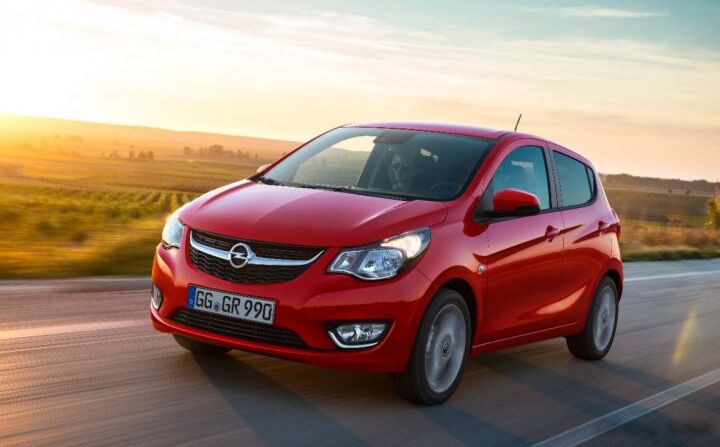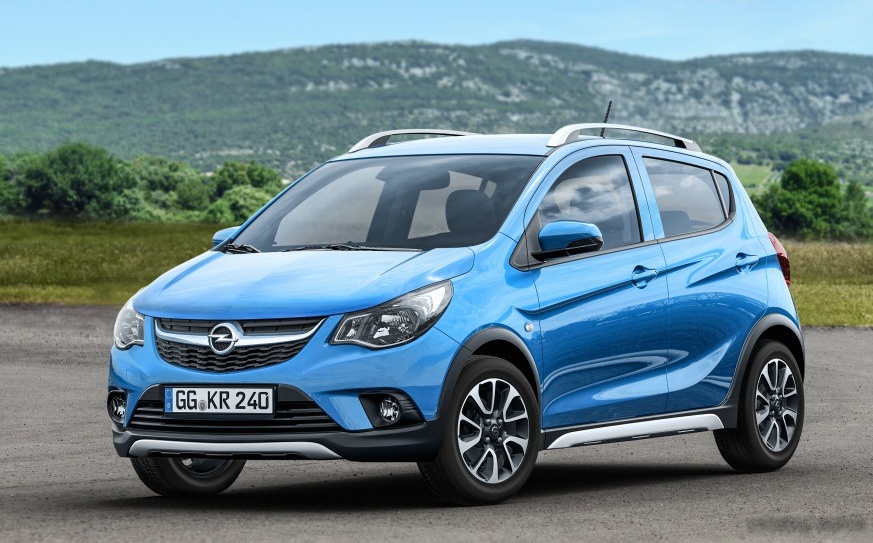
The Opel Karl Rocks 1.0 (73 hp) was a subcompact hatchback produced from January 2018 to June 2019. Positioned as an entry-level variant within the Karl Rocks range, it offered a more rugged aesthetic and slightly increased ground clearance compared to the standard Karl. It was part of the broader Karl model generation, based on the General Motors’ (later PSA Group) VAUX/Opel PA6 platform, also known internally as the 1HX0. The Karl Rocks aimed to provide an affordable and practical option for urban drivers, particularly in European markets where small, fuel-efficient vehicles are highly popular. This specific 1.0-liter engine and five-speed manual transmission combination represented the base powertrain offering for the Rocks trim.
Technical Specifications
| Brand | Opel |
| Model | Karl |
| Generation | Karl Rocks |
| Type (Engine) | 1.0 (73 Hp) |
| Start of production | January, 2018 |
| End of production | June, 2019 |
| Powertrain Architecture | Internal Combustion engine |
| Body type | Hatchback |
| Seats | 5 |
| Doors | 5 |
| Fuel consumption (urban) | 6.2 l/100 km (37.9 US mpg, 45.6 UK mpg, 16.1 km/l) |
| Fuel consumption (extra urban) | 4.5 l/100 km (52.3 US mpg, 62.8 UK mpg, 22.2 km/l) |
| Fuel consumption (combined) | 5.2 l/100 km (45.2 US mpg, 54.3 UK mpg, 19.2 km/l) |
| CO2 emissions | 118 g/km |
| Fuel Type | Petrol (Gasoline) |
| Acceleration 0 – 100 km/h | 14 sec |
| Acceleration 0 – 62 mph | 14 sec |
| Acceleration 0 – 60 mph | 13.3 sec |
| Maximum speed | 168 km/h (104.39 mph) |
| Emission standard | Euro 6d |
| Weight-to-power ratio | 12.9 kg/Hp, 77.7 Hp/tonne |
| Weight-to-torque ratio | 9.9 kg/Nm, 101.2 Nm/tonne |
| Power | 73 Hp @ 6500 rpm |
| Power per litre | 73.1 Hp/l |
| Torque | 95 Nm @ 4500 rpm (70.07 lb.-ft. @ 4500 rpm) |
| Engine layout | Front, Transverse |
| Engine Model/Code | D10XE |
| Engine displacement | 999 cm3 (60.96 cu. in.) |
| Number of cylinders | 3 |
| Engine configuration | Inline |
| Cylinder Bore | 74 mm (2.91 in.) |
| Piston Stroke | 77.4 mm (3.05 in.) |
| Compression ratio | 10.5:1 |
| Number of valves per cylinder | 4 |
| Fuel injection system | Multi-port manifold injection |
| Engine aspiration | Naturally aspirated engine |
| Engine oil capacity | 3.5 l (3.7 US qt | 3.08 UK qt) |
| Coolant | 4.2 l (4.44 US qt | 3.7 UK qt) |
| Kerb Weight | 939 kg (2070.14 lbs.) |
| Max. weight | 1353 kg (2982.85 lbs.) |
| Max load | 414 kg (912.71 lbs.) |
| Trunk (boot) space – minimum | 206 l (7.27 cu. ft.) |
| Trunk (boot) space – maximum | 1013 l (35.77 cu. ft.) |
| Fuel tank capacity | 32 l (8.45 US gal | 7.04 UK gal) |
| Length | 3676 mm (144.72 in.) |
| Width | 1632 mm (64.25 in.) |
| Width with mirrors folded | 1698 mm (66.85 in.) |
| Width including mirrors | 1876 mm (73.86 in.) |
| Height | 1532 mm (60.31 in.) |
| Wheelbase | 2385 mm (93.9 in.) |
| Front track | 1396 mm (54.96 in.) |
| Rear (Back) track | 1404 mm (55.28 in.) |
| Minimum turning circle | 10.6 m (34.78 ft.) |
| Drivetrain Architecture | The Internal combustion engine (ICE) drives the front wheels of the vehicle. |
| Drive wheel | Front wheel drive |
| Number of gears and type of gearbox | 5 gears, manual transmission |
| Front brakes | Ventilated discs |
| Rear brakes | Drum |
| Assisting systems | ABS (Anti-lock braking system) |
| Steering type | Steering rack and pinion |
| Power steering | Electric Steering |
| Tires size | 165/65 R14; 185/55 R15; 195/45 R16 |
| Wheel rims size | 14; 15; 16 |
Powertrain & Engine Architecture
The Opel Karl Rocks 1.0 utilized the D10XE engine, a 999cc three-cylinder petrol engine. This engine was part of GM’s Small Engine Family (SEF), designed for efficiency and compact packaging. It featured a naturally aspirated configuration with multi-point fuel injection and four valves per cylinder. The engine’s relatively small displacement and three-cylinder layout contributed to its fuel efficiency, but also limited its overall power output. The D10XE engine produced 73 horsepower at 6500 rpm and 95 Nm (70 lb-ft) of torque at 4500 rpm. The engine was transversely mounted at the front of the vehicle. The transmission was a five-speed manual gearbox, chosen for its simplicity and cost-effectiveness. This gearbox was not known for particularly short ratios, prioritizing fuel economy over spirited acceleration.
Driving Characteristics
The 1.0-liter engine in the Karl Rocks provided adequate, but not exhilarating, performance. Acceleration from 0-60 mph took around 13.3 seconds, and top speed was limited to 104.39 mph. The engine felt strained when climbing hills or carrying a full load of passengers. The five-speed manual transmission helped to keep the engine in its optimal power band, but frequent downshifts were often necessary. Compared to other Karl Rocks variants with more powerful engines, this 1.0-liter version felt noticeably slower and less refined. The steering was light and easy, making it well-suited for city driving, but lacked feedback at higher speeds. The suspension was tuned for comfort, absorbing bumps and imperfections in the road reasonably well.
Equipment & Trim Levels
The Karl Rocks 1.0, as the entry-level trim, came with a basic level of equipment. Standard features typically included air conditioning, power front windows, a basic audio system with USB connectivity, and ABS brakes. Safety features included driver and passenger airbags. The interior upholstery was typically cloth, and the dashboard featured a simple, functional design. Optional extras included alloy wheels, a touchscreen infotainment system, and parking sensors. The “Rocks” trim added plastic cladding around the wheel arches and along the lower body, giving it a more rugged appearance, as well as a slightly raised ride height.
Chassis & Braking
The Karl Rocks featured a MacPherson strut front suspension and a torsion beam rear suspension. The front brakes were ventilated discs, providing adequate stopping power for the vehicle’s weight and performance. The rear brakes were drums, a cost-saving measure common in this segment. The steering was a rack and pinion system with electric power assistance. The chassis was designed to prioritize comfort and fuel efficiency over sporty handling. The relatively narrow tires (typically 165/65 R14 or 185/55 R15) contributed to the car’s fuel economy but limited its grip in corners.
Market Reception & Comparison
The Opel Karl Rocks 1.0 was generally well-received as an affordable and practical city car. Critics praised its fuel efficiency and low running costs, but noted its limited performance and basic interior. Compared to other subcompact hatchbacks in the European market, such as the Volkswagen Up!, Skoda Citigo, and Hyundai i10, the Karl Rocks offered a slightly more spacious interior and a more rugged appearance. However, it often lagged behind these competitors in terms of refinement and driving dynamics. The 1.0-liter engine was considered adequate for urban driving, but less suitable for longer journeys or frequent highway use.
Legacy
The Opel Karl Rocks 1.0, while not a performance icon, served as a valuable entry point into the Opel range for budget-conscious buyers. The D10XE engine proved to be relatively reliable, although regular maintenance was essential. On the used car market, these models are typically found at very affordable prices. Their simplicity and low running costs make them attractive to first-time car owners or those seeking a cheap and cheerful city runabout. However, potential buyers should be aware of the engine’s limited power output and the basic nature of the interior. The Karl Rocks, in general, represents a practical and economical choice for those prioritizing affordability and fuel efficiency over driving excitement.