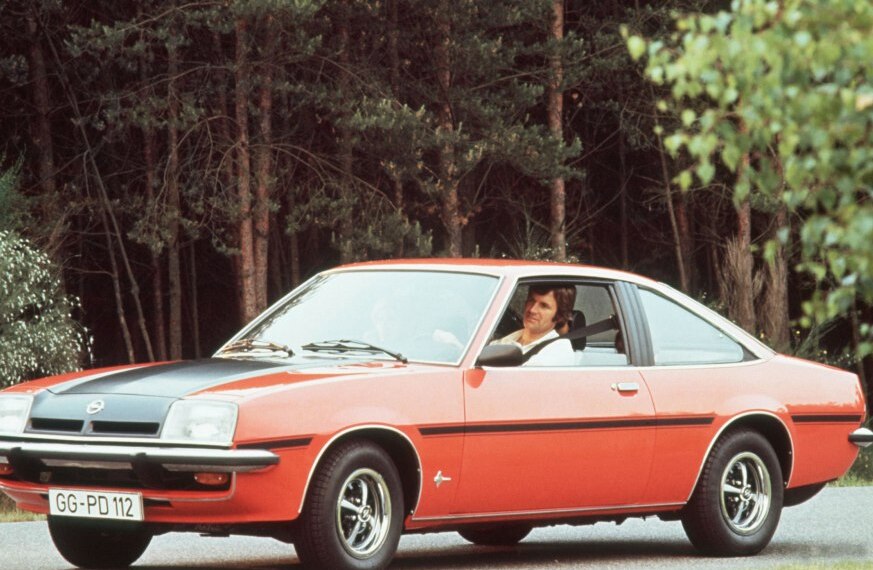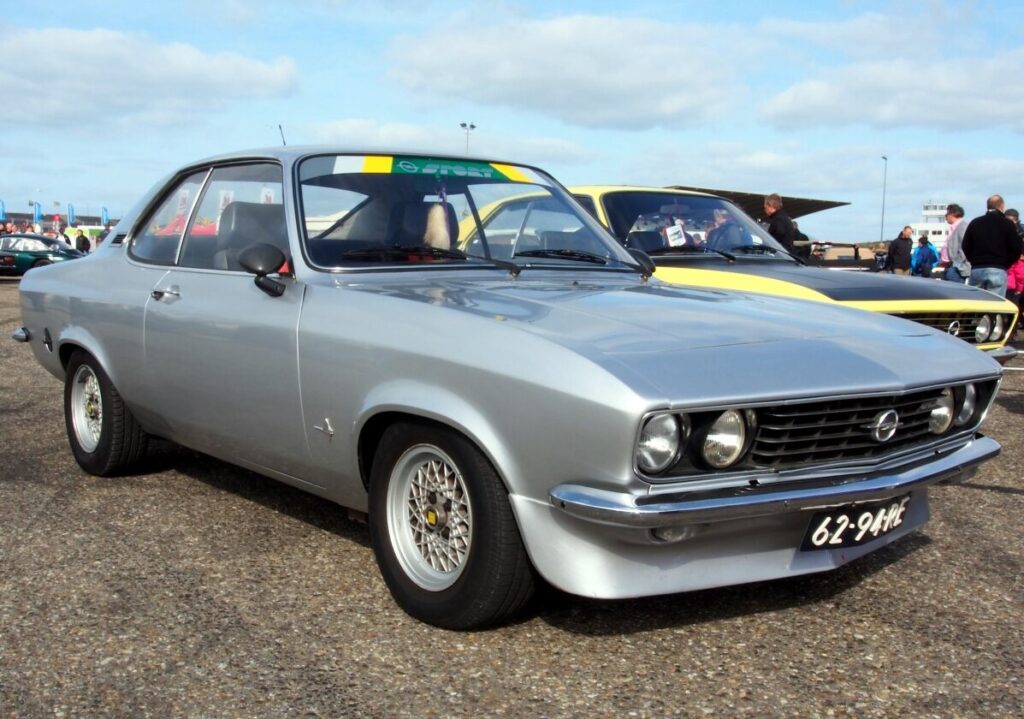
The Opel Manta A 1.6, producing 68 horsepower, was a cornerstone of Opel’s early foray into the sporty coupe market. Produced between 1970 and 1975, this variant occupied the entry-level position within the Manta A range, appealing to buyers seeking affordable style and a degree of performance. It was a key model in establishing the Manta’s identity as a driver-focused vehicle, and a significant seller for Opel in Europe. The Manta A, built on a rear-wheel-drive platform, represented a departure from Opel’s more conservative offerings and aimed to capture a younger demographic.
Technical Specifications
| Brand | Opel |
| Model | Manta |
| Generation | Manta A |
| Type (Engine) | 1.6 (68 Hp) |
| Start of production | 1970 |
| End of production | 1975 |
| Powertrain Architecture | Internal Combustion engine |
| Body type | Coupe |
| Seats | 4 |
| Doors | 2 |
| Fuel Type | Petrol (Gasoline) |
| Acceleration 0 – 100 km/h | 17 sec |
| Acceleration 0 – 62 mph | 17 sec |
| Acceleration 0 – 60 mph | 16.2 sec |
| Maximum speed | 154 km/h (95.69 mph) |
| Weight-to-power ratio | 13.7 kg/Hp, 73.1 Hp/tonne |
| Weight-to-torque ratio | 8.6 kg/Nm, 116.1 Nm/tonne |
| Power | 68 Hp @ 5200 rpm |
| Power per litre | 42.9 Hp/l |
| Torque | 108 Nm @ 3400 rpm (79.66 lb.-ft. @ 3400 rpm) |
| Engine layout | Front, Longitudinal |
| Engine Model/Code | 16N |
| Engine displacement | 1584 cm3 (96.66 cu. in.) |
| Number of cylinders | 4 |
| Engine configuration | Inline |
| Cylinder Bore | 85 mm (3.35 in.) |
| Piston Stroke | 69.8 mm (2.75 in.) |
| Compression ratio | 8.2:1 |
| Number of valves per cylinder | 2 |
| Fuel injection system | Carburettor |
| Engine aspiration | Naturally aspirated engine |
| Valvetrain | SOHC |
| Engine oil capacity | 3.8 l (4.02 US qt | 3.34 UK qt) |
| Coolant | 6.5 l (6.87 US qt | 5.72 UK qt) |
| Kerb Weight | 930 kg (2050.3 lbs.) |
| Max. weight | 1295 kg (2854.99 lbs.) |
| Max load | 365 kg (804.69 lbs.) |
| Trunk (boot) space – minimum | 326 l (11.51 cu. ft.) |
| Fuel tank capacity | 46 l (12.15 US gal | 10.12 UK gal) |
| Permitted trailer load with brakes (12%) | 1000 kg (2204.62 lbs.) |
| Permitted trailer load without brakes | 500 kg (1102.31 lbs.) |
| Length | 4292 mm (168.98 in.) |
| Width | 1626 mm (64.02 in.) |
| Height | 1360 mm (53.54 in.) |
| Wheelbase | 2430 mm (95.67 in.) |
| Front track | 1331 mm (52.4 in.) |
| Rear (Back) track | 1320 mm (51.97 in.) |
| Minimum turning circle | 10.5 m (34.45 ft.) |
| Drivetrain Architecture | Rear wheel drive |
| Number of gears and type of gearbox | 4 gears, manual transmission |
| Front brakes | Disc |
| Rear brakes | Drum |
Powertrain & Engine Architecture
The heart of the Manta A 1.6 was the 16N engine, a 1.6-liter inline-four cylinder unit. This engine featured a single overhead camshaft (SOHC) valvetrain and was fed by a single carburetor, a common setup for the era. The 16N produced 68 horsepower at 5200 rpm and 108 Nm (79.66 lb-ft) of torque at 3400 rpm. The engine was longitudinally mounted in the front of the vehicle, driving the rear wheels. The four-speed manual transmission was the standard offering for this variant, providing a relatively simple and robust drivetrain. The engine’s design prioritized affordability and reliability over outright performance.
Driving Characteristics
The 1.6-liter Manta A offered a modest driving experience. Acceleration was leisurely, taking around 17 seconds to reach 62 mph (100 km/h). The four-speed manual transmission, while precise, required frequent shifting to maintain momentum. Compared to the later, more powerful versions of the Manta (like those equipped with the 1.9-liter or V6 engines), the 1.6 felt underpowered, particularly when carrying passengers or luggage. However, the rear-wheel-drive layout provided a degree of handling balance that was enjoyable on winding roads. The gear ratios were geared towards fuel economy and everyday usability rather than outright speed.
Equipment & Trim Levels
The 1.6-liter Manta A was typically the base model, and as such, came with a relatively sparse equipment list. Standard features included cloth upholstery, basic instrumentation (speedometer, fuel gauge, temperature gauge), and manually operated windows and door locks. Optional extras included a vinyl roof, upgraded interior trim, and a basic radio. The interior design was functional and straightforward, reflecting the car’s affordable positioning. The dashboard layout was simple, with controls logically arranged for ease of use.
Chassis & Braking
The Manta A utilized a relatively simple chassis design. It featured independent front suspension with coil springs and a rigid rear axle with leaf springs. The braking system consisted of disc brakes on the front wheels and drum brakes on the rear. This configuration was typical for cars of this size and price point in the early 1970s. The suspension provided a comfortable ride, but handling was not as precise as that of more sophisticated sports coupes. The drum brakes on the rear wheels were adequate for normal driving conditions, but lacked the stopping power of disc brakes.
Market Reception & Comparison
The Manta A 1.6 was generally well-received as an affordable and stylish coupe. Critics praised its attractive design and relatively low price. However, the 1.6-liter engine was often criticized for its lack of power. Compared to the more expensive Manta variants, such as the 1.9-liter and V6 models, the 1.6 offered significantly less performance. However, it also offered better fuel economy and lower maintenance costs. The 1.6 was a popular choice for first-time car buyers and those seeking a practical and affordable coupe.
Legacy
The Opel Manta A 1.6, while not the most powerful or technologically advanced version of the Manta, played a crucial role in establishing the model’s reputation. The 16N engine proved to be reasonably reliable, and parts availability remains good today, making it a relatively easy car to maintain. In the used car market, the Manta A 1.6 is often sought after by enthusiasts looking for a classic coupe that is affordable and relatively easy to restore. While not a collector’s item in the same vein as the V6 models, the 1.6 remains a popular and enjoyable classic car.