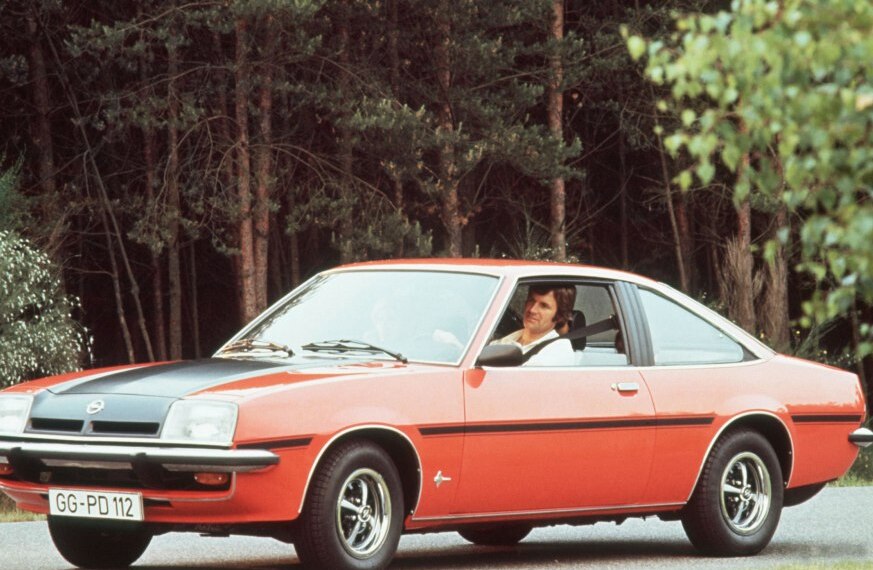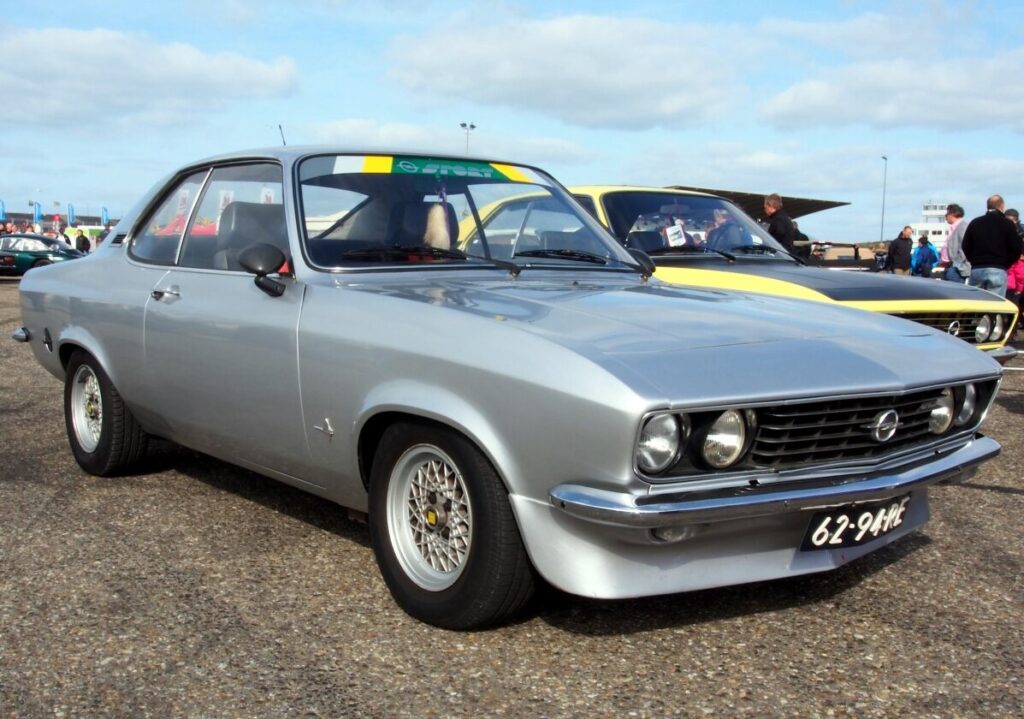
The Opel Manta A 1.9 S, produced between 1970 and 1975, represented a key variant within the first generation (A) of Opel’s iconic Manta coupe. Positioned as a step up from the base 1.6-liter models, the 1.9 S offered a noticeable performance increase aimed at drivers seeking a more engaging driving experience. It played a significant role in establishing the Manta as a popular choice in the European market, particularly among those desiring a stylish and relatively affordable sports coupe. The Manta A, built on Opel’s rear-wheel-drive platform, was a direct competitor to vehicles like the Ford Capri and Volkswagen K1300.
Technical Specifications
| Brand | Opel |
| Model | Manta |
| Generation | Manta A |
| Type (Engine) | 1.9 S (88 Hp) |
| Start of production | 1970 |
| End of production | 1975 |
| Powertrain Architecture | Internal Combustion engine |
| Body type | Coupe |
| Seats | 4 |
| Doors | 2 |
| Fuel Type | Petrol (Gasoline) |
| Acceleration 0 – 100 km/h | 13 sec |
| Acceleration 0 – 62 mph | 13 sec |
| Acceleration 0 – 60 mph | 12.4 sec |
| Maximum speed | 170 km/h (105.63 mph) |
| Weight-to-power ratio | 10.7 kg/Hp, 93.1 Hp/tonne |
| Weight-to-torque ratio | 6.7 kg/Nm, 150.3 Nm/tonne |
| Power | 88 Hp @ 4800 rpm |
| Power per litre | 46.4 Hp/l |
| Torque | 142 Nm @ 3400-3800 rpm (104.73 lb.-ft. @ 3400-3800 rpm) |
| Engine layout | Front, Longitudinal |
| Engine Model/Code | 19S |
| Engine displacement | 1897 cm3 (115.76 cu. in.) |
| Number of cylinders | 4 |
| Engine configuration | Inline |
| Cylinder Bore | 93 mm (3.66 in.) |
| Piston Stroke | 69.8 mm (2.75 in.) |
| Compression ratio | 8.8:1 |
| Number of valves per cylinder | 2 |
| Fuel injection system | Carburettor |
| Engine aspiration | Naturally aspirated engine |
| Valvetrain | SOHC |
| Engine oil capacity | 3.8 l (4.02 US qt | 3.34 UK qt) |
| Coolant | 6.1 l (6.45 US qt | 5.37 UK qt) |
| Kerb Weight | 945 kg (2083.37 lbs.) |
| Max. weight | 1310 kg (2888.06 lbs.) |
| Max load | 365 kg (804.69 lbs.) |
| Trunk (boot) space – minimum | 326 l (11.51 cu. ft.) |
| Fuel tank capacity | 46 l (12.15 US gal | 10.12 UK gal) |
| Permitted trailer load with brakes (12%) | 1000 kg (2204.62 lbs.) |
| Permitted trailer load without brakes | 500 kg (1102.31 lbs.) |
| Length | 4292 mm (168.98 in.) |
| Width | 1626 mm (64.02 in.) |
| Height | 1360 mm (53.54 in.) |
| Wheelbase | 2430 mm (95.67 in.) |
| Front track | 1331 mm (52.4 in.) |
| Rear (Back) track | 1320 mm (51.97 in.) |
| Minimum turning circle | 10.5 m (34.45 ft.) |
| Drivetrain Architecture | Rear wheel drive |
| Number of gears and type of gearbox | 4 gears, manual transmission |
| Front brakes | Disc |
| Rear brakes | Drum |
Powertrain & Engine Architecture
The heart of the Manta A 1.9 S was the 19S engine, a 1,897 cc (115.76 cubic inches) inline-four cylinder unit. This engine featured a single overhead camshaft (SOHC) valvetrain with two valves per cylinder. Fuel delivery was handled by a Solex carburetor, a common setup for the era. The 19S engine produced 88 horsepower at 4,800 rpm and 142 Nm (104.73 lb-ft) of torque between 3,400 and 3,800 rpm. The engine was mounted longitudinally in the front of the vehicle, driving the rear wheels. The four-speed manual transmission was the standard offering for this variant, providing a direct connection between the engine and the drivetrain. The engine code ’19S’ is crucial for identifying parts and specifications, and it distinguishes this engine from other 1.9-liter Opel variants.
Driving Characteristics
The 1.9 S offered a noticeable improvement in performance over the base Manta models. While not a high-performance sports car by modern standards, the 13-second 0-60 mph acceleration was respectable for the early 1970s. The rear-wheel-drive layout contributed to a balanced feel, although oversteer could be induced with aggressive driving. The four-speed manual transmission provided adequate control, but the gear ratios were relatively widely spaced. Compared to the later Manta GT/E models with their higher-output engines and five-speed gearboxes, the 1.9 S felt less refined and required more driver involvement to extract its full potential. The carburetor also meant that throttle response wasn’t as crisp as fuel-injected models.
Equipment & Trim Levels
The 1.9 S trim level typically included features such as upgraded interior trim, a more comprehensive instrument cluster, and often, a vinyl roof. Standard upholstery was typically cloth, with vinyl options available. The dashboard layout was functional and straightforward, reflecting the car’s focus on affordability. Optional extras included a sunroof, upgraded audio systems, and various cosmetic enhancements. The 1.9 S sat in the mid-range of the Manta A lineup, offering a balance between price and performance. It was a step above the basic models but didn’t have the premium features of the later, more expensive trims.
Chassis & Braking
The Manta A utilized a relatively simple chassis design. It featured independent front suspension with coil springs and a rigid rear axle with leaf springs. The 1.9 S typically came equipped with disc brakes on the front wheels and drum brakes on the rear. The suspension was tuned for a comfortable ride, but it could also handle moderate cornering loads. Stabilizer bars were often included as standard equipment, helping to reduce body roll. The weight distribution was reasonably balanced, contributing to the car’s handling characteristics. The braking system, while adequate for the time, lacked the sophistication of modern systems.
Market Reception & Comparison
The Opel Manta A 1.9 S was generally well-received by automotive critics. It was praised for its stylish design, relatively affordable price, and improved performance compared to the base models. However, some critics noted the car’s somewhat basic interior and the limitations of the carburetor-equipped engine. Compared to the Volkswagen K1300, the Manta offered a more modern design and a slightly more engaging driving experience. Against the Ford Capri, the Manta was often seen as a more affordable alternative, although the Capri offered a wider range of engine options and trim levels. Fuel economy was reasonable for the era, and the 1.9 S proved to be a relatively reliable vehicle.
Legacy
The Opel Manta A 1.9 S remains a popular classic car today, particularly among enthusiasts who appreciate its retro styling and simple mechanicals. The 19S engine is known for its durability, although regular maintenance is essential to keep it running smoothly. Parts availability is generally good, although some specific components can be difficult to find. The Manta A 1.9 S represents a significant chapter in Opel’s history, and it continues to be a cherished vehicle among collectors and classic car enthusiasts. Its relatively simple design makes it a good candidate for restoration projects, and its affordable price makes it accessible to a wide range of buyers in the used car market.