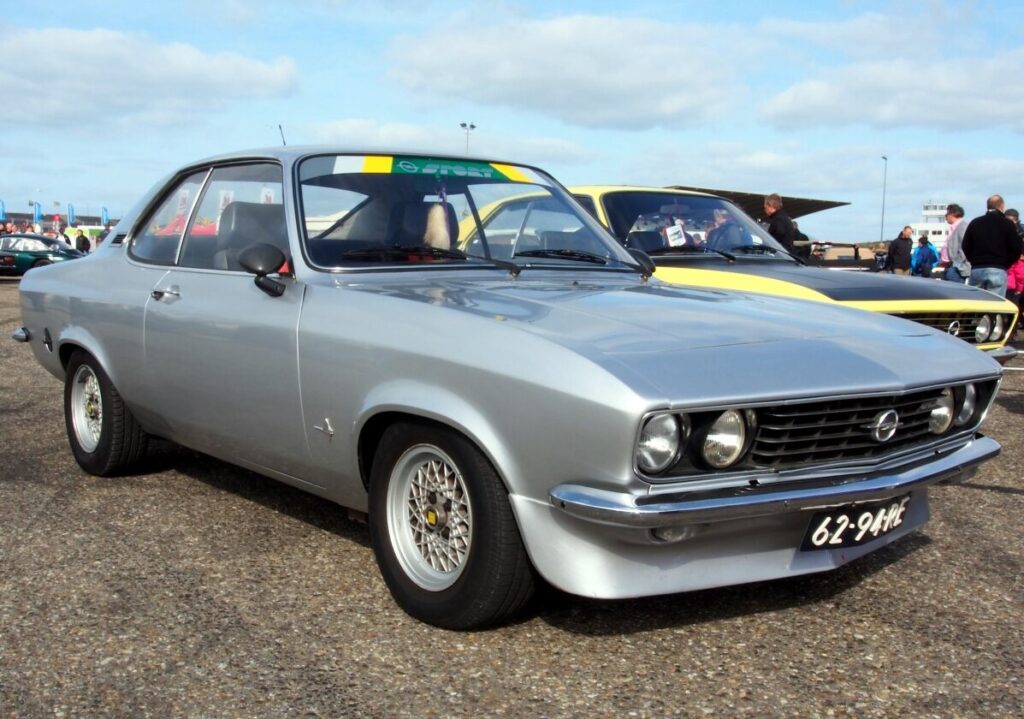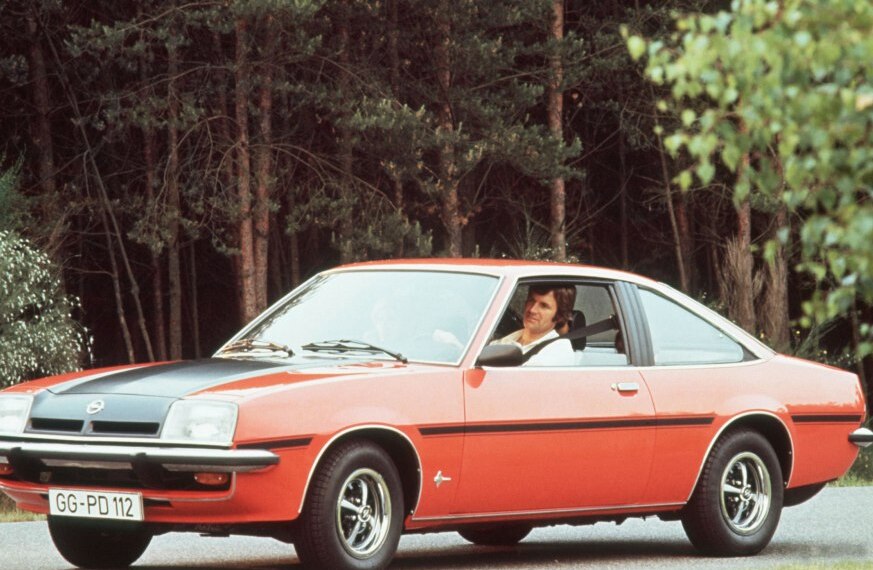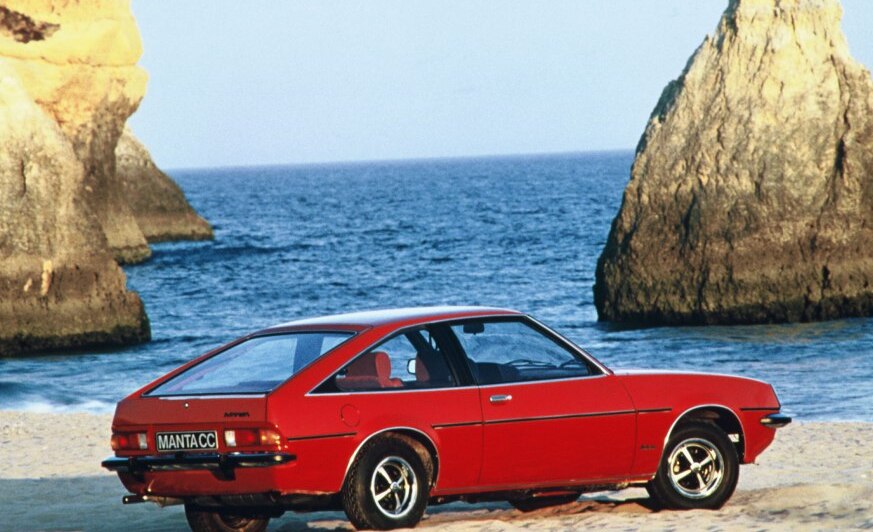
The Opel Manta B CC 2.0 S, produced between 1977 and 1982, represented a significant evolution of Opel’s iconic Manta coupe. Positioned as a mid-range performance variant within the broader Manta B lineup (internally designated the CC – Coupe Classic), the 2.0 S offered a balance between affordability and sporting character. It was a key model in Opel’s strategy to appeal to a younger, more enthusiastic driver in the European market, offering a stylish and relatively accessible entry point into rear-wheel-drive performance. The Manta B, as a whole, was built on the GM T-platform, shared with other vehicles like the Vauxhall Cavalier and Chevrolet Monza.
Technical Specifications
| Brand | Opel |
| Model | Manta |
| Generation | Manta B CC |
| Type (Engine) | 2.0 S (100 Hp) |
| Start of production | 1977 |
| End of production | 1982 |
| Powertrain Architecture | Internal Combustion engine |
| Body type | Hatchback |
| Seats | 4 |
| Doors | 3 |
| Fuel Type | Petrol (Gasoline) |
| Acceleration 0 – 100 km/h | 11 sec |
| Acceleration 0 – 62 mph | 11 sec |
| Acceleration 0 – 60 mph | 10.5 sec |
| Maximum speed | 180 km/h (111.85 mph) |
| Weight-to-power ratio | 10.3 kg/Hp, 97.1 Hp/tonne |
| Weight-to-torque ratio | 6.7 kg/Nm, 148.5 Nm/tonne |
| Power | 100 Hp @ 5400 rpm |
| Power per litre | 50.5 Hp/l |
| Torque | 153 Nm @ 3800 rpm (112.85 lb.-ft. @ 3800 rpm) |
| Engine layout | Front, Longitudinal |
| Engine Model/Code | 20S |
| Engine displacement | 1979 cm3 (120.77 cu. in.) |
| Number of cylinders | 4 |
| Engine configuration | Inline |
| Cylinder Bore | 95 mm (3.74 in.) |
| Piston Stroke | 69.8 mm (2.75 in.) |
| Compression ratio | 9:1 |
| Number of valves per cylinder | 2 |
| Fuel injection system | Carburettor |
| Engine aspiration | Naturally aspirated engine |
| Valvetrain | SOHC |
| Engine oil capacity | 3.8 l (4.02 US qt | 3.34 UK qt) |
| Coolant | 6.2 l (6.55 US qt | 5.46 UK qt) |
| Kerb Weight | 1030 kg (2270.76 lbs) |
| Max. weight | 1470 kg (3240.8 lbs) |
| Max load | 440 kg (970.03 lbs) |
| Trunk (boot) space – minimum | 330 l (11.65 cu. ft.) |
| Trunk (boot) space – maximum | 670 l (23.66 cu. ft.) |
| Fuel tank capacity | 50 l (13.21 US gal | 11 UK gal) |
| Length | 4376 mm (172.28 in.) |
| Width | 1670 mm (65.75 in.) |
| Height | 1340 mm (52.76 in.) |
| Wheelbase | 2518 mm (99.13 in.) |
| Front track | 1380 mm (54.33 in.) |
| Rear (Back) track | 1375 mm (54.13 in.) |
| Minimum turning circle | 10.1 m (33.14 ft.) |
| Drivetrain Architecture | Rear wheel drive |
| Number of gears | 4 gears, manual transmission |
| Front brakes | Disc |
| Rear brakes | Drum |
Powertrain & Engine Architecture
The heart of the Manta B CC 2.0 S was the 20S engine, a 1979cc inline-four cylinder unit. This engine, part of Opel’s family of four-cylinder designs, featured a single overhead camshaft (SOHC) valvetrain operating two valves per cylinder. Fuel delivery was handled by a Solex carburetor, a common setup for the era, though less sophisticated than fuel injection systems. The 20S engine produced 100 horsepower at 5400 rpm and 153 Nm (113 lb-ft) of torque at 3800 rpm. The engine was mounted longitudinally in the front of the vehicle, driving the rear wheels. The four-speed manual transmission was the standard offering for this variant, providing a direct connection between the engine and the rear axle. The engine code ’20S’ is crucial for identifying parts and specifications, and it’s a common identifier among Manta enthusiasts.
Driving Characteristics
The 2.0 S offered a noticeable step up in performance compared to the lower-spec Manta B models equipped with smaller engines. While not a high-performance machine by modern standards, the 100 hp engine provided adequate power for spirited driving. Acceleration to 60 mph took around 10.5 seconds, and the car could reach a top speed of 180 km/h (112 mph). The rear-wheel-drive layout contributed to a balanced feel, although the relatively soft suspension and limited-slip differential (often not standard) meant that oversteer could be induced with aggressive throttle application. The four-speed manual transmission had relatively widely spaced gear ratios, prioritizing cruising comfort over outright acceleration. Compared to the later 2.0E models with fuel injection, the carbureted 2.0 S felt less responsive and required more careful throttle control.
Equipment & Trim Levels
The 2.0 S trim level offered a reasonable level of equipment for the price point. Standard features typically included cloth upholstery, a basic instrument cluster, and steel wheels with hubcaps. Optional extras included a sunroof, upgraded stereo systems, and more comfortable seats. The interior design was functional and straightforward, reflecting the car’s focus on affordability. The dashboard layout was typical of the era, with a combination of analog gauges and simple controls. The 2.0 S often featured a sporty steering wheel and a center console with basic switchgear.
Chassis & Braking
The Manta B CC utilized a relatively simple chassis design. The front suspension consisted of MacPherson struts, while the rear suspension employed a solid axle with leaf springs. This setup provided a comfortable ride but wasn’t particularly sophisticated in terms of handling. Braking was handled by disc brakes at the front and drum brakes at the rear. The braking system was adequate for normal driving conditions, but lacked the stopping power of more modern systems. Stabilizer bars were often optional, and their presence significantly improved handling characteristics. The car’s relatively light weight (around 1030 kg or 2270 lbs) helped to offset the limitations of the chassis and braking system.
Market Reception & Comparison
The Manta B CC 2.0 S was generally well-received by automotive critics as a stylish and affordable coupe. It was praised for its distinctive design and its relatively strong performance. However, some critics noted the car’s somewhat dated technology and its lack of refinement compared to more modern competitors. Compared to the more expensive 2.0E models, the 2.0 S offered a more accessible price point, making it attractive to a wider range of buyers. Fuel economy was reasonable for the time, but not exceptional. Reliability was generally good, although the carburetor required periodic adjustment and maintenance. The 2.0 S competed with other coupes such as the Ford Capri and the Vauxhall Firenza.
Legacy
The Opel Manta B CC 2.0 S has become a popular classic car among enthusiasts. Its distinctive styling, rear-wheel-drive layout, and relatively simple mechanicals make it an appealing choice for those seeking a classic driving experience. The 20S engine, while not particularly powerful, is known for its durability and relative ease of maintenance. Today, well-maintained examples of the 2.0 S are sought after by collectors and are often used for classic car rallies and events. Parts availability can be a challenge, but a dedicated network of Manta enthusiasts and specialist suppliers helps to keep these cars on the road. The Manta B, and the 2.0 S variant in particular, remains a symbol of 1970s and 80s automotive style and performance.