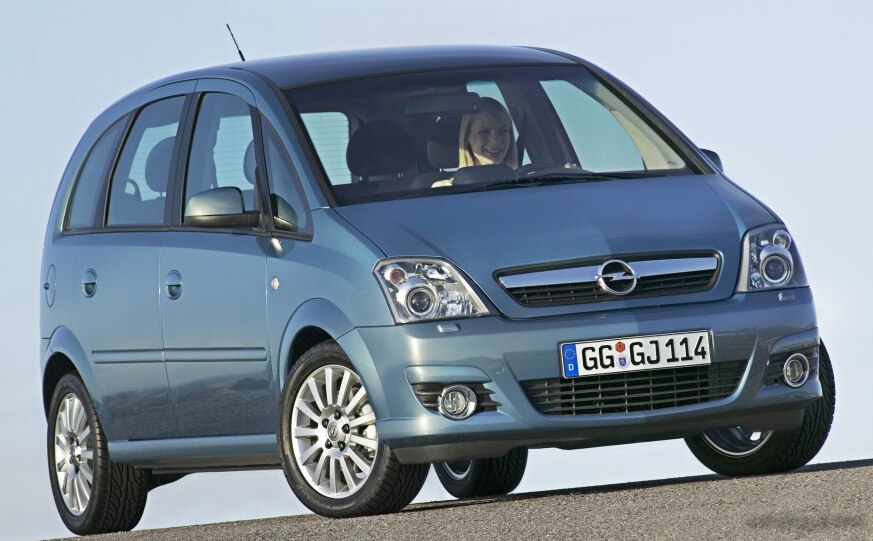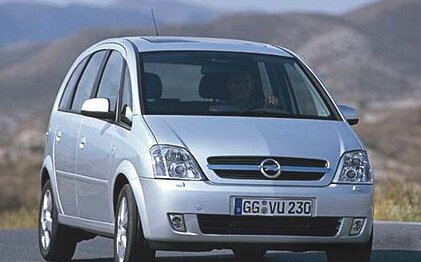
The Opel Meriva A 1.3 CDTI (75 hp) ECOTEC, produced primarily in 2005, represented an entry-level offering within the first generation (2003-2010) of Opel’s compact minivan. Positioned as a fuel-efficient and practical family vehicle, it aimed to provide affordable transportation within the European market. This variant, powered by a small-displacement diesel engine and a five-speed manual transmission, was designed for buyers prioritizing economy over outright performance. The Meriva A itself was Opel’s response to the growing demand for multi-purpose vehicles (MPVs) offering flexibility and space in a relatively small package, competing with models like the Renault Scenic and Citroën Xsara Picasso.
Technical Specifications
| Brand | Opel |
| Model | Meriva |
| Generation | Meriva A |
| Type (Engine) | 1.3 CDTI (75 Hp) ECOTEC |
| Start of production | October, 2005 |
| End of production | 2005 |
| Powertrain Architecture | Internal Combustion engine |
| Body type | Minivan |
| Seats | 5 |
| Doors | 5 |
| Fuel consumption (urban) | 6.4 l/100 km (36.8 US mpg, 44.1 UK mpg, 15.6 km/l) |
| Fuel consumption (extra urban) | 4.2 l/100 km (56 US mpg, 67.3 UK mpg, 23.8 km/l) |
| Fuel consumption (combined) | 5 l/100 km (47 US mpg, 56.5 UK mpg, 20 km/l) |
| CO2 emissions | 135 g/km |
| Fuel Type | Diesel |
| Acceleration 0 – 100 km/h | 17.8 sec |
| Acceleration 0 – 62 mph | 17.8 sec |
| Acceleration 0 – 60 mph | 16.9 sec |
| Maximum speed | 157 km/h (97.56 mph) |
| Weight-to-power ratio | 17.6 kg/Hp, 56.8 Hp/tonne |
| Weight-to-torque ratio | 7.8 kg/Nm, 128.8 Nm/tonne |
| Power | 75 Hp @ 4000 rpm |
| Power per litre | 60.1 Hp/l |
| Torque | 170 Nm @ 1750 rpm (125.39 lb.-ft. @ 1750 rpm) |
| Engine layout | Front, Transverse |
| Engine Model/Code | Z13DTJ |
| Engine displacement | 1248 cm3 (76.16 cu. in.) |
| Number of cylinders | 4 |
| Engine configuration | Inline |
| Cylinder Bore | 69.6 mm (2.74 in.) |
| Piston Stroke | 82 mm (3.23 in.) |
| Compression ratio | 17.6:1 |
| Number of valves per cylinder | 4 |
| Fuel injection system | Diesel Commonrail |
| Engine aspiration | Turbocharger, Intercooler |
| Valvetrain | DOHC |
| Engine oil capacity | 3.2 l (3.38 US qt | 2.82 UK qt) |
| Coolant | 7 l (7.4 US qt | 6.16 UK qt) |
| Kerb Weight | 1320 kg (2910.1 lbs.) |
| Max. weight | 1870 kg (4122.64 lbs.) |
| Max load | 550 kg (1212.54 lbs.) |
| Trunk (boot) space – minimum | 360 l (12.71 cu. ft.) |
| Trunk (boot) space – maximum | 1410 l (49.79 cu. ft.) |
| Fuel tank capacity | 53 l (14 US gal | 11.66 UK gal) |
| Length | 4042 mm (159.13 in.) |
| Width | 1694 mm (66.69 in.) |
| Height | 1624 mm (63.94 in.) |
| Wheelbase | 2630 mm (103.54 in.) |
| Front track | 1449 mm (57.05 in.) |
| Rear (Back) track | 1464 mm (57.64 in.) |
| Drag coefficient (Cd) | 0.32 |
| Drivetrain Architecture | The Internal combustion engine (ICE) drives the front wheels of the vehicle. |
| Drive wheel | Front wheel drive |
| Number of gears and type of gearbox | 5 gears, manual transmission |
| Front suspension | Independent coil spring |
| Rear suspension | Semi-independent, coil spring |
| Front brakes | Disc |
| Rear brakes | Disc |
| Assisting systems | ABS (Anti-lock braking system) |
| Tires size | 185/60 R15 |
| Wheel rims size | 15 |
Powertrain & Engine Architecture
The heart of the Meriva A 1.3 CDTI was the Z13DTJ engine, a 1.3-liter inline-four cylinder diesel. This engine belonged to Opel/Fiat’s family of small-displacement diesel engines, known for their fuel efficiency. The Z13DTJ featured a turbocharger with an intercooler to boost power output, and utilized a common rail direct fuel injection system for precise fuel delivery. This system, operating at very high pressures, contributed to improved combustion efficiency and reduced emissions. The engine employed a double overhead camshaft (DOHC) valvetrain with four valves per cylinder, optimizing gas flow for better performance. The five-speed manual transmission was chosen for its simplicity and contribution to fuel economy, although a four-speed automatic transmission was offered as an option in some markets. The automatic, while providing convenience, typically resulted in slightly lower fuel economy and slower acceleration.
Driving Characteristics
The 1.3 CDTI engine, producing 75 horsepower, delivered modest performance in the Meriva A. Acceleration was leisurely, with a 0-60 mph time around 16.9 seconds. The engine’s strength lay in its torque, peaking at 170 Nm (125 lb-ft) at 1750 rpm, which provided adequate pulling power for everyday driving and highway cruising. The five-speed manual transmission allowed drivers to keep the engine in its optimal power band, but required frequent shifting, especially when overtaking or climbing hills. Compared to the more powerful 1.7 CDTI or gasoline-powered variants, the 1.3 CDTI felt noticeably slower. However, its fuel economy was significantly better, making it an attractive option for budget-conscious buyers.
Equipment & Trim Levels
The 1.3 CDTI variant of the Meriva A typically came with a basic level of equipment. Standard features generally included power steering, central locking, electric front windows, and an adjustable steering column. Safety features included ABS brakes and driver/passenger airbags. Interior upholstery was typically cloth, and the dashboard featured a functional, if somewhat basic, design. Optional extras included air conditioning, alloy wheels, a CD player, and rear electric windows. Higher trim levels, such as the ‘Enjoy’ or ‘Cosmo’, added more features as standard, but the 1.3 CDTI was often positioned as the entry-level model, focusing on affordability.
Chassis & Braking
The Meriva A featured an independent coil spring suspension at the front, providing a comfortable ride. The rear suspension utilized a semi-independent coil spring setup, which was a cost-effective solution for a vehicle in this class. Disc brakes were fitted to all four wheels, providing adequate stopping power. The ABS system helped to prevent wheel lock-up during hard braking, enhancing safety. The relatively lightweight nature of the 1.3 CDTI variant, weighing around 1320 kg (2910 lbs), contributed to its manageable handling characteristics. Stabilizer bars were included to reduce body roll during cornering, but the Meriva A was not designed for sporty driving.
Market Reception & Comparison
The Opel Meriva A 1.3 CDTI was generally well-received by critics as a practical and economical family vehicle. Its fuel efficiency was a major selling point, and its spacious interior and flexible seating arrangements were praised. However, its modest performance was often criticized, particularly when compared to more powerful alternatives. Compared to the 1.7 CDTI, the 1.3 CDTI offered significantly lower running costs but lacked the punch needed for more demanding driving situations. The gasoline-powered variants provided more responsive performance but at the expense of fuel economy. The 1.3 CDTI appealed to buyers who prioritized practicality and affordability over outright performance.
Legacy
The Opel Meriva A 1.3 CDTI, while not the most powerful or exciting variant in the lineup, proved to be a reliable and economical choice for many owners. The Z13DTJ engine, when properly maintained, is known for its durability. On the used car market today, these models are often available at very affordable prices. However, potential buyers should be aware of the typical wear and tear associated with diesel engines, such as turbocharger issues and potential problems with the fuel injection system. Despite its age, the Meriva A 1.3 CDTI remains a viable option for those seeking a budget-friendly and practical family vehicle.