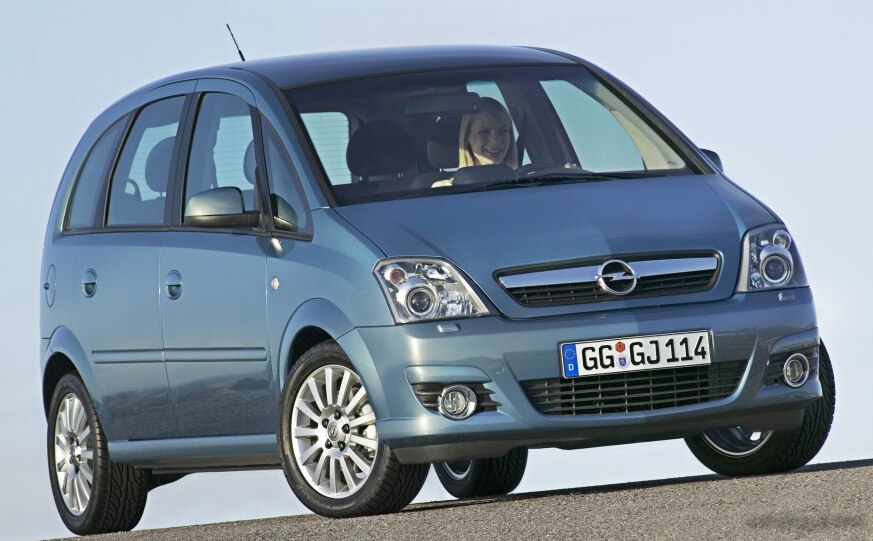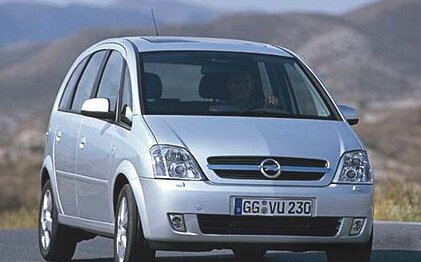
The Opel Meriva A 1.8i 16V Automatic, produced between 2003 and 2005, represented a mid-range offering within the first generation (A) of the Meriva compact minivan. Positioned above the base 1.4L engine option, but below the more powerful and sporty 2.0L Turbo, this variant aimed to provide a balance of practicality, comfort, and reasonable performance for family buyers. The Meriva A, launched in May 2003, was Opel’s entry into the increasingly popular sub-compact MPV segment, competing with vehicles like the Renault Scenic and Citroën Xsara Picasso. It was built on the GM Delta platform, shared with other Opel/Vauxhall and Chevrolet models, and distinguished itself with its flexible seating arrangements and distinctive styling.
Technical Specifications
| Brand | Opel |
| Model | Meriva |
| Generation | Meriva A |
| Type (Engine) | 1.8i 16V (125 Hp) Automatic |
| Start of production | May, 2003 |
| End of production | 2005 |
| Powertrain Architecture | Internal Combustion engine |
| Body type | Minivan |
| Seats | 5 |
| Doors | 5 |
| Fuel consumption (urban) | 10.7 l/100 km (22 US mpg, 26.4 UK mpg, 9.3 km/l) |
| Fuel consumption (extra urban) | 6.1 l/100 km (38.6 US mpg, 46.3 UK mpg, 16.4 km/l) |
| Fuel consumption (combined) | 8.2 l/100 km (28.7 US mpg, 34.4 UK mpg, 12.2 km/l) |
| Fuel Type | Petrol (Gasoline) |
| Acceleration 0 – 100 km/h | 12.3 sec |
| Acceleration 0 – 62 mph | 12.3 sec |
| Acceleration 0 – 60 mph | 11.7 sec |
| Maximum speed | 190 km/h (118.06 mph) |
| Weight-to-power ratio | 11 kg/Hp, 90.6 Hp/tonne |
| Weight-to-torque ratio | 8.1 kg/Nm, 123.2 Nm/tonne |
| Power | 125 Hp @ 5600 rpm |
| Power per litre | 69.6 Hp/l |
| Torque | 170 Nm @ 3800 rpm (125.39 lb.-ft. @ 3800 rpm) |
| Engine layout | Front, Transverse |
| Engine Model/Code | Z18XE |
| Engine displacement | 1796 cm3 (109.6 cu. in.) |
| Number of cylinders | 4 |
| Engine configuration | Inline |
| Cylinder Bore | 80.5 mm (3.17 in.) |
| Piston Stroke | 88.2 mm (3.47 in.) |
| Compression ratio | 10.5:1 |
| Number of valves per cylinder | 4 |
| Fuel injection system | Multi-port manifold injection |
| Engine aspiration | Naturally aspirated engine |
| Valvetrain | DOHC |
| Engine oil capacity | 4.25 l (4.49 US qt | 3.74 UK qt) |
| Coolant | 6.45 l (6.82 US qt | 5.68 UK qt) |
| Kerb Weight | 1380 kg (3042.38 lbs.) |
| Max. weight | 1835 kg (4045.48 lbs.) |
| Max load | 455 kg (1003.1 lbs.) |
| Trunk (boot) space – minimum | 350 l (12.36 cu. ft.) |
| Trunk (boot) space – maximum | 1410 l (49.79 cu. ft.) |
| Fuel tank capacity | 53 l (14 US gal | 11.66 UK gal) |
| Length | 4042 mm (159.13 in.) |
| Width | 1694 mm (66.69 in.) |
| Height | 1624 mm (63.94 in.) |
| Wheelbase | 2630 mm (103.54 in.) |
| Front track | 1449 mm (57.05 in.) |
| Rear (Back) track | 1464 mm (57.64 in.) |
| Drivetrain Architecture | The Internal combustion engine (ICE) drives the front wheels of the vehicle. |
| Drive wheel | Front wheel drive |
| Number of gears and type of gearbox | 5 gears, automatic transmission |
| Front suspension | Coil spring |
| Rear suspension | Coil spring |
| Front brakes | Ventilated discs |
| Rear brakes | Disc |
| Assisting systems | ABS (Anti-lock braking system) |
| Steering type | Steering rack and pinion |
| Power steering | Hydraulic Steering |
| Tires size | 185/60 R15 |
| Wheel rims size | 15 |
Powertrain & Engine Architecture
The heart of the Meriva A 1.8i Automatic is the Z18XE engine, a member of Opel’s Ecotec family. This 1.8-liter (1796 cc) inline-four cylinder engine features a dual overhead camshaft (DOHC) valvetrain with four valves per cylinder, contributing to its relatively high output for its displacement. The Z18XE utilizes multi-port fuel injection, delivering fuel directly into the intake ports. The engine produces 125 horsepower at 5600 rpm and 170 Nm (125 lb-ft) of torque at 3800 rpm. Paired with this engine is a five-speed automatic transmission, providing smooth, if not particularly sporty, gear changes. This transmission was a common unit used across various Opel and Vauxhall models of the era, known for its reliability but not its responsiveness. The engine’s design prioritized fuel efficiency and smooth operation over outright performance.
Driving Characteristics
The 1.8i Automatic Meriva offered a comfortable and practical driving experience, but it wasn’t designed for spirited performance. Acceleration from 0-60 mph took around 11.7 seconds, and top speed was approximately 118 mph. The automatic transmission, while convenient, did detract from the engine’s potential, resulting in a noticeable delay in response during overtaking maneuvers. The gear ratios were tuned for economy rather than acceleration. Compared to the manual transmission version of the same engine, the automatic suffered a slight performance penalty. The 2.0L Turbo offered significantly more power and a more engaging driving experience, while the 1.4L provided even more basic transportation. The 1.8i Automatic found its niche as a comfortable and easy-to-drive family vehicle.
Equipment & Trim Levels
The 1.8i Automatic trim typically included features such as air conditioning, power windows, central locking, and an integrated radio/CD player. Safety features included ABS brakes and driver and passenger airbags. Higher trim levels, often denoted by additions like “Comfort” or “Enjoy,” added features like alloy wheels, upgraded upholstery, and a multi-function display. Optional extras included a sunroof, rear parking sensors, and upgraded audio systems. Interior upholstery was typically cloth, with a relatively simple and functional dashboard layout. The Meriva A prioritized practicality and space over luxurious appointments.
Chassis & Braking
The Meriva A utilized a relatively simple chassis design, featuring coil spring suspension at both the front and rear. The front suspension employed MacPherson struts, while the rear used a torsion beam setup. Braking duties were handled by ventilated discs at the front and solid discs at the rear. The ABS system provided enhanced braking control, particularly in slippery conditions. The suspension was tuned for comfort, providing a relatively soft ride quality. Stabilizer bars were fitted to both axles to reduce body roll during cornering, but the Meriva A was not intended as a performance vehicle.
Market Reception & Comparison
The Opel Meriva A 1.8i Automatic was generally well-received by critics as a practical and comfortable family vehicle. However, the automatic transmission was often criticized for its lack of responsiveness. Fuel economy was considered reasonable for its class, averaging around 28.7 US mpg in combined driving. Compared to the 1.4L engine, the 1.8L offered noticeably more power, making it a better choice for those who frequently carried passengers or cargo. The 2.0L Turbo, while more expensive, provided a significant performance upgrade. Reliability was generally good, although some owners reported minor issues with the automatic transmission over the long term.
Legacy
The Opel Meriva A 1.8i Automatic remains a relatively common sight on the used car market. The Z18XE engine is known for its durability and relatively low maintenance costs. The automatic transmission, while not the most refined, is generally reliable if properly maintained. Parts availability is good, and the Meriva A represents a relatively affordable and practical option for buyers seeking a compact MPV. While it may not offer the performance or features of more modern vehicles, its simplicity, practicality, and reasonable running costs continue to appeal to a wide range of buyers.