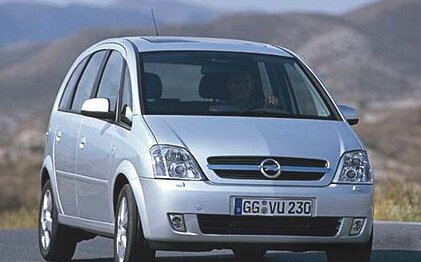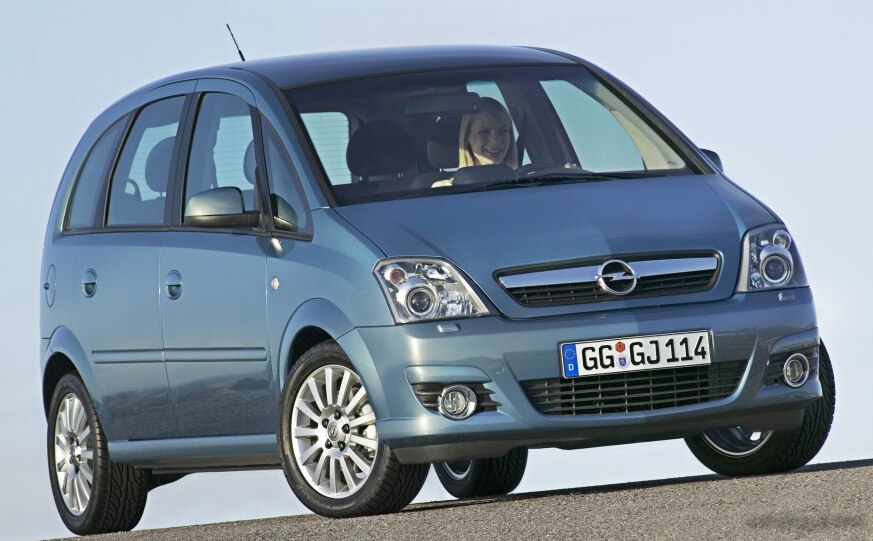
The Opel Meriva A, particularly the facelifted version introduced in 2006, represented Opel’s entry into the compact minivan segment. The 1.3 CDTI (75 horsepower) variant with a Diesel Particulate Filter (DPF) was a key offering, especially in European markets where diesel engines were highly favored for their fuel efficiency. Produced from January 2006 to February 2010, this version of the Meriva aimed to provide an affordable and practical family vehicle. It sat within the broader Meriva A range (produced 2003-2010), which was based on the GM Delta platform, also known internally as the 1HX0/A3 platform. This specific engine and transmission combination was positioned as the entry-level diesel option, appealing to buyers prioritizing economy over outright performance.
Technical Specifications
| Brand | Opel |
| Model | Meriva |
| Generation | Meriva A (facelift 2006) |
| Type (Engine) | 1.3 CDTI (75 Hp) DPF |
| Start of production | January, 2006 |
| End of production | February, 2010 |
| Powertrain Architecture | Internal Combustion engine |
| Body type | Minivan |
| Seats | 5 |
| Doors | 5 |
| Fuel consumption (urban) | 6.4 l/100 km (36.8 US mpg, 44.1 UK mpg, 15.6 km/l) |
| Fuel consumption (extra urban) | 4.2 l/100 km (56 US mpg, 67.3 UK mpg, 23.8 km/l) |
| Fuel consumption (combined) | 5 l/100 km (47 US mpg, 56.5 UK mpg, 20 km/l) |
| CO2 emissions | 135 g/km |
| Fuel Type | Diesel |
| Acceleration 0 – 100 km/h | 17.8 sec |
| Acceleration 0 – 62 mph | 17.8 sec |
| Acceleration 0 – 60 mph | 16.9 sec |
| Maximum speed | 157 km/h (97.56 mph) |
| Weight-to-power ratio | 17.6 kg/Hp, 56.8 Hp/tonne |
| Weight-to-torque ratio | 7.8 kg/Nm, 128.8 Nm/tonne |
| Power | 75 Hp @ 4000 rpm |
| Power per litre | 60.1 Hp/l |
| Torque | 170 Nm @ 1750 rpm (125.39 lb.-ft. @ 1750 rpm) |
| Engine layout | Front, Transverse |
| Engine Model/Code | Z13DTJ |
| Engine displacement | 1248 cm3 (76.16 cu. in.) |
| Number of cylinders | 4 |
| Engine configuration | Inline |
| Cylinder Bore | 69.6 mm (2.74 in.) |
| Piston Stroke | 82 mm (3.23 in.) |
| Compression ratio | 17.6:1 |
| Number of valves per cylinder | 4 |
| Fuel injection system | Diesel Commonrail |
| Engine aspiration | Turbocharger, Intercooler |
| Valvetrain | DOHC |
| Engine oil capacity | 3.2 l (3.38 US qt | 2.82 UK qt) |
| Coolant | 7 l (7.4 US qt | 6.16 UK qt) |
| Kerb Weight | 1320 kg (2910.1 lbs.) |
| Max. weight | 1870 kg (4122.64 lbs.) |
| Max load | 550 kg (1212.54 lbs.) |
| Trunk (boot) space – minimum | 360 l (12.71 cu. ft.) |
| Trunk (boot) space – maximum | 1410 l (49.79 cu. ft.) |
| Fuel tank capacity | 53 l (14 US gal | 11.66 UK gal) |
| Length | 4052 mm (159.53 in.) |
| Width | 1694 mm (66.69 in.) |
| Height | 1624 mm (63.94 in.) |
| Wheelbase | 2630 mm (103.54 in.) |
| Front track | 1449 mm (57.05 in.) |
| Rear (Back) track | 1464 mm (57.64 in.) |
| Drag coefficient (Cd) | 0.32 |
| Drivetrain Architecture | The Internal combustion engine (ICE) drives the front wheels of the vehicle. |
| Drive wheel | Front wheel drive |
| Number of gears and type of gearbox | 5 gears, manual transmission |
| Front suspension | Independent coil spring |
| Rear suspension | Semi-independent, coil spring |
| Front brakes | Disc |
| Rear brakes | Disc |
| Assisting systems | ABS (Anti-lock braking system) |
| Tires size | 185/60 R15 |
| Wheel rims size | 15 |
Powertrain & Engine Architecture
The heart of this Meriva variant is the Z13DTJ engine, a 1.3-liter inline-four cylinder diesel. This engine is part of Opel/Fiat’s family of small-displacement diesel engines, known for their fuel efficiency. The Z13DTJ utilizes a common rail direct injection system, delivering fuel directly into the combustion chamber at extremely high pressure. This, combined with a turbocharger and intercooler, helps to maximize power output and torque while minimizing emissions. The engine features a double overhead camshaft (DOHC) valvetrain with four valves per cylinder, contributing to improved breathing and efficiency. The 5-speed manual transmission was the standard offering for this model, chosen for its simplicity and cost-effectiveness. The transmission’s gear ratios were tuned for fuel economy rather than sporty acceleration.
Driving Characteristics
The 1.3 CDTI 75 hp Meriva wasn’t designed for speed. Acceleration was leisurely, taking approximately 17.8 seconds to reach 62 mph (100 km/h). The engine’s 170 Nm (125 lb-ft) of torque, available from 1750 rpm, provided adequate pulling power for everyday driving situations, such as merging onto highways or overtaking slower vehicles. However, it required downshifting to access this torque, especially when fully loaded. The manual transmission, while not particularly engaging, was precise and easy to operate. The focus was clearly on providing a comfortable and economical driving experience, rather than a dynamic one. Compared to the more powerful 1.7 CDTI or gasoline variants, this version felt noticeably slower, but it offered significantly better fuel economy.
Equipment & Trim Levels
The 1.3 CDTI 75 hp Meriva typically came with a fairly basic level of equipment, reflecting its position as the entry-level diesel model. Standard features generally included power steering, central locking, electric front windows, and an adjustable steering column. Air conditioning was often an optional extra. Interior upholstery was typically cloth, and the dashboard featured a functional, if somewhat plain, design. Optional extras could include alloy wheels, a CD player, and upgraded interior trim. Safety features included ABS brakes and driver and passenger airbags.
Chassis & Braking
The Meriva A utilized a relatively simple chassis design. Front suspension consisted of independent coil springs, while the rear suspension employed a semi-independent coil spring setup. This configuration prioritized ride comfort over handling precision. Brakes were disc brakes on all four wheels, providing adequate stopping power for the vehicle’s weight and performance. ABS (Anti-lock Braking System) was standard, enhancing safety during emergency braking situations. The 15-inch wheels and 185/60 R15 tires were chosen to balance ride comfort and fuel efficiency.
Market Reception & Comparison
The 1.3 CDTI Meriva was generally well-received by critics as a practical and economical family vehicle. Its fuel efficiency was a major selling point, particularly in Europe where diesel fuel was often cheaper than gasoline. However, its lack of power was a common criticism. Compared to the more powerful diesel and gasoline variants, the 1.3 CDTI offered a more affordable entry point into the Meriva range, but at the expense of performance. Its fuel economy was superior to the 1.7 CDTI, but the latter offered a more refined driving experience. Reliability was generally good, although the diesel particulate filter (DPF) could be prone to clogging if the vehicle was primarily used for short trips.
Legacy
The Opel Meriva A 1.3 CDTI (75 hp) remains a relatively common sight on European roads today. The Z13DTJ engine, while not known for its blistering performance, is generally considered to be a reliable unit when properly maintained. The DPF can be a potential source of issues, requiring periodic cleaning or replacement. In the used car market, these Merivas are typically priced affordably, making them an attractive option for budget-conscious buyers seeking a practical and economical family vehicle. The model helped establish the Meriva as a popular choice in the compact minivan segment, paving the way for subsequent generations.