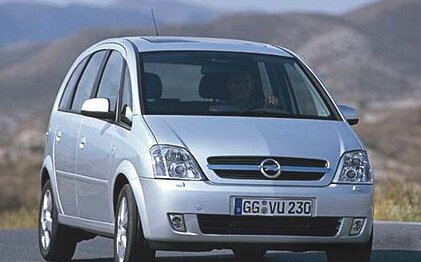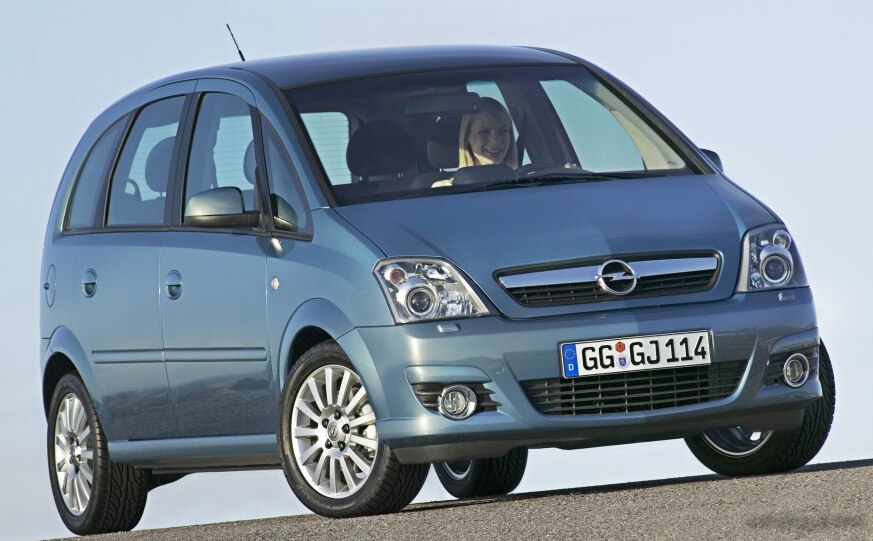
The Opel Meriva A, particularly the facelifted version introduced in October 2006, represented Opel’s entry into the compact minivan segment. Produced through February 2010, this generation Meriva aimed to provide a practical and versatile vehicle for families. The 1.7 CDTI variant, equipped with a 101 horsepower turbodiesel engine, was a significant offering within the Meriva A lineup, positioned as a fuel-efficient and reasonably equipped option. It played a key role in the European market, where smaller, economical vehicles were highly sought after. This specific configuration offered a balance between running costs and usability, appealing to buyers prioritizing practicality over outright performance.
Technical Specifications
| Brand | Opel |
| Model | Meriva |
| Generation | Meriva A (facelift 2006) |
| Type (Engine) | 1.7 CDTI (101 Hp) |
| Start of production | October, 2006 |
| End of production | February, 2010 |
| Powertrain Architecture | Internal Combustion engine |
| Body type | Minivan |
| Seats | 5 |
| Doors | 5 |
| Fuel consumption (urban) | 6.7 l/100 km (35.1 US mpg, 42.2 UK mpg, 14.9 km/l) |
| Fuel consumption (extra urban) | 4.5 l/100 km (52.3 US mpg, 62.8 UK mpg, 22.2 km/l) |
| Fuel consumption (combined) | 5.3 l/100 km (44.4 US mpg, 53.3 UK mpg, 18.9 km/l) |
| CO2 emissions | 146 g/km |
| Fuel Type | Diesel |
| Acceleration 0 – 100 km/h | 12.8 sec |
| Acceleration 0 – 62 mph | 12.8 sec |
| Acceleration 0 – 60 mph | 12.2 sec |
| Maximum speed | 180 km/h (111.85 mph) |
| Emission standard | Euro 4 |
| Weight-to-power ratio | 14.4 kg/Hp, 69.4 Hp/tonne |
| Weight-to-torque ratio | 6.1 kg/Nm, 164.9 Nm/tonne |
| Power | 101 Hp @ 4400 rpm |
| Power per litre | 59.9 Hp/l |
| Torque | 240 Nm @ 2300 rpm (177.01 lb.-ft. @ 2300 rpm) |
| Engine layout | Front, Transverse |
| Engine Model/Code | Z17DT |
| Engine displacement | 1686 cm3 (102.89 cu. in.) |
| Number of cylinders | 4 |
| Engine configuration | Inline |
| Cylinder Bore | 79 mm (3.11 in.) |
| Piston Stroke | 86 mm (3.39 in.) |
| Compression ratio | 18.4:1 |
| Number of valves per cylinder | 4 |
| Fuel injection system | Diesel Commonrail |
| Engine aspiration | Turbocharger, Intercooler |
| Valvetrain | DOHC |
| Engine oil capacity | 5.4 l (5.71 US qt, 4.75 UK qt) |
| Coolant | 6.7 l (7.08 US qt, 5.9 UK qt) |
| Kerb Weight | 1455 kg (3207.73 lbs.) |
| Max. weight | 1910 kg (4210.83 lbs.) |
| Max load | 455 kg (1003.1 lbs.) |
| Trunk (boot) space – minimum | 350 l (12.36 cu. ft.) |
| Trunk (boot) space – maximum | 1410 l (49.79 cu. ft.) |
| Fuel tank capacity | 53 l (14 US gal, 11.66 UK gal) |
| Length | 4052 mm (159.53 in.) |
| Width | 1694 mm (66.69 in.) |
| Height | 1624 mm (63.94 in.) |
| Wheelbase | 2630 mm (103.54 in.) |
| Front track | 1449 mm (57.05 in.) |
| Rear (Back) track | 1464 mm (57.64 in.) |
| Drag coefficient (Cd) | 0.32 |
| Drivetrain Architecture | The Internal combustion engine (ICE) drives the front wheels of the vehicle. |
| Drive wheel | Front wheel drive |
| Number of gears and type of gearbox | 6 gears, manual transmission |
| Front suspension | Coil spring |
| Rear suspension | Coil spring |
| Front brakes | Ventilated discs |
| Rear brakes | Disc |
| Assisting systems | ABS (Anti-lock braking system) |
| Steering type | Steering rack and pinion |
| Power steering | Hydraulic Steering |
| Tires size | 185/60 R15 |
| Wheel rims size | 6J X 15 |
Powertrain & Engine Architecture
The heart of this Meriva variant is the Z17DT, a 1.7-liter inline four-cylinder turbodiesel engine. This engine belongs to Opel/Fiat’s family of common rail diesel engines, known for their efficiency and relatively quiet operation. The Z17DT utilizes a direct injection system with a common rail, injecting fuel at extremely high pressures for optimized combustion. The engine features a single overhead camshaft (SOHC) design operating four valves per cylinder (DOHC). A turbocharger with an intercooler is employed to boost power output, delivering 101 horsepower at 4400 rpm and 240 Nm (177 lb-ft) of torque at 2300 rpm. The engine’s relatively high compression ratio of 18.4:1 contributes to its thermal efficiency. The engine was paired with a 6-speed manual transmission, which was the standard offering for this trim level.
Driving Characteristics
The 1.7 CDTI Meriva offered a practical, if not particularly sporty, driving experience. With 101 horsepower, acceleration was adequate for everyday driving, but overtaking maneuvers required planning. The 6-speed manual transmission helped to keep the engine in its optimal power band, and the readily available torque made it easy to maintain highway speeds. Compared to higher-output Meriva variants, such as those with larger gasoline engines, the 1.7 CDTI prioritized fuel economy over outright performance. The gear ratios were tuned for efficiency, resulting in a slightly less engaging driving experience than the more powerful models. However, the comfortable suspension and light steering made it easy to maneuver in urban environments.
Equipment & Trim Levels
The 1.7 CDTI Meriva typically came with a reasonable level of standard equipment. This included power windows, central locking, air conditioning, and an audio system. Safety features such as ABS and front airbags were also standard. Higher trim levels offered options like alloy wheels, upgraded upholstery, a trip computer, and rear parking sensors. The interior was designed with practicality in mind, featuring durable materials and a flexible seating arrangement. The rear seats could be folded down or even removed completely, creating a large cargo area. The dashboard layout was straightforward and functional, with easy-to-read gauges and controls.
Chassis & Braking
The Meriva A utilized a relatively simple chassis design, featuring coil springs and a torsion beam rear suspension. The front suspension employed MacPherson struts. This setup provided a comfortable ride, but didn’t offer the same level of handling precision as more sophisticated suspension systems. The braking system consisted of ventilated discs on the front wheels and solid discs on the rear. ABS was standard, providing enhanced braking performance in emergency situations. The steering was a hydraulic rack and pinion system, offering light and precise control.
Market Reception & Comparison
The 1.7 CDTI Meriva was generally well-received by critics as a practical and economical family vehicle. Its fuel efficiency was a major selling point, particularly in Europe where diesel fuel was often cheaper than gasoline. Compared to the gasoline-powered Meriva variants, the 1.7 CDTI offered significantly better fuel economy, but at the expense of some performance. It was often compared to other compact minivans, such as the Renault Modus and the Fiat Idea. The Meriva’s spacious interior and flexible seating arrangement gave it an edge over some of its competitors.
Legacy
The Opel Meriva A 1.7 CDTI has proven to be a relatively reliable vehicle, with the Z17DT engine generally considered durable. Common issues include wear and tear on the turbocharger and potential problems with the diesel particulate filter (DPF), particularly on vehicles that primarily see short trips. In the used car market, these Merivas represent a good value for buyers seeking an affordable and practical family vehicle. Their fuel efficiency and relatively low maintenance costs make them an attractive option for those on a budget. While not a performance icon, the 1.7 CDTI Meriva A remains a testament to Opel’s commitment to providing practical and economical transportation.