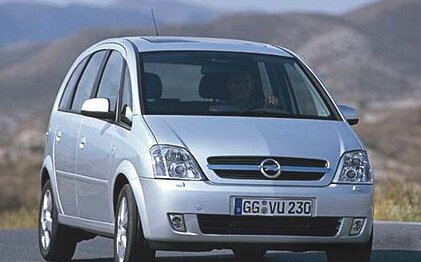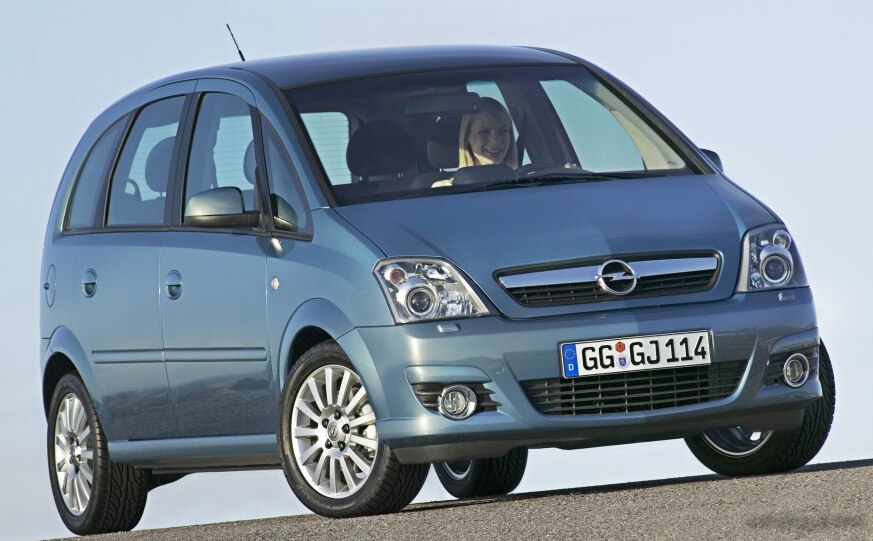
The Opel Meriva A, particularly the facelifted version introduced in 2006, represented a significant step forward for Opel in the compact minivan segment. This generation, built on the GM Delta platform (internally designated 1HX0/A3), aimed to provide a practical and versatile vehicle for families. The 1.7 CDTI (125 hp) ECOTEC variant, produced from October 2006 to February 2010, was a key offering in the Meriva A lineup, positioned as a fuel-efficient and reasonably equipped option for buyers prioritizing economy and practicality. It was primarily sold in European markets, where compact MPVs were highly popular.
Technical Specifications
| Brand | Opel |
| Model | Meriva |
| Generation | Meriva A (facelift 2006) |
| Type (Engine) | 1.7 CDTI (125 Hp) ECOTEC |
| Start of production | October, 2006 |
| End of production | February, 2010 |
| Powertrain Architecture | Internal Combustion engine |
| Body type | Minivan |
| Seats | 5 |
| Doors | 5 |
| Fuel consumption (combined) | 5.4 l/100 km (43.6 US mpg, 52.3 UK mpg, 18.5 km/l) |
| CO2 emissions | 146 g/km |
| Fuel Type | Diesel |
| Acceleration 0 – 100 km/h | 10.9 sec |
| Acceleration 0 – 62 mph | 10.9 sec |
| Acceleration 0 – 60 mph | 10.4 sec |
| Maximum speed | 195 km/h (121.17 mph) |
| Emission standard | Euro 4 |
| Weight-to-power ratio | 11.6 kg/Hp, 85.9 Hp/tonne |
| Weight-to-torque ratio | 5.2 kg/Nm, 192.4 Nm/tonne |
| Power | 125 Hp @ 4400 rpm |
| Power per litre | 74.1 Hp/l |
| Torque | 280 Nm @ 2300 rpm (206.52 lb.-ft. @ 2300 rpm) |
| Engine layout | Front, Transverse |
| Engine Model/Code | Z17DTR |
| Engine displacement | 1686 cm3 (102.89 cu. in.) |
| Number of cylinders | 4 |
| Engine configuration | Inline |
| Cylinder Bore | 79 mm (3.11 in.) |
| Piston Stroke | 86 mm (3.39 in.) |
| Compression ratio | 18.4:1 |
| Number of valves per cylinder | 4 |
| Fuel injection system | Diesel Commonrail |
| Engine aspiration | Turbocharger, Intercooler |
| Valvetrain | DOHC |
| Engine oil capacity | 5 l (5.28 US qt | 4.4 UK qt) |
| Coolant | 7.1 l (7.5 US qt | 6.25 UK qt) |
| Kerb Weight | 1455 kg (3207.73 lbs.) |
| Max. weight | 1910 kg (4210.83 lbs.) |
| Max load | 455 kg (1003.1 lbs.) |
| Trunk (boot) space – minimum | 350 l (12.36 cu. ft.) |
| Trunk (boot) space – maximum | 1410 l (49.79 cu. ft.) |
| Fuel tank capacity | 53 l (14 US gal | 11.66 UK gal) |
| Length | 4052 mm (159.53 in.) |
| Width | 1694 mm (66.69 in.) |
| Height | 1624 mm (63.94 in.) |
| Wheelbase | 2630 mm (103.54 in.) |
| Front track | 1449 mm (57.05 in.) |
| Rear (Back) track | 1464 mm (57.64 in.) |
| Drag coefficient (Cd) | 0.32 |
| Drivetrain Architecture | The Internal combustion engine (ICE) drives the front wheels of the vehicle. |
| Drive wheel | Front wheel drive |
| Number of gears and type of gearbox | 6 gears, manual transmission |
| Front suspension | Coil spring |
| Rear suspension | Coil spring |
| Front brakes | Ventilated discs |
| Rear brakes | Disc |
| Assisting systems | ABS (Anti-lock braking system) |
| Steering type | Steering rack and pinion |
| Power steering | Hydraulic Steering |
| Tires size | 185/60 R15 |
| Wheel rims size | 6J x 15 |
Powertrain & Engine Architecture
The heart of this Meriva variant is the Z17DTR, a 1.7-liter inline-four cylinder diesel engine. This engine belongs to Opel/Fiat’s family of common rail direct injection diesels, known for their efficiency and relatively quiet operation. The Z17DTR utilizes a turbocharger with an intercooler to boost power output to 125 horsepower at 4400 rpm and 280 Nm (206.52 lb-ft) of torque at 2300 rpm. The engine features a double overhead camshaft (DOHC) valvetrain with four valves per cylinder, optimizing breathing and contributing to its power delivery. The fuel injection system is a common rail diesel injection system, allowing for precise fuel metering and improved combustion efficiency. The engine is transversely mounted in the front of the vehicle. The 6-speed manual transmission was the standard offering for this engine, providing a good balance between fuel economy and drivability.
Driving Characteristics
The 1.7 CDTI with the 6-speed manual transmission offered a practical and economical driving experience. While not particularly sporty, the engine provided adequate power for everyday driving and highway cruising. The 280 Nm of torque available from 2300 rpm meant that the Meriva felt responsive in most situations, with enough grunt for overtaking maneuvers. The gear ratios in the 6-speed gearbox were well-spaced, allowing the driver to keep the engine in its optimal power band. Compared to the more powerful petrol engines available in the Meriva A range, the 1.7 CDTI prioritized fuel efficiency over outright performance. It wasn’t as quick accelerating as the petrol variants, but it offered significantly better fuel economy. Compared to the later 1.3 CDTI engine, the 1.7 offered a noticeable increase in power and refinement.
Equipment & Trim Levels
The 1.7 CDTI variant typically came with a reasonable level of standard equipment. This included power windows, central locking, air conditioning, and an audio system. Higher trim levels, such as ‘Enjoy’ and ‘Cosmo’, added features like alloy wheels, fog lights, a trip computer, and upgraded interior trim. Interior upholstery was typically cloth, with options for different patterns and colors. Optional extras included a panoramic sunroof, parking sensors, and a navigation system. The Meriva A was known for its flexible interior, with the ‘FlexSpace’ rear seating system allowing for various configurations to maximize cargo space.
Chassis & Braking
The Meriva A featured a relatively simple chassis setup. Both the front and rear suspension utilized coil springs and dampers. The front suspension employed MacPherson struts, while the rear used a torsion beam setup. This configuration provided a comfortable ride, although it wasn’t particularly sporty. The braking system consisted of ventilated discs on the front wheels and solid discs on the rear. Anti-lock Braking System (ABS) was standard. The steering was a hydraulic power-assisted rack and pinion system, providing a reasonably direct and responsive feel.
Market Reception & Comparison
The Opel Meriva A 1.7 CDTI was generally well-received by automotive critics as a practical and economical family vehicle. Its fuel efficiency was a major selling point, particularly in Europe where diesel fuel was often cheaper than petrol. Critics praised its spacious interior and flexible seating arrangement. However, some noted that the engine could be a bit noisy under hard acceleration. Compared to other compact MPVs of the time, such as the Renault Scenic and Citroën C4 Picasso, the Meriva A offered a competitive package in terms of price, practicality, and fuel economy. The 1.7 CDTI offered a good balance between performance and economy, making it a popular choice for buyers who didn’t need the extra power of the petrol engines.
Legacy
The Opel Meriva A 1.7 CDTI has proven to be a relatively reliable powertrain in the long term. The Z17DTR engine, while not without its potential issues (such as occasional turbocharger or EGR valve problems), is generally considered durable and capable of high mileage with proper maintenance. In the used car market, these Merivas represent a good value proposition for buyers seeking an affordable and practical family vehicle. Parts availability is generally good, and maintenance costs are reasonable. The Meriva A, and particularly the 1.7 CDTI variant, remains a popular choice for those seeking a no-frills, economical, and versatile MPV.