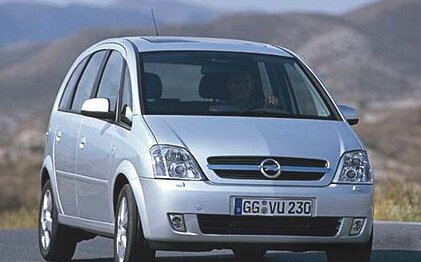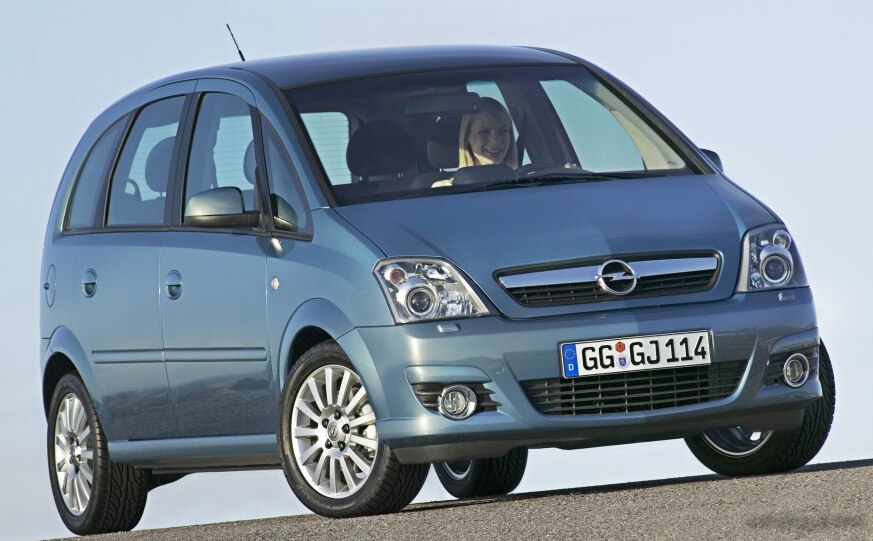
The Opel Meriva A OPC 1.6i 16V, produced from February 2006 to October 2009, represented the performance-oriented variant of the first-generation Meriva (facelifted model). Positioned as the flagship trim, it aimed to inject a dose of sporty appeal into the practical and family-focused Meriva lineup. This model was primarily marketed in Europe, offering a more engaging driving experience than the standard Meriva variants. It was a relatively niche offering, appealing to buyers seeking a compact, versatile vehicle with a surprising amount of power.
Technical Specifications
| Brand | Opel |
| Model | Meriva |
| Generation | Meriva A (facelift 2006) |
| Type (Engine) | OPC 1.6i 16V (180 Hp) |
| Start of production | February, 2006 |
| End of production | October, 2009 |
| Powertrain Architecture | Internal Combustion engine |
| Body type | Minivan |
| Seats | 5 |
| Doors | 5 |
| Fuel consumption (urban) | 10.4 l/100 km (22.6 US mpg, 27.2 UK mpg, 9.6 km/l) |
| Fuel consumption (extra urban) | 6.3 l/100 km (37.3 US mpg, 44.8 UK mpg, 15.9 km/l) |
| Fuel Type | Petrol (Gasoline) |
| Acceleration 0 – 100 km/h | 8.2 sec |
| Acceleration 0 – 62 mph | 8.2 sec |
| Acceleration 0 – 60 mph | 7.8 sec |
| Maximum speed | 222 km/h (137.94 mph) |
| Weight-to-power ratio | 8.1 kg/Hp, 124.1 Hp/tonne |
| Weight-to-torque ratio | 6.3 kg/Nm, 158.6 Nm/tonne |
| Power | 180 Hp @ 5500 rpm |
| Power per litre | 112.6 Hp/l |
| Torque | 230 Nm @ 2200 rpm (169.64 lb.-ft. @ 2200 rpm) |
| Engine layout | Front, Transverse |
| Engine Model/Code | Z16LET |
| Engine displacement | 1598 cm3 (97.52 cu. in.) |
| Number of cylinders | 4 |
| Engine configuration | Inline |
| Cylinder Bore | 79 mm (3.11 in.) |
| Piston Stroke | 81.5 mm (3.21 in.) |
| Compression ratio | 8.8:1 |
| Number of valves per cylinder | 4 |
| Fuel injection system | Multi-port manifold injection |
| Engine aspiration | Turbocharger, Intercooler |
| Engine oil capacity | 4.5 l (4.76 US qt | 3.96 UK qt) |
| Coolant | 6.3 l (6.66 US qt | 5.54 UK qt) |
| Kerb Weight | 1450 kg (3196.7 lbs.) |
| Max. weight | 1905 kg (4199.81 lbs.) |
| Max load | 455 kg (1003.1 lbs.) |
| Trunk (boot) space – minimum | 360 l (12.71 cu. ft.) |
| Trunk (boot) space – maximum | 1410 l (49.79 cu. ft.) |
| Fuel tank capacity | 53 l (14 US gal | 11.66 UK gal) |
| Length | 4052 mm (159.53 in.) |
| Width | 1694 mm (66.69 in.) |
| Height | 1624 mm (63.94 in.) |
| Wheelbase | 2630 mm (103.54 in.) |
| Front track | 1449 mm (57.05 in.) |
| Rear (Back) track | 1464 mm (57.64 in.) |
| Drivetrain Architecture | The Internal combustion engine (ICE) drives the front wheels of the vehicle. |
| Drive wheel | Front wheel drive |
| Number of gears and type of gearbox | 6 gears, manual transmission |
| Front suspension | Independent coil spring |
| Rear suspension | Semi-independent, coil spring |
| Front brakes | Disc |
| Rear brakes | Disc |
| Assisting systems | ABS (Anti-lock braking system) |
| Tires size | 205/45 R17 |
INTRODUCTION
The Opel Meriva A OPC, launched in 2006 following the facelift of the original Meriva, was a surprising addition to the compact MPV segment. Built on the GM’s 1HX0/A3 platform, the OPC (Opel Performance Center) variant aimed to provide a more dynamic driving experience than the standard Meriva, which was primarily focused on practicality and family transport. It was a response to a growing demand for slightly more exciting versions of everyday cars, offering a blend of versatility and performance. The OPC trim was available for a relatively short period, ending production in October 2009.
Powertrain & Engine Architecture
The heart of the Meriva OPC is the Z16LET, a 1.6-liter turbocharged inline-four cylinder engine. This engine, also found in other Opel/Vauxhall models like the Astra OPC, is a significant departure from the naturally aspirated engines offered in the standard Meriva range. It utilizes multi-port fuel injection and an intercooled turbocharger to produce 180 horsepower at 5500 rpm and 230 Nm (169.64 lb-ft) of torque at 2200 rpm. The engine features a compression ratio of 8.8:1 and a 16-valve DOHC (Dual Overhead Camshaft) valvetrain. The engine is transversely mounted at the front of the vehicle. The OPC was exclusively offered with a six-speed manual transmission, designed to handle the increased power output and provide a more engaging driving experience. This transmission featured relatively short gear ratios, optimized for acceleration.
Driving Characteristics
The Meriva OPC’s driving experience is noticeably different from its standard counterparts. The turbocharger provides a noticeable boost in power, resulting in brisk acceleration. The 0-60 mph sprint takes approximately 7.8 seconds, and it reaches a top speed of 222 km/h (137.94 mph). While not a sports car, the OPC offers a level of performance that is unexpected in a compact MPV. The six-speed manual transmission allows for precise gear selection, and the short ratios contribute to responsive acceleration. However, the turbocharger does exhibit some lag at lower engine speeds, requiring the driver to downshift to access the full power band. Compared to the standard 1.4L or 1.7L Meriva models, the OPC provides a much more engaging and dynamic driving experience, albeit at the expense of some fuel economy.
Equipment & Trim Levels
The Meriva OPC came with a fairly comprehensive standard equipment list, reflecting its position as the top-of-the-line trim. Standard features included sport seats with unique upholstery, a leather-wrapped steering wheel, air conditioning, and an upgraded audio system. Exterior styling cues included a more aggressive front bumper with integrated fog lights, side skirts, a rear spoiler, and 17-inch alloy wheels. Optional extras included features like parking sensors, climate control, and a panoramic sunroof. The interior trim was generally darker and more sporty than the standard Meriva, with aluminum accents and a focus on a driver-centric layout.
Chassis & Braking
The Meriva OPC featured a slightly modified chassis compared to the standard Meriva, with a lowered ride height and stiffer suspension. The front suspension utilized independent coil springs, while the rear suspension was a semi-independent coil spring setup. This setup aimed to reduce body roll and improve handling. The braking system was also upgraded, with disc brakes on all four wheels, providing improved stopping power compared to the drum brakes found on some lower-spec Meriva models. ABS (Anti-lock Braking System) was standard. The suspension tuning was a compromise between comfort and handling, providing a reasonably comfortable ride while still offering improved cornering stability.
Market Reception & Comparison
The Meriva OPC received mixed reviews from automotive critics. While praised for its surprising performance and versatility, some reviewers criticized its turbo lag and relatively firm ride. Compared to other trims, the OPC offered a significantly more engaging driving experience but came with a higher price tag and slightly reduced fuel economy. Against competitors like the Renault Modus Sport or Ford Fusion, the Meriva OPC offered a unique combination of practicality and performance. The standard Meriva models, with their smaller engines, were generally considered more economical and practical for everyday use, while the OPC appealed to a smaller segment of buyers seeking a more sporty and dynamic MPV.
Legacy
The Opel Meriva A OPC, while not a high-volume seller, has gained a following among enthusiasts. The Z16LET engine is generally considered reliable, although regular maintenance is crucial, particularly regarding the turbocharger and cooling system. Used examples are relatively affordable, but finding well-maintained OPCs can be challenging. The OPC’s unique blend of practicality and performance has made it a desirable option for those seeking a versatile and engaging compact MPV. Today, it represents a somewhat quirky and underrated performance car from the mid-2000s, offering a distinctive driving experience that sets it apart from its more conventional rivals.