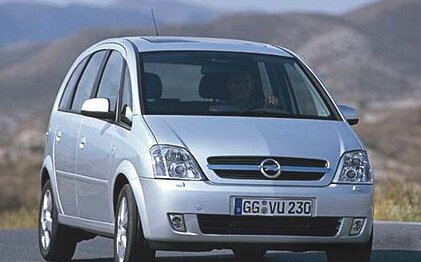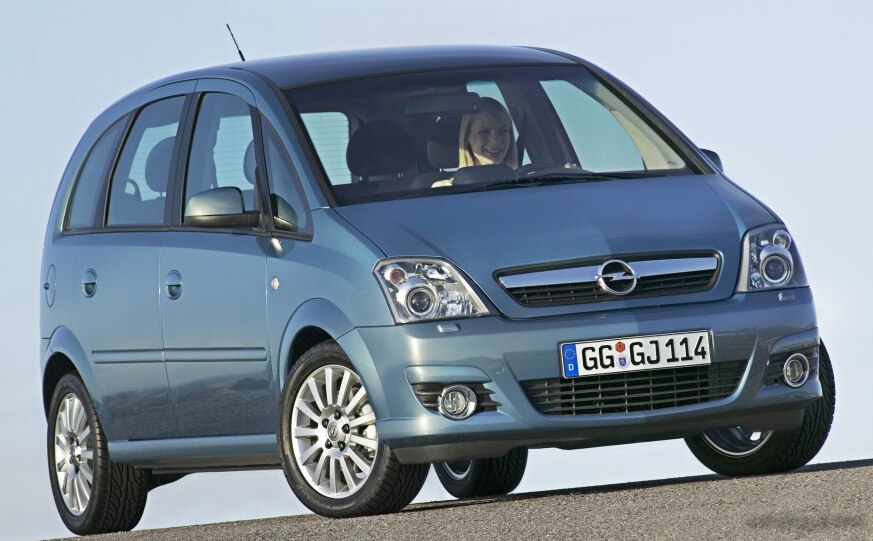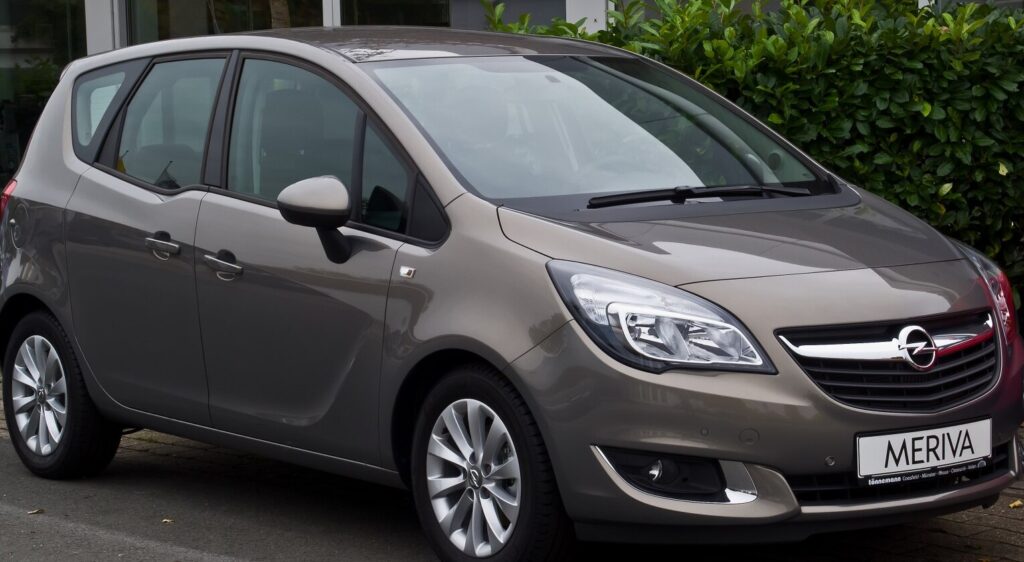
The Opel Meriva B, particularly the facelifted version introduced in 2014, represented a significant evolution of Opel’s compact MPV. The 1.3 CDTI (95 hp) ecoFLEX Ecotec start/stop variant, produced from January to March 2014, was positioned as an entry-level, fuel-efficient option within the Meriva B range. This model aimed to appeal to buyers prioritizing economy and practicality in a versatile, family-oriented package. It sat below the more powerful 1.6-liter petrol and diesel options, and was exclusively offered with a manual transmission during its brief production run.
Technical Specifications
| Brand | Opel |
| Model | Meriva |
| Generation | Meriva B (facelift 2014) |
| Type (Engine) | 1.3 CDTI (95 Hp) ecoFLEX Ecotec start/stop |
| Start of production | January, 2014 |
| End of production | March, 2014 |
| Powertrain Architecture | Internal Combustion engine |
| Body type | MPV |
| Seats | 5 |
| Doors | 5 |
| Fuel consumption (urban) | 4.8 l/100 km (49 US mpg, 58.9 UK mpg, 20.8 km/l) |
| Fuel consumption (extra urban) | 3.7 l/100 km (63.6 US mpg, 76.3 UK mpg, 27 km/l) |
| Fuel consumption (combined) | 4.1 l/100 km (57.4 US mpg, 68.9 UK mpg, 24.4 km/l) |
| CO2 emissions | 109 g/km |
| Fuel Type | Diesel |
| Acceleration 0 – 100 km/h | 13.8 sec |
| Acceleration 0 – 62 mph | 13.8 sec |
| Acceleration 0 – 60 mph | 13.1 sec |
| Maximum speed | 168 km/h (104.39 mph) |
| Emission standard | Euro 5 |
| Power | 95 Hp @ 4000 rpm |
| Power per litre | 76.1 Hp/l |
| Torque | 180 Nm @ 1750-3500 rpm (132.76 lb.-ft. @ 1750-3500 rpm) |
| Engine layout | Front, Transverse |
| Engine Model/Code | A13DTE |
| Engine displacement | 1248 cm3 (76.16 cu. in.) |
| Number of cylinders | 4 |
| Engine configuration | Inline |
| Cylinder Bore | 69.6 mm (2.74 in.) |
| Piston Stroke | 82 mm (3.23 in.) |
| Fuel injection system | Diesel Commonrail |
| Engine aspiration | Turbocharger, Intercooler |
| Valvetrain | DOHC |
| Engine oil capacity | 3.5 l (3.7 US qt | 3.08 UK qt) |
| Coolant capacity | 6.2 l (6.55 US qt | 5.46 UK qt) |
| Trunk (boot) space – minimum | 400 l (14.13 cu. ft.) |
| Trunk (boot) space – maximum | 1500 l (52.97 cu. ft.) |
| Fuel tank capacity | 54 l (14.27 US gal | 11.88 UK gal) |
| Length | 4300 mm (169.29 in.) |
| Width | 1912 mm (75.28 in.) |
| Height | 1615 mm (63.58 in.) |
| Wheelbase | 2644 mm (104.09 in.) |
| Front track | 1488 mm (58.58 in.) |
| Rear track | 1509 mm (59.41 in.) |
| Minimum turning circle | 11.06 m (36.29 ft.) |
| Drivetrain Architecture | Front wheel drive |
| Number of gears | 5 |
| Gearbox type | Manual transmission |
| Front suspension | Independent type McPherson |
| Rear suspension | Elastic beam |
| Front brakes | Ventilated discs |
| Rear brakes | Disc |
| Assisting systems | ABS (Anti-lock braking system) |
| Steering type | Steering rack and pinion |
| Power steering | Electric Steering |
Powertrain & Engine Architecture
The heart of this Meriva variant is the A13DTE engine, a 1.3-liter inline-four cylinder diesel. This engine is part of Opel/Fiat’s family of small-displacement diesel engines, known for its relatively simple design and focus on fuel efficiency. It utilizes a common rail direct injection system, delivering fuel directly into the combustion chamber at extremely high pressure for optimized combustion. A turbocharger with an intercooler is employed to boost power output and improve torque across a wider rev range. The engine features a double overhead camshaft (DOHC) valvetrain, contributing to efficient gas exchange. The ‘ecoFLEX’ designation indicates the inclusion of fuel-saving technologies, including the start/stop system which automatically shuts off the engine when the vehicle is stationary, reducing idle fuel consumption. This particular engine was paired exclusively with a five-speed manual transmission, prioritizing fuel economy over outright performance.
Driving Characteristics
The 95 hp output and 180 Nm (132.76 lb-ft) of torque of the 1.3 CDTI engine translate to modest, but adequate, performance in the Meriva B. Acceleration from 0-100 km/h (0-62 mph) takes around 13.8 seconds, making it no performance car. The focus is on usability and fuel economy. The five-speed manual transmission is well-matched to the engine’s characteristics, offering reasonable gear spacing for everyday driving. The engine feels most comfortable in the mid-range, providing sufficient torque for overtaking maneuvers and maintaining speed on inclines. Compared to the 1.6-liter petrol or diesel versions, this variant feels noticeably less powerful, but offers significantly better fuel economy. The gear ratios are tuned for efficiency, meaning the engine operates at relatively low RPMs at highway speeds, contributing to a quieter and more comfortable ride.
Equipment & Trim Levels
The 1.3 CDTI ecoFLEX typically came with a base level of equipment, reflecting its position as the entry-level model. Standard features generally included air conditioning, power windows, central locking, and an audio system with MP3 compatibility. Safety features such as ABS, front airbags, and stability control were also standard. Interior upholstery was typically cloth, and the dashboard featured a functional, if somewhat basic, design. Optional extras included alloy wheels, parking sensors, a more advanced audio system, and upgraded interior trim. The Meriva B was known for its flexible interior, with the ‘FlexSpace’ rear seating system allowing for various configurations to maximize cargo space.
Chassis & Braking
The Meriva B’s chassis is designed to provide a comfortable and stable ride. The front suspension utilizes an independent McPherson strut setup, while the rear employs a torsion beam (elastic beam) arrangement. This configuration strikes a balance between ride comfort and handling. The braking system consists of ventilated discs on the front wheels and solid discs on the rear. ABS (Anti-lock Braking System) is standard, enhancing braking performance and stability, particularly on slippery surfaces. The steering is electrically assisted, providing light and precise control.
Market Reception & Comparison
The 1.3 CDTI ecoFLEX variant of the Meriva B was generally well-received by critics for its impressive fuel economy and low running costs. However, its modest performance was often noted as a drawback. Compared to the 1.6-liter petrol engine, the diesel offered significantly better fuel economy but less power. Against the 1.6-liter diesel, the 1.3 CDTI provided even greater fuel efficiency, but at the expense of some refinement and performance. The target audience for this variant was primarily budget-conscious buyers seeking a practical and economical family vehicle.
Legacy
The 1.3 CDTI engine, while not known for being particularly exciting, proved to be relatively reliable in the Meriva B. Common issues are typically related to the diesel particulate filter (DPF) if the vehicle is primarily used for short journeys, and the occasional turbocharger failure. On the used car market, these Merivas represent a good value proposition for buyers seeking an affordable and fuel-efficient MPV. Their simple mechanicals and readily available parts contribute to relatively low maintenance costs. While not a collector’s item, the 1.3 CDTI ecoFLEX Meriva B remains a practical and economical choice for those needing a versatile family vehicle.