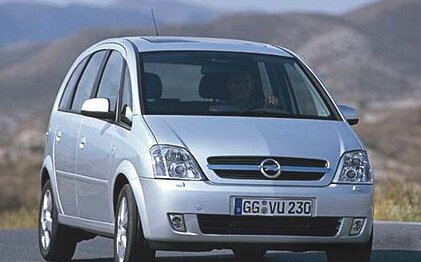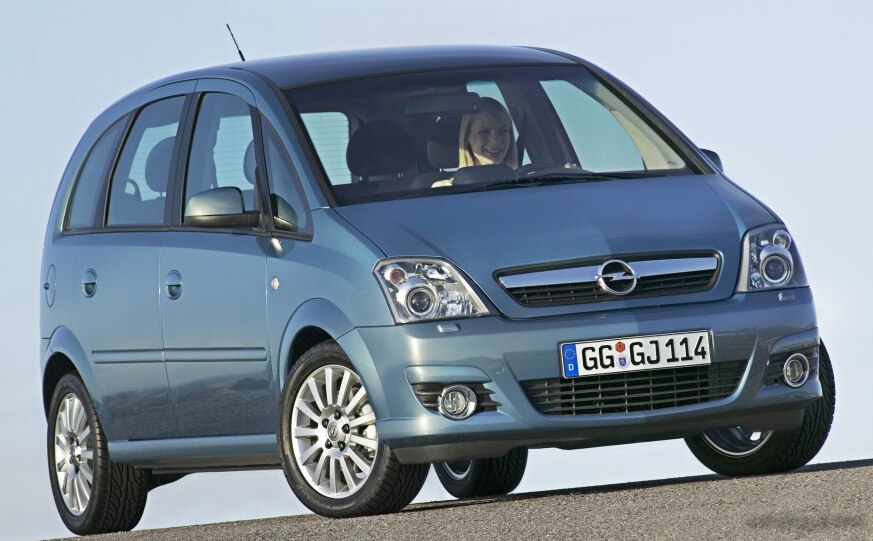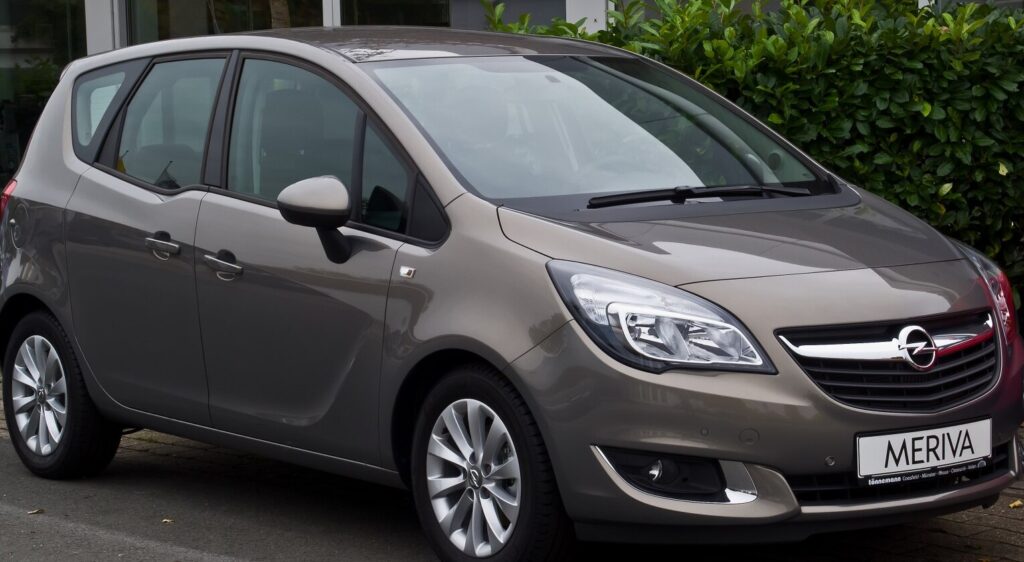
The Opel Meriva B, particularly the facelifted version introduced in January 2014, represented a significant evolution of Opel’s compact MPV offering. The 1.4 Ecotec variant, producing 100 horsepower, was a key part of the lineup from 2014 to 2017. Positioned as a mid-range option, it aimed to balance affordability with reasonable performance and fuel efficiency for family transport. This model sat within the broader Meriva B generation (2010-2017), which itself was based on the GM Gamma platform, shared with several other Opel/Vauxhall and Chevrolet models. The facelift brought revised styling, improved interior materials, and updated technology, enhancing the Meriva’s appeal in the competitive European MPV segment.
Technical Specifications
| Brand | Opel |
| Model | Meriva |
| Generation | Meriva B (facelift 2014) |
| Type (Engine) | 1.4 (100 Hp) Ecotec |
| Start of production | January, 2014 |
| End of production | January, 2017 |
| Powertrain Architecture | Internal Combustion engine |
| Body type | MPV |
| Seats | 5 |
| Doors | 5 |
| Fuel consumption (urban) | 7.6 l/100 km (30.9 US mpg, 37.2 UK mpg, 13.2 km/l) |
| Fuel consumption (extra urban) | 5 l/100 km (47 US mpg, 56.5 UK mpg, 20 km/l) |
| Fuel consumption (combined) | 6 l/100 km (39.2 US mpg, 47.1 UK mpg, 16.7 km/l) |
| CO2 emissions | 140 g/km |
| Fuel Type | Petrol (Gasoline) |
| Acceleration 0 – 100 km/h | 13.9 sec |
| Acceleration 0 – 62 mph | 13.9 sec |
| Acceleration 0 – 60 mph | 13.2 sec |
| Maximum speed | 177 km/h (109.98 mph) |
| Emission standard | Euro 6 |
| Power | 100 Hp @ 6000 rpm |
| Power per litre | 71.5 Hp/l |
| Torque | 130 Nm @ 4000 rpm (95.88 lb.-ft. @ 4000 rpm) |
| Engine layout | Front, Transverse |
| Engine Model/Code | B14XER |
| Engine displacement | 1398 cm3 (85.31 cu. in.) |
| Number of cylinders | 4 |
| Engine configuration | Inline |
| Cylinder Bore | 73.4 mm (2.89 in.) |
| Piston Stroke | 82.6 mm (3.25 in.) |
| Fuel injection system | Multi-port manifold injection |
| Engine aspiration | Naturally aspirated engine |
| Valvetrain | DOHC |
| Engine oil capacity | 4 l (4.23 US qt | 3.52 UK qt) |
| Coolant | 6 l (6.34 US qt | 5.28 UK qt) |
| Trunk (boot) space – minimum | 400 l (14.13 cu. ft.) |
| Trunk (boot) space – maximum | 1500 l (52.97 cu. ft.) |
| Fuel tank capacity | 54 l (14.27 US gal | 11.88 UK gal) |
| Length | 4300 mm (169.29 in.) |
| Width | 1912 mm (75.28 in.) |
| Height | 1615 mm (63.58 in.) |
| Wheelbase | 2644 mm (104.09 in.) |
| Front track | 1488 mm (58.58 in.) |
| Rear (Back) track | 1509 mm (59.41 in.) |
| Minimum turning circle | 11.06 m (36.29 ft.) |
| Drivetrain Architecture | The Internal combustion engine (ICE) drives the front wheels of the vehicle. |
| Drive wheel | Front wheel drive |
| Number of gears and type of gearbox | 5 gears, manual transmission |
| Front suspension | Independent type McPherson |
| Rear suspension | Elastic beam |
| Front brakes | Ventilated discs |
| Rear brakes | Disc |
| Assisting systems | ABS (Anti-lock braking system) |
| Steering type | Steering rack and pinion |
| Power steering | Electric Steering |
Powertrain & Engine Architecture
The heart of this Meriva variant is the B14XER engine, a 1.4-liter inline-four cylinder gasoline engine. This engine belongs to Opel’s Ecotec family, known for its focus on efficiency and refinement. It utilizes a naturally aspirated configuration, relying on conventional port fuel injection rather than direct injection, which was becoming more common in this era. The engine features a double overhead camshaft (DOHC) valvetrain, contributing to improved breathing and power delivery. The 1398cc displacement is achieved with a bore of 73.4mm and a stroke of 82.6mm. Paired with the engine is a five-speed manual transmission, providing a relatively conventional driving experience. While an automatic transmission was offered on other Meriva B models, the 1.4 100hp version was primarily sold with the manual gearbox in many European markets.
Driving Characteristics
The 1.4-liter, 100 horsepower engine in the Meriva B provides adequate, but not exhilarating, performance. Acceleration from 0-100 km/h takes around 13.9 seconds, making it suitable for urban and suburban driving but less ideal for frequent highway overtaking. The five-speed manual transmission is well-matched to the engine’s characteristics, offering a reasonable spread of gears. The gear ratios are tuned for fuel economy rather than outright performance. Compared to the more powerful 1.6-liter turbo engine offered in the Meriva B, or even the diesel variants, this 1.4 feels noticeably less responsive. However, it offers a smoother and quieter driving experience than the diesel, and is generally more affordable to maintain. The relatively light weight of the Meriva B helps to mitigate the engine’s modest power output.
Equipment & Trim Levels
The 1.4 Ecotec Meriva B typically came equipped with a respectable level of standard features. These included air conditioning, power windows, central locking, and an audio system with USB connectivity. Safety features such as ABS, electronic stability control, and multiple airbags were also standard. Higher trim levels, such as ‘Enjoy’ or ‘Cosmo’, added features like alloy wheels, cruise control, parking sensors, and upgraded interior trim. Interior upholstery was typically cloth, with options for more premium materials on higher trims. The dashboard layout was functional and user-friendly, with a focus on practicality. Optional extras included a panoramic sunroof, navigation system, and heated seats.
Chassis & Braking
The Meriva B utilizes a McPherson strut suspension setup at the front, providing a comfortable and controlled ride. The rear suspension employs a torsion beam (elastic beam) design, which is a cost-effective solution for compact MPVs. The front brakes are ventilated discs, offering good stopping power, while the rear brakes are solid discs. The steering is electrically assisted, providing light and precise control. The suspension tuning is geared towards comfort and ride quality, rather than sporty handling. Stabilizer bars are fitted to both the front and rear axles to reduce body roll during cornering.
Market Reception & Comparison
The Opel Meriva B, including the 1.4 Ecotec variant, was generally well-received by automotive critics as a practical and versatile MPV. The 1.4-liter engine was praised for its fuel efficiency, but criticized for its lack of outright performance. Compared to the 1.6-liter turbo engine, the 1.4 offered lower running costs but a less engaging driving experience. The diesel variants provided better fuel economy and torque, but were often more expensive to purchase and maintain. The Meriva B competed with other compact MPVs such as the Renault Scenic, Citroën C4 Picasso, and Ford C-Max. The Meriva’s flexible seating arrangement and spacious interior were key selling points.
Legacy
The Opel Meriva B 1.4 Ecotec has proven to be a relatively reliable powertrain in the used car market. The engine is generally robust and doesn’t suffer from any major inherent flaws. Regular maintenance, including oil changes and timing belt replacements, is crucial for long-term reliability. The manual transmission is also known for its durability. Today, these Merivas represent an affordable and practical option for families seeking a spacious and economical MPV. While not particularly exciting to drive, they offer a comfortable and reliable transportation solution. Parts availability remains good, and maintenance costs are generally reasonable.