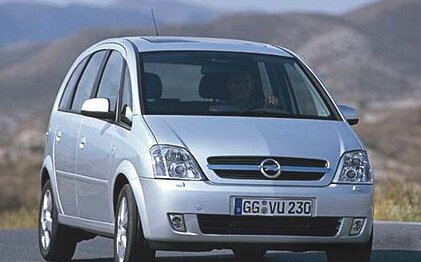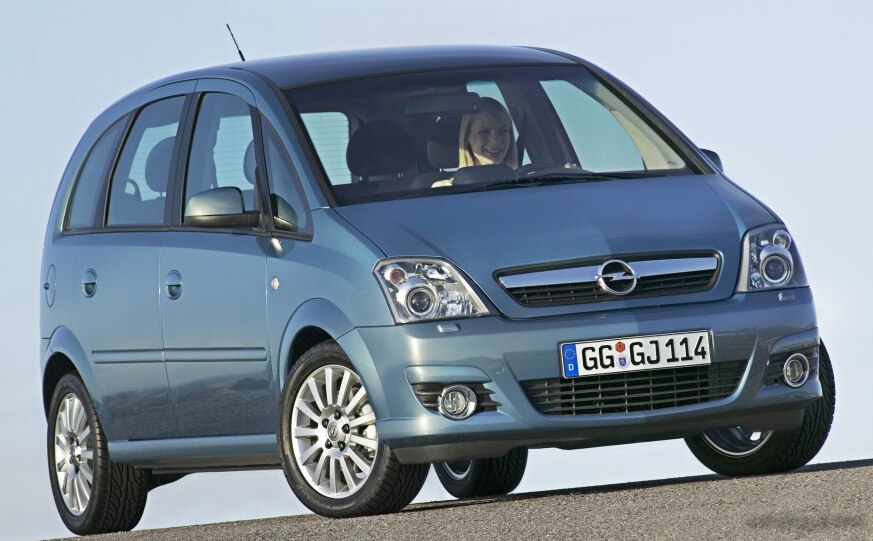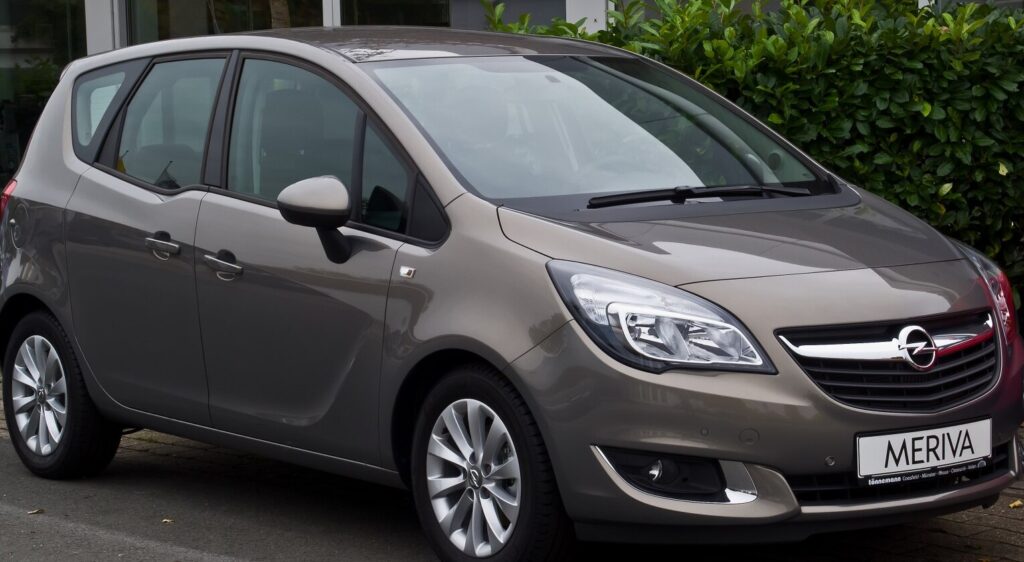
The Opel Meriva B, particularly the facelifted version introduced in 2014, represented a significant evolution of Opel’s compact MPV offering. The 1.6 CDTI (95 hp) Ecotec start/stop variant, produced from January 2014 to January 2017, was positioned as an entry-level to mid-range option within the Meriva B lineup. It aimed to provide a balance of fuel efficiency, practicality, and affordability for families and individuals seeking a versatile vehicle. This model sat within the broader context of the Meriva B (facelift), which itself was based on Opel/Vauxhall’s Gamma platform, shared with models like the Opel Astra J and the Chevrolet Cruze.
Technical Specifications
| Brand | Opel |
| Model | Meriva |
| Generation | Meriva B (facelift 2014) |
| Type (Engine) | 1.6 CDTI (95 Hp) Ecotec start/stop |
| Start of production | January, 2014 |
| End of production | January, 2017 |
| Powertrain Architecture | Internal Combustion engine |
| Body type | MPV |
| Seats | 5 |
| Doors | 5 |
| Fuel consumption (urban) | 4.5 l/100 km (52.3 US mpg, 62.8 UK mpg, 22.2 km/l) |
| Fuel consumption (extra urban) | 3.7 l/100 km (63.6 US mpg, 76.3 UK mpg, 27 km/l) |
| Fuel consumption (combined) | 4 l/100 km (58.8 US mpg, 70.6 UK mpg, 25 km/l) |
| CO2 emissions | 105 g/km |
| Fuel Type | Diesel |
| Acceleration 0 – 100 km/h | 13.8 sec |
| Acceleration 0 – 62 mph | 13.8 sec |
| Acceleration 0 – 60 mph | 13.1 sec |
| Maximum speed | 174 km/h (108.12 mph) |
| Emission standard | Euro 6 |
| Power | 95 Hp @ 3500 rpm |
| Power per litre | 59.4 Hp/l |
| Torque | 280 Nm @ 1500-1750 rpm (206.52 lb.-ft. @ 1500-1750 rpm) |
| Engine layout | Front, Transverse |
| Engine Model/Code | B16DTC |
| Engine displacement | 1598 cm3 (97.52 cu. in.) |
| Number of cylinders | 4 |
| Engine configuration | Inline |
| Cylinder Bore | 79.7 mm (3.14 in.) |
| Piston Stroke | 80.1 mm (3.15 in.) |
| Fuel injection system | Diesel Commonrail |
| Engine aspiration | Turbocharger, Intercooler |
| Valvetrain | DOHC |
| Engine oil capacity | 5 l (5.28 US qt | 4.4 UK qt) |
| Coolant | 6.2 l (6.55 US qt | 5.46 UK qt) |
| Trunk (boot) space – minimum | 400 l (14.13 cu. ft.) |
| Trunk (boot) space – maximum | 1500 l (52.97 cu. ft.) |
| Fuel tank capacity | 54 l (14.27 US gal | 11.88 UK gal) |
| Length | 4300 mm (169.29 in.) |
| Width | 1912 mm (75.28 in.) |
| Height | 1615 mm (63.58 in.) |
| Wheelbase | 2644 mm (104.09 in.) |
| Front track | 1488 mm (58.58 in.) |
| Rear (Back) track | 1509 mm (59.41 in.) |
| Minimum turning circle | 11.06 m (36.29 ft.) |
| Drivetrain Architecture | The Internal combustion engine (ICE) drives the front wheels of the vehicle. |
| Drive wheel | Front wheel drive |
| Number of gears and type of gearbox | 5 gears, manual transmission |
| Front suspension | Independent type McPherson |
| Rear suspension | Elastic beam |
| Front brakes | Ventilated discs |
| Rear brakes | Disc |
| Assisting systems | ABS (Anti-lock braking system) |
| Steering type | Steering rack and pinion |
| Power steering | Electric Steering |
Powertrain & Engine Architecture
The heart of this Meriva variant is the 1.6-liter (1598 cc) B16DTC turbodiesel engine. This engine belongs to Opel’s ‘Ecotec’ family, known for its focus on efficiency and reduced emissions. It’s an inline-four cylinder engine featuring a common-rail direct injection system, delivering fuel at high pressure directly into the combustion chamber for improved combustion and reduced noise. The engine utilizes a variable geometry turbocharger and intercooler to enhance power output and torque across a wider rev range. The DOHC (Double Overhead Camshaft) valvetrain contributes to efficient gas exchange. The 95 horsepower peak is achieved at 3500 rpm, while the 280 Nm (206.52 lb-ft) of torque is available from 1500-1750 rpm, providing good low-end responsiveness. The engine also incorporates a Start/Stop system to further improve fuel economy in urban driving conditions. The engine is paired with a five-speed manual transmission, which was the standard offering for this trim level.
Driving Characteristics
The 1.6 CDTI 95 hp Meriva B offers a practical and economical driving experience. Acceleration is not its strong suit, with a 0-62 mph (0-100 km/h) time of around 13.8 seconds. However, the readily available torque from the diesel engine makes it feel more responsive in everyday driving situations, such as overtaking or merging onto highways. The five-speed gearbox is well-matched to the engine’s characteristics, providing adequate spacing between gears. Compared to higher-output versions of the Meriva B, such as those with more powerful diesel engines or the 1.4-liter turbo petrol, this variant prioritizes fuel efficiency over outright performance. The manual transmission provides a more engaging driving experience than an automatic would, and allows the driver to better control the engine’s power delivery.
Equipment & Trim Levels
The 1.6 CDTI 95 hp Meriva B typically came equipped with a reasonable level of standard features. These included air conditioning, electric front windows, a basic audio system with USB connectivity, and ABS brakes. Safety features such as driver and passenger airbags, and stability control were also standard. Interior upholstery was typically cloth, and the dashboard featured a functional, if somewhat basic, design. Optional extras included alloy wheels, a more advanced infotainment system with touchscreen display, rear parking sensors, and cruise control. Trim levels varied slightly depending on the market, but this variant generally occupied a mid-range position, offering a good balance of features and affordability.
Chassis & Braking
The Meriva B utilizes a McPherson strut suspension setup at the front, providing a comfortable ride and decent handling. The rear suspension employs an elastic beam configuration, which is a cost-effective solution for compact MPVs. The front brakes are ventilated discs, offering good stopping power, while the rear brakes are solid discs. ABS (Anti-lock Braking System) is standard, enhancing safety during emergency braking situations. The steering is electrically assisted, providing light and precise control. The chassis is tuned to prioritize comfort and practicality over sporty handling, making it well-suited for everyday driving and family use.
Market Reception & Comparison
The Opel Meriva B 1.6 CDTI 95 hp was generally well-received by critics as a practical and fuel-efficient MPV. Its strengths lay in its spacious interior, versatile seating arrangements, and low running costs. Compared to the more powerful diesel variants, it offered a more affordable entry point into the Meriva B range, but at the expense of performance. Fuel economy was a key selling point, with combined figures of around 4.0 l/100 km (58.8 US mpg) being highly competitive in its class. Reliability was generally good, although some owners reported minor issues with the diesel particulate filter (DPF) system, a common concern with modern diesel engines.
Legacy
The 1.6 CDTI engine proved to be a relatively reliable unit, and Meriva B models equipped with this engine continue to be a popular choice on the used car market. The engine’s durability and fuel efficiency make it an attractive option for buyers seeking a practical and economical MPV. However, potential buyers should be aware of the potential for DPF issues and ensure that the vehicle has been properly maintained. The Meriva B, in general, established Opel as a strong contender in the compact MPV segment, offering a compelling alternative to rivals such as the Renault Scenic and the Citroën C4 Picasso.