
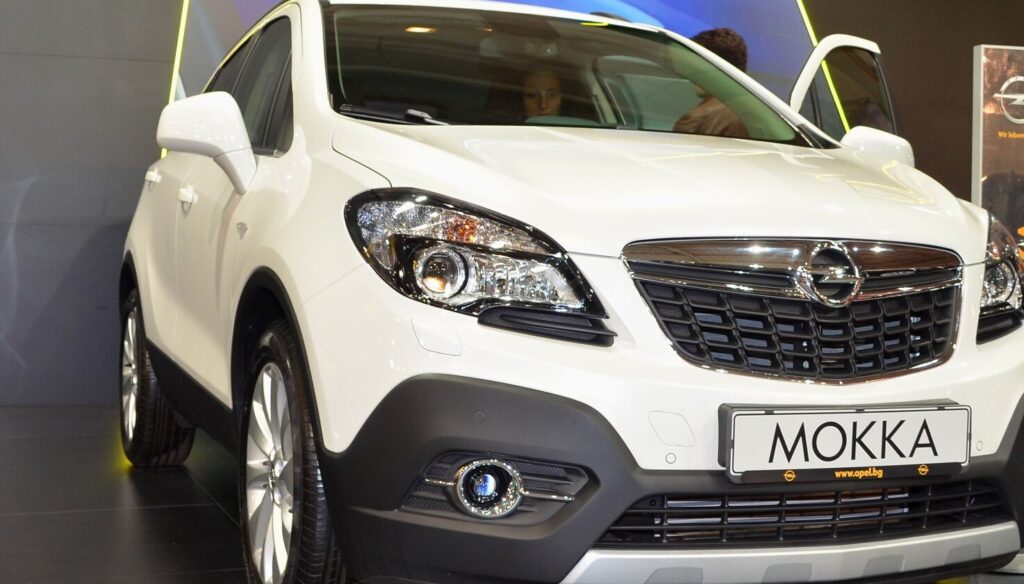
The Opel Mokka 1.7 CDTI Ecotec, produced from October 2012 to 2015, represented a key entry point into Opel’s burgeoning SUV lineup. Positioned as a fuel-efficient and practical option within the first generation Mokka (J13) series, this variant aimed to attract buyers seeking the style and versatility of a small SUV with the economy of a diesel engine. It played a significant role in establishing the Mokka as a popular choice in the European market, competing with vehicles like the Nissan Juke and Peugeot 2008. This specific configuration – the 1.7-liter CDTI paired with a six-speed automatic transmission – offered a balance between affordability and convenience, though it differed significantly in performance and driving experience from its more powerful gasoline counterparts.
Technical Specifications
| Brand | Opel |
| Model | Mokka |
| Generation | Mokka |
| Type (Engine) | 1.7 CDTI (130 Hp) Ecotec |
| Start of production | October, 2012 |
| End of production | 2015 |
| Powertrain Architecture | Internal Combustion engine |
| Body type | SUV |
| Seats | 5 |
| Doors | 5 |
| Fuel consumption (urban) | 6.4 l/100 km (36.8 US mpg, 44.1 UK mpg, 15.6 km/l) |
| Fuel consumption (extra urban) | 4.6 l/100 km (51.1 US mpg, 61.4 UK mpg, 21.7 km/l) |
| Fuel consumption (combined) | 5.3 l/100 km (44.4 US mpg, 53.3 UK mpg, 18.9 km/l) |
| CO2 emissions | 139 g/km |
| Fuel Type | Diesel |
| Acceleration 0 – 100 km/h | 10.5 sec |
| Acceleration 0 – 62 mph | 10.5 sec |
| Acceleration 0 – 60 mph | 10 sec |
| Maximum speed | 184 km/h (114.33 mph) |
| Emission standard | Euro 5 |
| Weight-to-power ratio | 11.5 kg/Hp, 87.2 Hp/tonne |
| Weight-to-torque ratio | 5 kg/Nm, 201.3 Nm/tonne |
| Power | 130 Hp @ 4000 rpm |
| Power per litre | 77.1 Hp/l |
| Torque | 300 Nm @ 2000-2500 rpm (221.27 lb.-ft. @ 2000-2500 rpm) |
| Engine layout | Front, Transverse |
| Engine Model/Code | A17DTS |
| Engine displacement | 1686 cm3 (102.89 cu. in.) |
| Number of cylinders | 4 |
| Engine configuration | Inline |
| Cylinder Bore | 79 mm (3.11 in.) |
| Piston Stroke | 86 mm (3.39 in.) |
| Fuel injection system | Diesel Commonrail |
| Engine aspiration | Turbocharger, Intercooler |
| Engine oil capacity | 4.5 l (4.76 US qt | 3.96 UK qt) |
| Kerb Weight | 1490 kg (3284.89 lbs.) |
| Max. weight | 1959 kg (4318.86 lbs.) |
| Max load | 469 kg (1033.97 lbs.) |
| Trunk (boot) space – minimum | 356 l (12.57 cu. ft.) |
| Trunk (boot) space – maximum | 1372 l (48.45 cu. ft.) |
| Fuel tank capacity | 54 l (14.27 US gal | 11.88 UK gal) |
| Length | 4278 mm (168.43 in.) |
| Width | 1658 mm (65.28 in.) |
| Height | 1777 mm (69.96 in.) |
| Wheelbase | 2555 mm (100.59 in.) |
| Front track | 1540 mm (60.63 in.) |
| Rear (Back) track | 1540 mm (60.63 in.) |
| Minimum turning circle | 10.8 m (35.43 ft.) |
| Drivetrain Architecture | Front wheel drive |
| Number of gears and type of gearbox | 6 gears, automatic transmission |
| Front suspension | Independent type McPherson |
| Rear suspension | Semi-independent, coil spring |
| Front brakes | Ventilated discs |
| Rear brakes | Disc |
| Assisting systems | ABS (Anti-lock braking system) |
| Steering type | Steering rack and pinion |
| Tires size | 215/55 R18 |
| Wheel rims size | 18 |
Powertrain & Engine Architecture
The heart of the Mokka 1.7 CDTI Ecotec is the A17DTS engine, a 1.7-liter inline-four cylinder diesel. This engine is part of Opel/Vauxhall’s ‘Ecotec’ family, designed with fuel efficiency and reduced emissions in mind. It utilizes a common rail direct injection system, delivering fuel directly into the combustion chamber at extremely high pressure for optimized combustion. A turbocharger with an intercooler is employed to boost power output and improve torque across a wider rev range. The engine produces 130 horsepower at 4000 rpm and a respectable 300 Nm (221 lb-ft) of torque between 2000 and 2500 rpm. This torque figure is a key characteristic of diesel engines, providing strong pulling power at lower engine speeds. The engine also incorporates a diesel particulate filter (DPF) to reduce harmful emissions, meeting Euro 5 standards. The engine is transversely mounted in the front of the vehicle. The six-speed automatic transmission, while offering convenience, is a traditional torque converter type, known for its smooth operation but less direct feel compared to modern dual-clutch transmissions.
Driving Characteristics
The 1.7 CDTI automatic Mokka delivers a comfortable, if not particularly sporty, driving experience. Acceleration from 0-100 km/h (0-62 mph) takes around 10.5 seconds, which is adequate for everyday driving but noticeably slower than the 1.4-liter turbocharged gasoline versions. The automatic transmission is programmed for fuel efficiency, meaning it upshifts quickly and doesn’t hold gears for long, which can sometimes result in the engine feeling strained during overtaking maneuvers. The abundance of low-end torque, however, makes it well-suited for city driving and cruising on the highway. The gear ratios are optimized for economy rather than performance. Compared to the manual transmission version of the same engine, the automatic sacrifices some responsiveness, but offers greater ease of use, especially in congested traffic.
Equipment & Trim Levels
The Mokka 1.7 CDTI Ecotec was typically offered in mid-range trim levels, often designated as ‘Enjoy’ or ‘Edition’. Standard equipment generally included air conditioning, a CD/MP3 stereo system, electric front windows, remote central locking, and stability control. Higher trim levels added features such as alloy wheels, a touchscreen infotainment system, rear parking sensors, and cruise control. Interior upholstery was typically cloth, with options for leather upgrades. The dashboard layout was functional and straightforward, prioritizing usability over outright style. Optional extras included a panoramic sunroof, heated seats, and a more advanced navigation system.
Chassis & Braking
The Mokka’s chassis utilizes an independent McPherson strut suspension at the front and a semi-independent coil spring setup at the rear. This configuration provides a reasonable balance between ride comfort and handling. The front brakes are ventilated discs, offering good stopping power, while the rear brakes are solid discs. Anti-lock Braking System (ABS) is standard. The Mokka 1.7 CDTI, being one of the heavier variants due to the diesel engine and automatic transmission, benefits from a slightly stiffer suspension setup compared to the lighter gasoline models to maintain stability and control. Stabilizer bars are fitted to both the front and rear axles to reduce body roll during cornering.
Market Reception & Comparison
The Opel Mokka 1.7 CDTI Ecotec was generally well-received by critics for its fuel efficiency and practicality. However, some reviewers noted the engine’s lack of refinement compared to some of its competitors, and the automatic transmission was sometimes criticized for its sluggishness. Fuel economy was a strong point, with combined figures around 5.3 l/100 km (44.4 US mpg), making it an attractive option for drivers covering long distances. Compared to the 1.4-liter gasoline versions, the 1.7 CDTI offered significantly better fuel economy but less outright performance. The 1.7 CDTI was also a more affordable option than the higher-powered 1.6-liter gasoline turbo.
Legacy
The Opel Mokka 1.7 CDTI Ecotec has proven to be a relatively reliable powertrain in the used car market. The A17DTS engine, while not without its potential issues (such as DPF clogging if not properly maintained), is generally robust and capable of high mileage. The automatic transmission is also known to be durable. However, potential buyers should be aware of the importance of regular servicing, particularly regarding the DPF and timing chain. Today, these Mokkas represent an affordable entry point into the compact SUV segment, offering a practical and economical option for those seeking a versatile vehicle.
