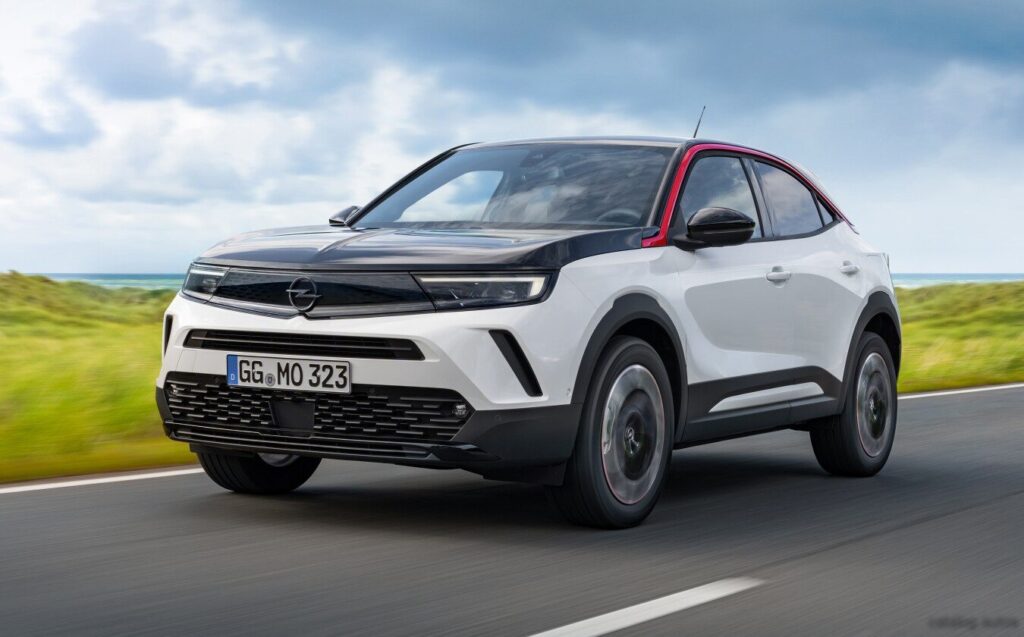
The Opel Mokka B 1.2 Turbo, producing 100 horsepower, was a key variant in the second generation of Opel’s popular subcompact SUV, the Mokka B (introduced in 2020). Positioned as an entry-level offering within the Mokka B range, it aimed to provide an accessible and fuel-efficient option for buyers seeking a stylish and practical small SUV. Production of this specific configuration ran from 2020 until October 2024, playing a significant role in establishing the Mokka B as a competitive force in the European market. The Mokka B represented a substantial departure from its predecessor, moving to Opel’s Common Modular Platform (CMP) shared with Peugeot and Citroën, resulting in a lighter and more modern vehicle.
Technical Specifications
| Brand | Opel |
| Model | Mokka |
| Generation | Mokka B |
| Type (Engine) | 1.2 Turbo (100 Hp) |
| Start of production | 2020 |
| End of production | October, 2024 |
| Powertrain Architecture | Internal Combustion engine |
| Body type | SUV |
| Seats | 5 |
| Doors | 5 |
| Combined fuel consumption (WLTP) | 5.5-5.7 l/100 km (42.8 – 41.3 US mpg, 51.4 – 49.6 UK mpg, 18.2 – 17.5 km/l) |
| CO2 emissions (WLTP) | 124-128 g/km |
| Fuel consumption (economy) – urban (NEDC) | 5.5 l/100 km (42.8 US mpg, 51.4 UK mpg, 18.2 km/l) |
| Fuel consumption (economy) – extra urban (NEDC) | 4 l/100 km (58.8 US mpg, 70.6 UK mpg, 25 km/l) |
| Fuel consumption (economy) – combined (NEDC) | 4.6 l/100 km (51.1 US mpg, 61.4 UK mpg, 21.7 km/l) |
| CO2 emissions (NEDC) | 104 g/km |
| Fuel Type | Petrol (Gasoline) |
| Acceleration 0 – 100 km/h | 10.6 sec |
| Acceleration 0 – 62 mph | 10.6 sec |
| Acceleration 0 – 60 mph | 10.1 sec |
| Maximum speed | 188 km/h (116.82 mph) |
| Emission standard | Euro 6d |
| Weight-to-power ratio | 12 kg/Hp, 83.7 Hp/tonne |
| Weight-to-torque ratio | 5.8 kg/Nm, 171.5 Nm/tonne |
| Power | 100 Hp @ 5000 rpm |
| Power per litre | 83.4 Hp/l |
| Torque | 205 Nm @ 1750 rpm (151.2 lb.-ft. @ 1750 rpm) |
| Engine layout | Front, Transverse |
| Engine Model/Code | F12XHL |
| Engine displacement | 1199 cm3 (73.17 cu. in.) |
| Number of cylinders | 3 |
| Engine configuration | Inline |
| Number of valves per cylinder | 4 |
| Fuel injection system | Direct injection |
| Engine aspiration | Turbocharger, Intercooler |
| Valvetrain | DOHC |
| Engine oil capacity | 3.5 l (3.7 US qt | 3.08 UK qt) |
| Kerb Weight | 1195 kg (2634.52 lbs.) |
| Max. weight | 1700 kg (3747.86 lbs.) |
| Max load | 505 kg (1113.33 lbs.) |
| Trunk (boot) space – minimum | 350 l (12.36 cu. ft.) |
| Trunk (boot) space – maximum | 1105 l (39.02 cu. ft.) |
| Fuel tank capacity | 44 l (11.62 US gal | 9.68 UK gal) |
| Max. roof load | 70 kg (154.32 lbs.) |
| Permitted trailer load with brakes (12%) | 1200 kg (2645.55 lbs.) |
| Permitted trailer load without brakes | 620 kg (1366.87 lbs.) |
| Permitted towbar download | 55 kg (121.25 lbs.) |
| Length | 4151 mm (163.43 in.) |
| Width | 1791 mm (70.51 in.) |
| Width including mirrors | 1987 mm (78.23 in.) |
| Height | 1531 mm (60.28 in.) |
| Wheelbase | 2557 mm (100.67 in.) |
| Front track | 1548 mm (60.94 in.) |
| Rear (Back) track | 1548 mm (60.94 in.) |
| Drag coefficient (Cd) | 0.32 |
| Minimum turning circle (turning diameter) | 11.08 m (36.35 ft.) |
| Drivetrain Architecture | The Internal combustion engine (ICE) drives the front wheels of the vehicle. |
| Drive wheel | Front wheel drive |
| Number of gears and type of gearbox | 6 gears, manual transmission |
| Assisting systems | ABS (Anti-lock braking system) |
| Tires size | 215/65 R 16 |
| Wheel rims size | 6.5 J x 16 |
Powertrain & Engine Architecture
The heart of the Mokka B 1.2 Turbo is the F12XHL engine, a 1.2-liter, three-cylinder turbocharged gasoline engine. This engine is part of Opel’s (and PSA Group’s) “PureTech” family of engines, known for its compact size, lightweight construction, and efficiency. The engine utilizes direct fuel injection, which improves combustion efficiency and reduces emissions. A single turbocharger with an intercooler provides forced induction, boosting power output. The engine features a Double Overhead Camshaft (DOHC) valvetrain with four valves per cylinder, optimizing gas flow for improved performance. The 100 horsepower output is achieved at 5000 rpm, while peak torque of 205 Nm (151.2 lb-ft) is delivered at a low 1750 rpm, providing good responsiveness in everyday driving situations. This engine was paired with a six-speed manual transmission in this configuration, prioritizing fuel economy over outright performance.
Driving Characteristics
The 1.2 Turbo 100 hp variant of the Mokka B offers a comfortable and practical driving experience, geared towards urban and suburban commuting. Acceleration from 0-100 km/h (0-62 mph) takes approximately 10.6 seconds, which is adequate but not particularly brisk. The low-end torque provided by the turbocharger makes it feel more responsive than its horsepower figure might suggest, especially during overtaking maneuvers. The six-speed manual transmission allows for precise gear selection, but the gear ratios are tuned for fuel efficiency rather than sporty performance. Compared to higher-output versions of the Mokka B, such as those with 130 hp, this variant feels noticeably less powerful, particularly when fully loaded or tackling steep inclines. However, the lighter engine weight contributes to a more balanced feel in corners.
Equipment & Trim Levels
The 1.2 Turbo 100 hp Mokka B typically came equipped with a respectable level of standard features. These generally included air conditioning, a touchscreen infotainment system with smartphone integration (Apple CarPlay and Android Auto), power windows and mirrors, and a suite of safety features such as ABS, electronic stability control, and multiple airbags. Interior upholstery was typically cloth, with a functional and durable design. Optional extras included alloy wheels, a larger touchscreen display, a rearview camera, parking sensors, and advanced driver-assistance systems (ADAS) like lane departure warning and automatic emergency braking. Trim levels varied slightly depending on the market, but this engine was generally offered in base or mid-range trims.
Chassis & Braking
The Mokka B’s chassis is based on the CMP platform, which prioritizes lightweight construction and rigidity. The suspension consists of MacPherson struts at the front and a torsion beam setup at the rear. This configuration provides a comfortable ride quality, absorbing bumps and imperfections in the road surface effectively. The braking system typically features disc brakes on the front wheels and drum brakes on the rear wheels, providing adequate stopping power for the vehicle’s weight and performance. Stabilizer bars are included on both axles to reduce body roll during cornering.
Market Reception & Comparison
The Opel Mokka B 1.2 Turbo was generally well-received by automotive critics as a practical and affordable entry point into the subcompact SUV segment. Its fuel efficiency and low running costs were particularly praised. However, some reviewers noted that the engine could feel strained when pushed hard, and the acceleration was not as quick as some competitors. Compared to the more powerful 130 hp version, the 100 hp model offered a more economical option, appealing to buyers who prioritized fuel savings over performance. The 1.5-liter diesel variants offered even better fuel economy but came with a higher purchase price and potential concerns about diesel emissions regulations.
Legacy
The 1.2 Turbo engine, in general, has proven to be a relatively reliable powertrain, although some early models experienced issues with the timing chain. Regular maintenance, including oil changes and adherence to the manufacturer’s service schedule, is crucial for ensuring long-term reliability. On the used car market, the Mokka B 1.2 Turbo 100 hp represents a good value proposition, offering a stylish and practical SUV at an affordable price. Its fuel efficiency and relatively low maintenance costs make it an attractive option for budget-conscious buyers. The Mokka B, as a whole, helped to revitalize Opel’s SUV lineup and establish the brand as a competitive player in the European market.