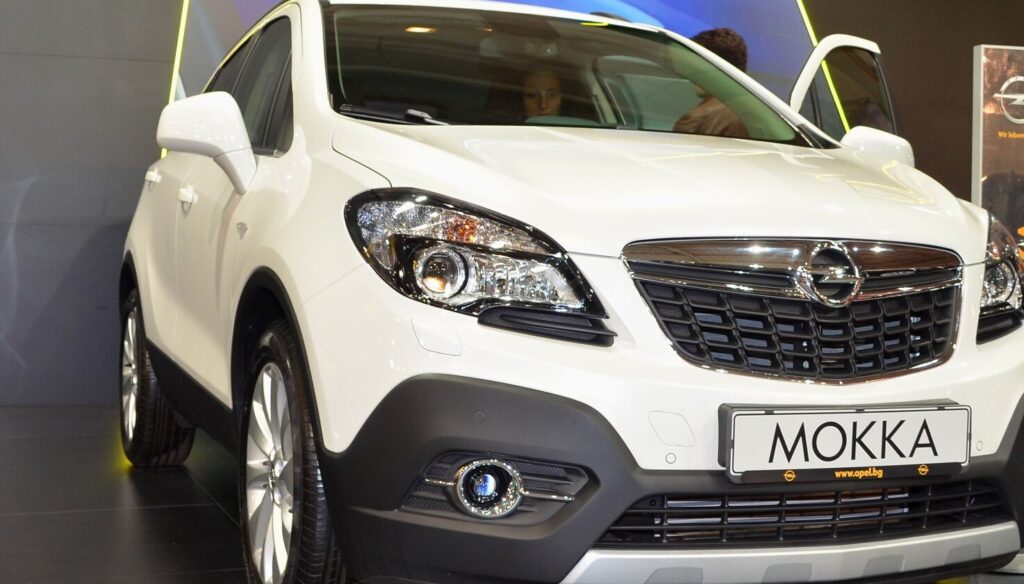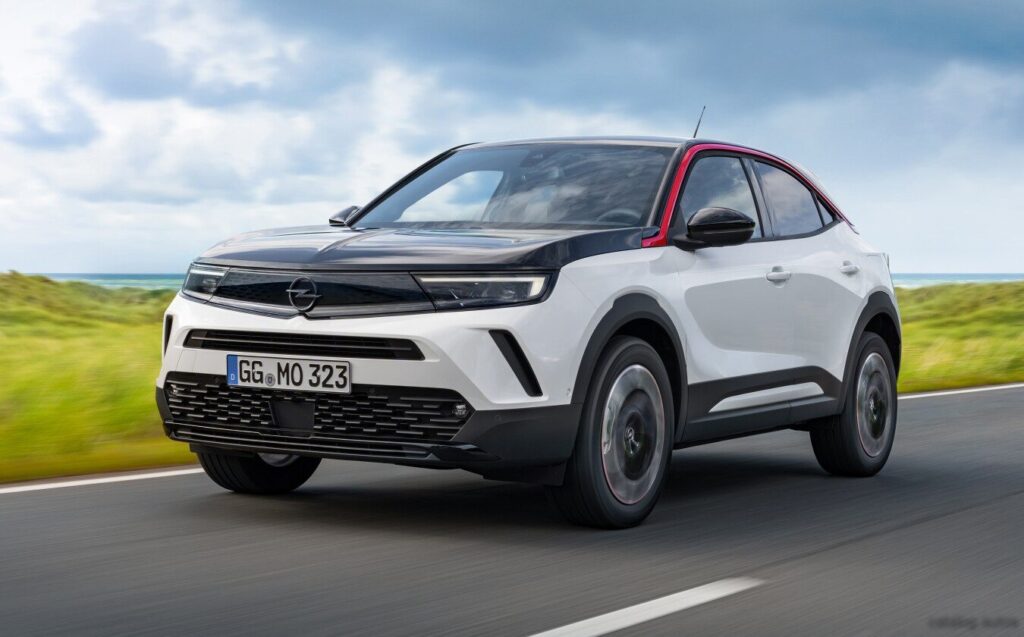
The Opel Mokka B 1.2 Turbo, producing 130 horsepower, represents a significant iteration in Opel’s compact SUV offerings. Introduced in 2020 and continuing through October 2024, this variant played a key role in the second generation (B) of the Mokka, positioned as a mainstream choice within the lineup. Built on the Common Modular Platform (CMP) shared with Peugeot and Citroën, the Mokka B aimed to modernize Opel’s image with a bolder design and updated technology. This specific engine and transmission combination targeted buyers seeking a balance between fuel efficiency, affordability, and everyday usability.
Technical Specifications
| Brand | Opel |
| Model | Mokka |
| Generation | Mokka B |
| Type (Engine) | 1.2 Turbo (130 Hp) |
| Start of production | 2020 |
| End of production | October, 2024 |
| Powertrain Architecture | Internal Combustion engine |
| Body type | SUV |
| Seats | 5 |
| Doors | 5 |
| Combined fuel consumption (WLTP) | 5.5-5.6 l/100 km (42.8 – 42 US mpg, 51.4 – 50.4 UK mpg, 18.2 – 17.9 km/l) |
| CO2 emissions (WLTP) | 123-126 g/km |
| Fuel consumption (economy) – urban (NEDC) | 5.3 l/100 km (44.4 US mpg, 53.3 UK mpg, 18.9 km/l) |
| Fuel consumption (economy) – extra urban (NEDC) | 4 l/100 km (58.8 US mpg, 70.6 UK mpg, 25 km/l) |
| Fuel consumption (economy) – combined (NEDC) | 4.5 l/100 km (52.3 US mpg, 62.8 UK mpg, 22.2 km/l) |
| CO2 emissions (NEDC) | 103 g/km |
| Fuel Type | Petrol (Gasoline) |
| Acceleration 0 – 100 km/h | 9.1 sec |
| Acceleration 0 – 62 mph | 9.1 sec |
| Acceleration 0 – 60 mph | 8.6 sec |
| Maximum speed | 202 km/h (125.52 mph) |
| Emission standard | Euro 6d |
| Weight-to-power ratio | 9.2 kg/Hp, 108.3 Hp/tonne |
| Weight-to-torque ratio | 5.2 kg/Nm, 191.7 Nm/tonne |
| Power | 130 Hp @ 5500 rpm |
| Power per litre | 108.4 Hp/l |
| Torque | 230 Nm @ 1750 rpm (169.64 lb.-ft. @ 1750 rpm) |
| Engine layout | Front, Transverse |
| Engine Model/Code | F12XHT |
| Engine displacement | 1199 cm3 (73.17 cu. in.) |
| Number of cylinders | 3 |
| Engine configuration | Inline |
| Number of valves per cylinder | 4 |
| Fuel injection system | Direct injection |
| Engine aspiration | Turbocharger, Intercooler |
| Valvetrain | DOHC |
| Engine oil capacity | 3.5 l (3.7 US qt | 3.08 UK qt) |
| Kerb Weight | 1200 kg (2645.55 lbs.) |
| Max. weight | 1715 kg (3780.93 lbs.) |
| Max load | 515 kg (1135.38 lbs.) |
| Trunk (boot) space – minimum | 350 l (12.36 cu. ft.) |
| Trunk (boot) space – maximum | 1105 l (39.02 cu. ft.) |
| Fuel tank capacity | 44 l (11.62 US gal | 9.68 UK gal) |
| Max. roof load | 70 kg (154.32 lbs.) |
| Permitted trailer load with brakes (12%) | 1200 kg (2645.55 lbs.) |
| Permitted trailer load without brakes | 620 kg (1366.87 lbs.) |
| Permitted towbar download | 55 kg (121.25 lbs.) |
| Length | 4151 mm (163.43 in.) |
| Width | 1791 mm (70.51 in.) |
| Width including mirrors | 1987 mm (78.23 in.) |
| Height | 1531 mm (60.28 in.) |
| Wheelbase | 2557 mm (100.67 in.) |
| Front track | 1548 mm (60.94 in.) |
| Rear (Back) track | 1548 mm (60.94 in.) |
| Drag coefficient (Cd) | 0.32 |
| Minimum turning circle (turning diameter) | 11.08 m (36.35 ft.) |
| Drivetrain Architecture | The Internal combustion engine (ICE) drives the front wheels of the vehicle. |
| Drive wheel | Front wheel drive |
| Number of gears and type of gearbox | 6 gears, manual transmission |
Powertrain & Engine Architecture
The heart of the Mokka B 1.2 Turbo is the F12XHT engine, a 1.2-liter, three-cylinder turbocharged gasoline engine. This engine is part of Opel’s Small Engine Family, known for its compact size and efficiency. It utilizes direct fuel injection, delivering fuel directly into the combustion chamber for improved combustion and reduced emissions. The engine also features a turbocharger with an intercooler, enhancing power output by forcing more air into the cylinders. The valvetrain employs a Double Overhead Camshaft (DOHC) configuration, optimizing valve timing for improved performance across the rev range. The 6-speed manual transmission was standard, providing a balance between fuel economy and driver engagement. A Start & Stop system was included as standard, further contributing to fuel savings. The engine also incorporates a particulate filter to reduce emissions, meeting stringent Euro 6d standards.
Driving Characteristics
The 130 hp 1.2 Turbo engine in the Mokka B provides adequate performance for everyday driving. Acceleration from 0 to 60 mph takes approximately 8.6 seconds, and top speed is around 125 mph. While not a particularly sporty setup, the turbocharger provides a noticeable boost in power, especially at lower engine speeds. The 6-speed manual transmission allows for precise gear selection, but the engine’s relatively low torque output (230 Nm or 169.64 lb-ft) means frequent downshifts are often necessary when overtaking or climbing hills. Compared to higher-output versions of the Mokka B, this variant prioritizes fuel economy over outright performance. The gear ratios are tuned for efficiency, resulting in a comfortable and economical driving experience, but at the expense of rapid acceleration.
Equipment & Trim Levels
The 1.2 Turbo 130 hp variant of the Mokka B typically came with a reasonable level of standard equipment. This included air conditioning, a touchscreen infotainment system with Apple CarPlay and Android Auto compatibility, and a suite of safety features such as lane departure warning and automatic emergency braking. Interior upholstery was typically cloth, with options for upgraded materials available. Higher trim levels added features like a larger touchscreen, navigation system, heated seats, and parking sensors. The dashboard design was modern and minimalist, reflecting Opel’s new design language. Optional extras included a panoramic sunroof, adaptive cruise control, and a premium sound system.
Chassis & Braking
The Mokka B’s chassis is tuned for comfort and stability. The front suspension utilizes MacPherson struts, while the rear suspension employs a torsion beam setup. This configuration provides a good balance between ride quality and handling. The braking system consists of disc brakes on the front wheels and drum brakes on the rear wheels. Anti-lock Braking System (ABS) is standard, enhancing braking performance and safety. The steering is electrically assisted, providing light and precise control. Stabilizer bars are fitted to both the front and rear axles to reduce body roll during cornering.
Market Reception & Comparison
The Opel Mokka B 1.2 Turbo was generally well-received by critics as a practical and affordable compact SUV. Its fuel economy was praised, with combined fuel consumption figures ranging from 5.5 to 5.6 liters per 100 kilometers (42.8 – 42 US mpg). However, some reviewers noted that the engine could feel underpowered when fully loaded or driving uphill. Compared to other trims in the Mokka B lineup, such as the diesel variants, the 1.2 Turbo offered a lower purchase price but slightly reduced fuel economy and performance. It positioned itself as a strong competitor against other small SUVs like the Renault Captur and Peugeot 2008.
Legacy
The 1.2 Turbo engine has proven to be relatively reliable in the Mokka B, with few widespread mechanical issues reported. The engine’s direct injection system and turbocharger require regular maintenance, such as oil changes and spark plug replacements, to ensure optimal performance and longevity. On the used car market, the Mokka B 1.2 Turbo represents a good value proposition for buyers seeking an affordable and fuel-efficient compact SUV. Its modern design, comfortable interior, and reasonable running costs make it a popular choice among used car buyers. The CMP platform’s modularity also means that parts availability is generally good, contributing to lower maintenance costs.