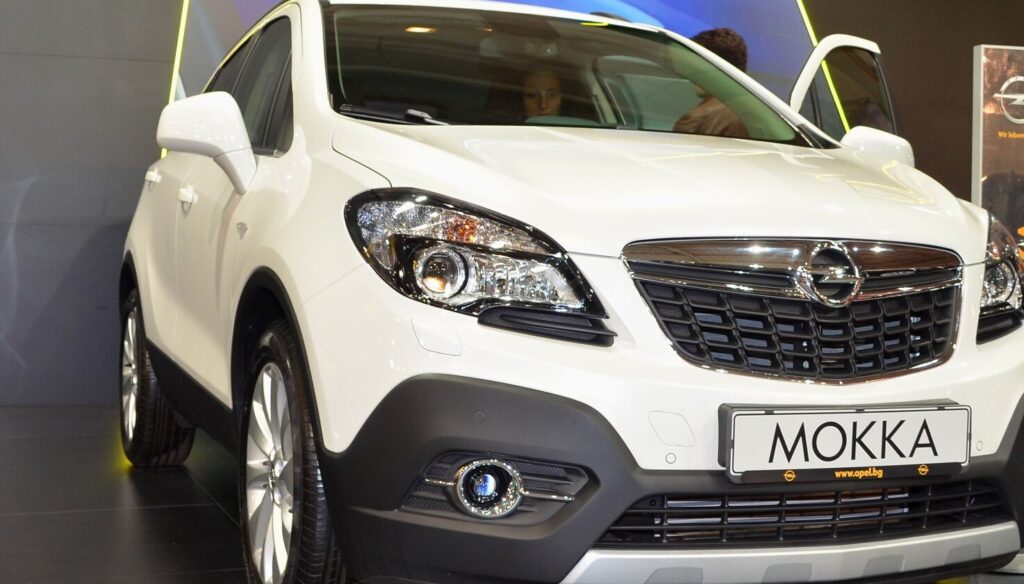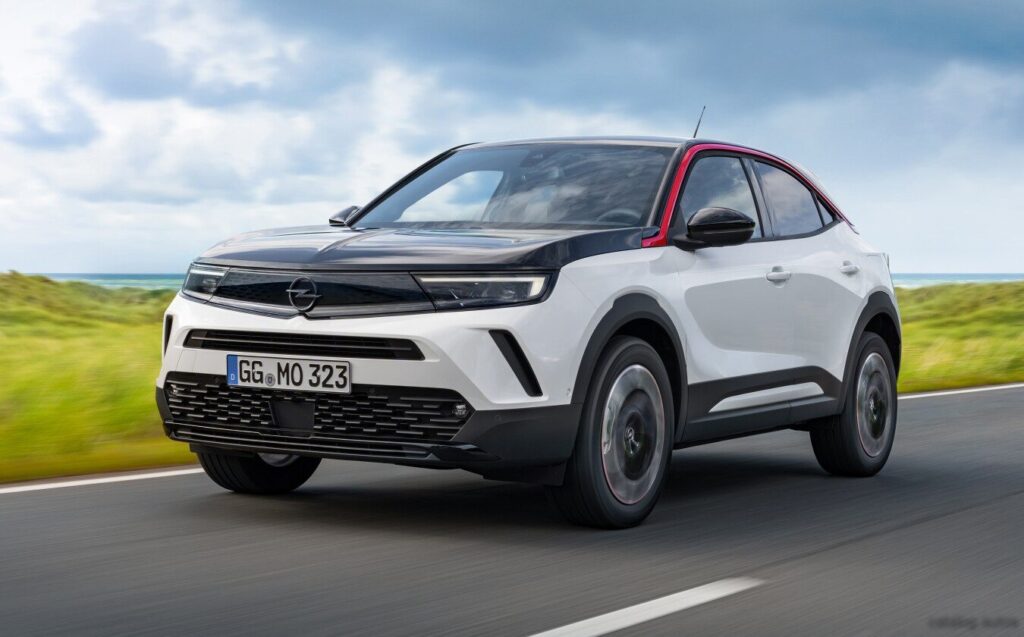
The Opel Mokka B 1.2 Turbo, producing 136 horsepower, represents a significant iteration in Opel’s compact SUV lineup. Introduced in 2023 and continuing through October 2024, this variant occupied a key position within the Mokka B range, offering a balance between fuel efficiency, performance, and affordability. Built on the Common Modular Platform (CMP) shared with other Stellantis brands, the Mokka B marked a departure from its predecessor with a completely redesigned exterior and a more modern interior. This specific 1.2 Turbo engine and six-speed manual transmission combination aimed to appeal to a broad customer base seeking a practical and stylish urban SUV.
Technical Specifications
| Brand | Opel |
| Model | Mokka |
| Generation | Mokka B |
| Type (Engine) | 1.2 Turbo (136 Hp) |
| Start of production | 2023 |
| End of production | October, 2024 |
| Powertrain Architecture | Internal Combustion engine |
| Body type | SUV |
| Seats | 5 |
| Doors | 5 |
| Fuel consumption at Low speed (WLTP) | 6.3-7.2 l/100 km (37.3 – 32.7 US mpg, 44.8 – 39.2 UK mpg, 15.9 – 13.9 km/l) |
| Fuel consumption at Medium speed (WLTP) | 5-5.7 l/100 km (47 – 41.3 US mpg, 56.5 – 49.6 UK mpg, 20 – 17.5 km/l) |
| Fuel consumption at high speed (WLTP) | 4.5-5.4 l/100 km (52.3 – 43.6 US mpg, 62.8 – 52.3 UK mpg, 22.2 – 18.5 km/l) |
| Fuel consumption at very high speed (WLTP) | 5.5-6.6 l/100 km (42.8 – 35.6 US mpg, 51.4 – 42.8 UK mpg, 18.2 – 15.2 km/l) |
| Combined fuel consumption (WLTP) | 5.5-5.6 l/100 km (42.8 – 42 US mpg, 51.4 – 50.4 UK mpg, 18.2 – 17.9 km/l) |
| CO2 emissions (WLTP) | 124-126 g/km |
| Fuel Type | Petrol (Gasoline) |
| Acceleration 0 – 100 km/h | 9.1 sec |
| Acceleration 0 – 62 mph | 9.1 sec |
| Acceleration 0 – 60 mph | 8.6 sec |
| Maximum speed | 204 km/h (126.76 mph) |
| Emission standard | Euro 6e |
| Weight-to-power ratio | 8.8 kg/Hp, 113.3 Hp/tonne |
| Weight-to-torque ratio | 5.2 kg/Nm, 191.7 Nm/tonne |
| Power | 136 Hp @ 6000 rpm |
| Power per litre | 113.4 Hp/l |
| Torque | 230 Nm @ 1750 rpm (169.64 lb.-ft. @ 1750 rpm) |
| Engine layout | Front, Transverse |
| Engine Model/Code | EB2LTD |
| Engine displacement | 1199 cm3 (73.17 cu. in.) |
| Number of cylinders | 3 |
| Engine configuration | Inline |
| Cylinder Bore | 75 mm (2.95 in.) |
| Piston Stroke | 90.5 mm (3.56 in.) |
| Number of valves per cylinder | 4 |
| Fuel injection system | Direct injection |
| Engine aspiration | Turbocharger, Intercooler |
| Valvetrain | DOHC |
| Kerb Weight | 1200 kg (2645.55 lbs.) |
| Max. weight | 1715 kg (3780.93 lbs.) |
| Max load | 515 kg (1135.38 lbs.) |
| Trunk (boot) space – minimum | 350 l (12.36 cu. ft.) |
| Trunk (boot) space – maximum | 1105 l (39.02 cu. ft.) |
| Fuel tank capacity | 44 l (11.62 US gal | 9.68 UK gal) |
| Max. roof load | 75 kg (165.35 lbs.) |
| Permitted trailer load with brakes (12%) | 1200 kg (2645.55 lbs.) |
| Permitted trailer load without brakes | 620 kg (1366.87 lbs.) |
| Permitted towbar download | 55 kg (121.25 lbs.) |
| Length | 4151 mm (163.43 in.) |
| Width | 1791 mm (70.51 in.) |
| Width including mirrors | 1987 mm (78.23 in.) |
| Height | 1534 mm (60.39 in.) |
| Wheelbase | 2557 mm (100.67 in.) |
| Front track | 1548 mm (60.94 in.) |
| Rear (Back) track | 1548 mm (60.94 in.) |
| Front overhang | 881 mm (34.69 in.) |
| Rear overhang | 712 mm (28.03 in.) |
| Minimum turning circle (turning diameter) | 11.08 m (36.35 ft.) |
| Drivetrain Architecture | The Internal combustion engine (ICE) drives the front wheels of the vehicle. |
| Drive wheel | Front wheel drive |
| Number of gears and type of gearbox | 6 gears, manual transmission |
Powertrain & Engine Architecture
The heart of the Mokka B 1.2 Turbo is the EB2LTD engine, a 1.2-liter, three-cylinder turbocharged gasoline engine. This engine is part of the PureTech family developed by the PSA Group (now part of Stellantis). It features direct fuel injection, a single-scroll turbocharger, and a cooled exhaust gas recirculation (EGR) system to optimize combustion and reduce emissions. The engine utilizes a double overhead camshaft (DOHC) valvetrain with four valves per cylinder. The six-speed manual transmission provides a relatively direct connection to the front wheels. This engine code is known for its responsiveness and relatively smooth operation for a three-cylinder unit. The turbocharger helps to mitigate the typical lack of low-end torque often associated with smaller displacement engines.
Driving Characteristics
The 136 hp 1.2 Turbo engine in the Mokka B delivers adequate performance for everyday driving. Acceleration from 0-60 mph takes approximately 8.6 seconds, and the car reaches a top speed of 126.76 mph. While not particularly sporty, the engine provides sufficient power for overtaking maneuvers and maintaining comfortable cruising speeds on the highway. The six-speed manual transmission allows for precise gear selection, and the relatively short gear ratios contribute to a feeling of responsiveness. Compared to higher-output versions of the Mokka B, this variant prioritizes fuel economy over outright performance. The manual transmission offers more driver engagement than the optional automatic, but requires more effort in stop-and-go traffic.
Equipment & Trim Levels
The Mokka B 1.2 Turbo typically came equipped with a respectable level of standard features. These included air conditioning, a touchscreen infotainment system with Apple CarPlay and Android Auto compatibility, lane departure warning, automatic emergency braking, and cruise control. Higher trim levels added features such as a larger touchscreen, navigation system, heated seats, a panoramic sunroof, and advanced driver-assistance systems like adaptive cruise control and blind-spot monitoring. Interior upholstery was typically cloth, with options for leather upgrades on higher trims. The dashboard design was modern and minimalist, with a focus on ease of use.
Chassis & Braking
The Mokka B utilizes a front-wheel-drive chassis with a MacPherson strut suspension in the front and a torsion beam suspension in the rear. The torsion beam setup is a cost-effective solution that provides adequate ride comfort for most driving conditions. The braking system consists of disc brakes on the front wheels and drum brakes on the rear wheels. Anti-lock Braking System (ABS) and Electronic Stability Control (ESC) are standard safety features. The steering is electric power-assisted, providing light and precise steering feel.
Market Reception & Comparison
The Opel Mokka B 1.2 Turbo was generally well-received by automotive critics. It was praised for its stylish design, comfortable interior, and fuel-efficient engine. However, some reviewers noted that the three-cylinder engine could feel strained under heavy acceleration. Compared to other trims in the Mokka B lineup, the 1.2 Turbo offered a compelling value proposition for buyers seeking a practical and affordable SUV. Its fuel economy was comparable to other small gasoline SUVs in its class, and its reliability was generally considered to be good. The 1.2 Turbo positioned itself as the entry-level engine option, appealing to budget-conscious buyers, while more powerful engines catered to those prioritizing performance.
Legacy
The EB2LTD engine has proven to be a relatively reliable powertrain when properly maintained. Common issues, if any, typically involve the turbocharger or fuel injectors. The Mokka B 1.2 Turbo has maintained a reasonable resale value in the used car market, reflecting its popularity and reputation for reliability. As a modern compact SUV, the Mokka B 1.2 Turbo represents a significant step forward for Opel, offering a compelling combination of style, efficiency, and practicality.