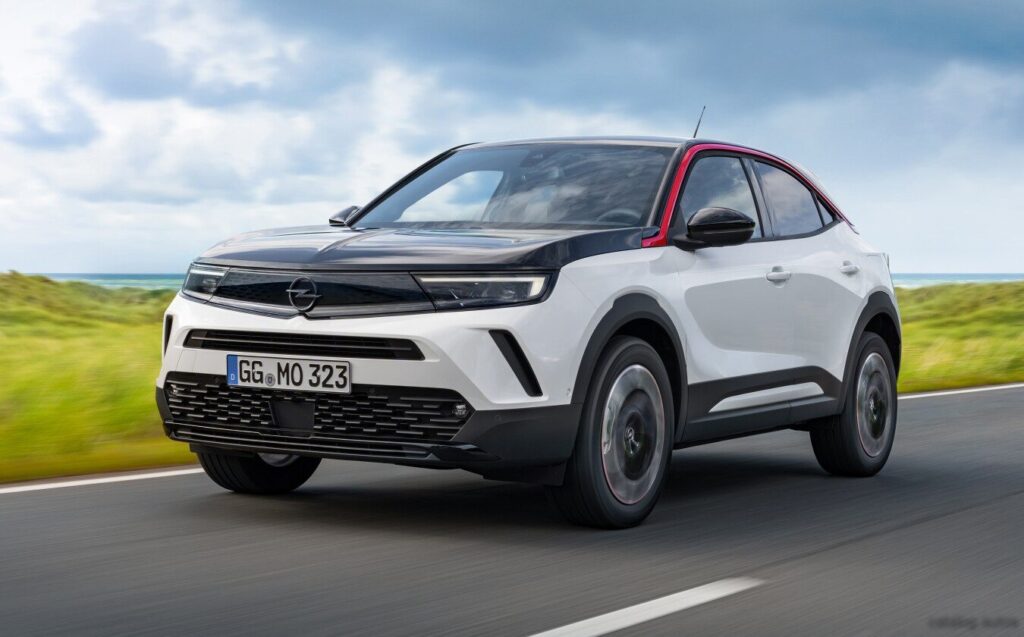
The Opel Mokka B 1.2 Turbo (136 Hp) Mild Hybrid e-DCT represents a significant step in Opel’s compact SUV offerings, launched in May 2024 and continuing through October of the same year. Positioned as a mid-range option within the Mokka B lineup, this variant combines a turbocharged three-cylinder gasoline engine with a 48-volt mild hybrid system and a dual-clutch transmission (e-DCT). It builds upon the foundation of the Mokka B, which itself is based on the Common Modular Platform (CMP) shared with other Stellantis brands, offering a blend of efficiency, technology, and practicality for the European market. This model aimed to appeal to buyers seeking a modern, fuel-efficient SUV with a touch of electrification without the full commitment of a plug-in hybrid or fully electric vehicle.
Technical Specifications
| Brand | Opel |
| Model | Mokka |
| Generation | Mokka B |
| Type (Engine) | 1.2 Turbo (136 Hp) Mild Hybrid e-DCT |
| Start of production | May, 2024 |
| End of production | October, 2024 |
| Powertrain Architecture | MHEV (Mild Hybrid Electric Vehicle) |
| Body type | SUV |
| Seats | 5 |
| Doors | 5 |
| Fuel consumption at Low speed (WLTP) | 4.2 l/100 km (56 US mpg, 67.3 UK mpg, 23.8 km/l) |
| Fuel consumption at Medium speed (WLTP) | 4.2 l/100 km (56 US mpg, 67.3 UK mpg, 23.8 km/l) |
| Fuel consumption at high speed (WLTP) | 4.5 l/100 km (52.3 US mpg, 62.8 UK mpg, 22.2 km/l) |
| Fuel consumption at very high speed (WLTP) | 5.9 l/100 km (39.9 US mpg, 47.9 UK mpg, 16.9 km/l) |
| Combined fuel consumption (WLTP) | 4.9 l/100 km (48 US mpg, 57.6 UK mpg, 20.4 km/l) |
| CO2 emissions (WLTP) | 110 g/km |
| Fuel Type | Petrol (Gasoline) |
| Acceleration 0 – 100 km/h | 9.1 sec |
| Acceleration 0 – 62 mph | 9.1 sec |
| Acceleration 0 – 60 mph | 8.6 sec |
| Maximum speed | 207 km/h (128.62 mph) |
| Emission standard | Euro 6e |
| Weight-to-power ratio | 8.9 kg/Hp, 112.2 Hp/tonne |
| Weight-to-torque ratio | 5.3 kg/Nm, 189.8 Nm/tonne |
| Gross battery capacity | 0.9 kWh |
| Battery voltage | 48 V |
| Battery technology | Lithium-ion (Li-Ion) |
| Battery location | Below the floor, under the front seats |
| All-electric range | 1 km (0.62 mi) |
| Electric motor power | 28 Hp |
| Electric motor Torque | 55 Nm (40.57 lb.-ft.) |
| Electric motor location | Integrated into the transmission |
| Power | 136 Hp @ 5500 rpm |
| Torque | 230 Nm @ 1750 rpm (169.64 lb.-ft. @ 1750 rpm) |
| Engine layout | Front, Transverse |
| Engine Model/Code | EB2LTDH2 |
| Engine displacement | 1199 cm3 (73.17 cu. in.) |
| Number of cylinders | 3 |
| Engine configuration | Inline |
| Cylinder Bore | 75 mm (2.95 in.) |
| Piston Stroke | 90.5 mm (3.56 in.) |
| Number of valves per cylinder | 4 |
| Fuel injection system | Direct injection |
| Engine aspiration | Turbocharger, Intercooler |
| Valvetrain | DOHC |
| Engine oil capacity | 3.5 l (3.7 US qt | 3.08 UK qt) |
| Kerb Weight | 1212 kg (2672 lbs.) |
| Max. weight | 1750 kg (3858.09 lbs.) |
| Max load | 538 kg (1186.09 lbs.) |
| Trunk (boot) space – minimum | 350 l (12.36 cu. ft.) |
| Trunk (boot) space – maximum | 1105 l (39.02 cu. ft.) |
| Fuel tank capacity | 44 l (11.62 US gal | 9.68 UK gal) |
| Max. roof load | 75 kg (165.35 lbs.) |
| Permitted trailer load with brakes (12%) | 1100 kg (2425.08 lbs.) |
| Permitted trailer load without brakes | 620 kg (1366.87 lbs.) |
| Permitted towbar download | 55 kg (121.25 lbs.) |
| Length | 4151 mm (163.43 in.) |
| Width | 1791 mm (70.51 in.) |
| Width including mirrors | 1987 mm (78.23 in.) |
| Height | 1534 mm (60.39 in.) |
| Wheelbase | 2557 mm (100.67 in.) |
| Front track | 1548 mm (60.94 in.) |
| Rear (Back) track | 1548 mm (60.94 in.) |
| Front overhang | 881 mm (34.69 in.) |
| Rear overhang | 712 mm (28.03 in.) |
| Ride height (ground clearance) | 189 mm (7.44 in.) |
| Minimum turning circle (turning diameter) | 11.08 m (36.35 ft.) |
| Number of gears and type of gearbox | 6 gears, automatic transmission e-DCT |
| Front brakes | Ventilated discs |
| Tires size | 215/65 R16; 215/60 R17; 215/55 R18 |
| Wheel rims size | 6.5J x 16; 6.5J x 17; 7J x 18 |
Powertrain & Engine Architecture
At the heart of the Mokka B 1.2 Turbo Mild Hybrid e-DCT lies the EB2LTDH2 engine, a 1.2-liter, three-cylinder turbocharged gasoline engine. This engine is part of the PureTech family developed by the PSA Group (now part of Stellantis). It utilizes direct fuel injection and a single-scroll turbocharger with an intercooler to deliver a balance of power and efficiency. The engine’s architecture features a DOHC (Double Overhead Camshaft) valvetrain with four valves per cylinder. The mild hybrid system consists of a 48-volt battery and an integrated electric motor. This system provides a power boost during acceleration and allows for regenerative braking, capturing energy normally lost during deceleration to recharge the battery. The e-DCT (efficient Dual-Clutch Transmission) is a six-speed automatic transmission designed for smooth and quick gear changes, contributing to both performance and fuel economy. The electric motor isn’t designed for full electric driving, but rather to assist the combustion engine, reducing load and improving responsiveness.
Driving Characteristics
The 136 hp output and 230 Nm (169.64 lb-ft) of torque, combined with the e-DCT, provide adequate performance for everyday driving. Acceleration from 0 to 100 km/h (0-62 mph) takes approximately 9.1 seconds. While not a particularly sporty setup, the mild hybrid system provides a noticeable boost in responsiveness during acceleration, making overtaking maneuvers easier. Compared to the standard 1.2 Turbo without the mild hybrid, this variant offers improved fuel economy and a slightly smoother driving experience. The e-DCT transmission shifts quickly and efficiently, but some drivers may find it less engaging than a traditional manual gearbox. The gear ratios are tuned for fuel efficiency, prioritizing comfortable cruising over outright performance. Compared to higher-output versions of the Mokka B, such as the all-electric variant, this 1.2 Turbo model offers a more affordable entry point but sacrifices some performance and range.
Equipment & Trim Levels
The Mokka B 1.2 Turbo (136 Hp) Mild Hybrid e-DCT typically came equipped with a good level of standard features. These included a touchscreen infotainment system with Apple CarPlay and Android Auto compatibility, digital instrument cluster, automatic climate control, and a suite of safety features such as lane departure warning, automatic emergency braking, and traffic sign recognition. Interior upholstery was generally cloth, with options for leather upgrades. Optional extras included a panoramic sunroof, adaptive cruise control, and premium audio system. Trim levels varied depending on the market, but generally offered progressive upgrades in terms of interior materials, exterior styling, and technology features.
Chassis & Braking
The Mokka B utilizes a MacPherson strut front suspension and a torsion beam rear suspension. This setup provides a comfortable ride quality suitable for everyday driving. The chassis is relatively lightweight, contributing to the vehicle’s agility. Braking duties are handled by ventilated discs on the front wheels and drums on the rear wheels in some configurations, while higher trims may feature disc brakes all around. The steering is electric power-assisted, providing a light and responsive feel. Stabilizer bars are fitted to both the front and rear axles to reduce body roll during cornering.
Market Reception & Comparison
The Opel Mokka B 1.2 Turbo Mild Hybrid e-DCT was generally well-received by critics for its fuel efficiency, comfortable ride, and modern styling. It offered a compelling alternative to other compact SUVs in the European market. Compared to the diesel-powered versions of the Mokka B, the 1.2 Turbo Mild Hybrid offered similar fuel economy in real-world driving conditions, but with lower emissions and a smoother, quieter engine. The mild hybrid system also helped to reduce running costs by enabling regenerative braking. However, some critics noted that the engine could feel strained under heavy acceleration, and the interior materials were not as premium as some competitors.
Legacy
The Opel Mokka B 1.2 Turbo Mild Hybrid e-DCT represents an important step in Opel’s transition towards electrification. The powertrain, while not groundbreaking, proved to be reliable and efficient. On the used car market, these models are becoming increasingly popular due to their affordability and fuel economy. The 48-volt mild hybrid system, while relatively simple, provides a valuable stepping stone towards more advanced hybrid technologies. The e-DCT transmission has also proven to be durable and reliable, requiring minimal maintenance. As with any used vehicle, potential buyers should check for regular maintenance records and inspect the vehicle thoroughly before making a purchase.