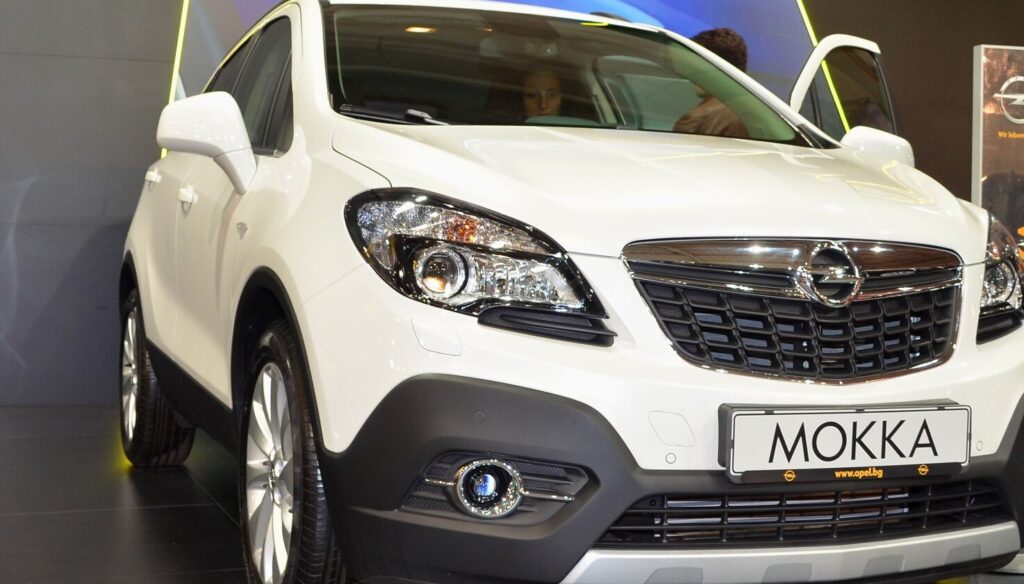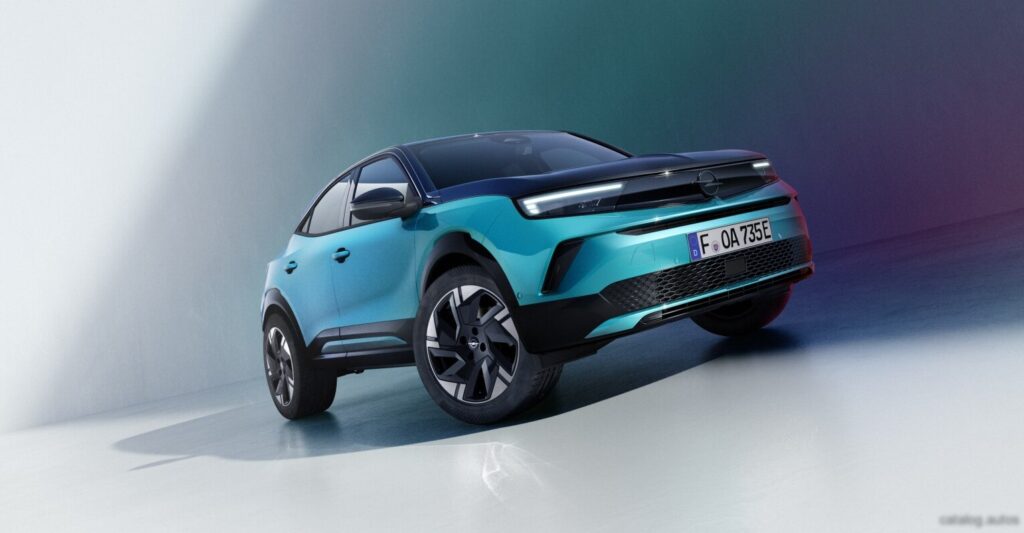
The Opel Mokka B, specifically the facelifted 2024 model year equipped with the 1.2 Turbo (136 hp) Mild Hybrid powertrain and e-DCT automatic transmission, represents a significant evolution of Opel’s subcompact SUV offering. Introduced in October 2024, this variant was produced through March 2025 and positioned as a mainstream offering within the Mokka B lineup, bridging the gap between more basic trims and the fully electric variants. It builds upon the foundation of the 1HX0/A3 platform, shared with other Stellantis group vehicles like the Peugeot 2008 and Citroën C3 Aircross, but distinguishes itself with Opel’s distinct styling and engineering approach.
Technical Specifications
| Brand | Opel |
| Model | Mokka |
| Generation | Mokka B (facelift 2024) |
| Type (Engine) | 1.2 Turbo (136 Hp) Mild Hybrid e-DCT |
| Start of production | October, 2024 |
| End of production | March, 2025 |
| Powertrain Architecture | MHEV (Mild Hybrid Electric Vehicle) |
| Body type | SUV |
| Seats | 5 |
| Doors | 5 |
| Fuel consumption at Low speed (WLTP) | 4.2 l/100 km (56 US mpg, 67.3 UK mpg, 23.8 km/l) |
| Fuel consumption at Medium speed (WLTP) | 4.2 l/100 km (56 US mpg, 67.3 UK mpg, 23.8 km/l) |
| Fuel consumption at high speed (WLTP) | 4.5 l/100 km (52.3 US mpg, 62.8 UK mpg, 22.2 km/l) |
| Fuel consumption at very high speed (WLTP) | 5.9 l/100 km (39.9 US mpg, 47.9 UK mpg, 16.9 km/l) |
| Combined fuel consumption (WLTP) | 4.9 l/100 km (48 US mpg, 57.6 UK mpg, 20.4 km/l) |
| CO2 emissions (WLTP) | 110 g/km |
| Fuel Type | Petrol (Gasoline) |
| Acceleration 0 – 100 km/h | 8.2 sec |
| Acceleration 0 – 62 mph | 8.2 sec |
| Acceleration 0 – 60 mph | 7.8 sec |
| Maximum speed | 209 km/h (129.87 mph) |
| Emission standard | Euro 6e |
| Weight-to-power ratio | 9.5 kg/Hp |
| Weight-to-torque ratio | 5.6 kg/Nm |
| Battery voltage | 48 V |
| Battery technology | Lithium-ion (Li-Ion) |
| Electric motor power | 28 Hp |
| Electric motor Torque | 55 Nm (40.57 lb.-ft.) |
| Power | 136 Hp @ 5500 rpm |
| Torque | 230 Nm @ 1750 rpm (169.64 lb.-ft. @ 1750 rpm) |
| Engine displacement | 1199 cm3 (73.17 cu. in.) |
| Number of cylinders | 3 |
| Cylinder Bore | 75 mm (2.95 in.) |
| Piston Stroke | 90.5 mm (3.56 in.) |
| Kerb Weight | 1287 kg (2837.35 lbs.) |
| Max. weight | 1750 kg (3858.09 lbs.) |
| Trunk (boot) space – minimum | 350 l (12.36 cu. ft.) |
| Trunk (boot) space – maximum | 1105 l (39.02 cu. ft.) |
| Fuel tank capacity | 44 l (11.62 US gal, 9.68 UK gal) |
| Length | 4150 mm (163.39 in.) |
| Width | 1787 mm (70.35 in.) |
| Height | 1535 mm (60.43 in.) |
| Wheelbase | 2557 mm (100.67 in.) |
| Number of gears | 6 |
| Gearbox type | automatic transmission e-DCT |
Powertrain & Engine Architecture
At the heart of the 2024 Mokka B 1.2 Turbo Mild Hybrid lies the PSA-derived 1.2-liter inline-three cylinder gasoline engine, specifically the EB2DT engine family. This engine, designated with various codes depending on the specific calibration, produces 136 horsepower at 5500 rpm and 230 Nm (169.64 lb-ft) of torque at 1750 rpm. The “Turbo” designation indicates the presence of a single turbocharger with an intercooler, enhancing low-end torque and overall responsiveness. The “Mild Hybrid” aspect is achieved through a 48-volt electrical system incorporating a belt-integrated starter generator (BiSG). This system allows for extended start-stop functionality, regenerative braking to recoup energy during deceleration, and a limited amount of electric assistance during acceleration (approximately 28 hp). The e-DCT (efficient Dual-Clutch Transmission) is a six-speed automatic transmission that contributes to smooth gear changes and improved fuel efficiency. The engine utilizes direct fuel injection and a double overhead camshaft (DOHC) valvetrain with four valves per cylinder.
Driving Characteristics
The 1.2 Turbo Mild Hybrid e-DCT offers a balanced driving experience. While not overtly sporty, the powertrain delivers adequate performance for everyday driving situations. Acceleration from 0-100 km/h (0-62 mph) takes approximately 8.2 seconds. The e-DCT transmission provides quick and seamless shifts, and the mild hybrid system helps to fill in torque gaps during acceleration. Compared to the more powerful engine options in the Mokka B range, this variant prioritizes fuel economy over outright performance. The mild hybrid system does provide a noticeable improvement in responsiveness from a standstill, and the extended start-stop functionality contributes to reduced fuel consumption in urban environments. The gear ratios are tuned for efficiency, meaning the engine may feel slightly strained during aggressive acceleration or when fully loaded.
Equipment & Trim Levels
The 1.2 Turbo Mild Hybrid e-DCT trim typically included a generous level of standard equipment. This generally encompassed features such as a touchscreen infotainment system with Apple CarPlay and Android Auto compatibility, automatic climate control, a suite of driver-assistance systems (including lane departure warning, automatic emergency braking, and speed sign recognition), and alloy wheels. Interior upholstery was typically cloth, with options for upgraded materials available. Optional extras could include a larger touchscreen display, a panoramic sunroof, adaptive cruise control, and premium audio systems. The specific trim level (e.g., Elegance, GS Line) dictated the level of standard equipment and available options.
Chassis & Braking
The Mokka B utilizes a front-wheel-drive chassis with a MacPherson strut suspension setup at the front and a torsion beam suspension at the rear. The torsion beam is a cost-effective solution for the rear suspension, suitable for the vehicle’s weight class and intended use. Braking duties are handled by ventilated discs at the front and solid discs at the rear. The steering system is an electric power-assisted rack and pinion system, providing light and precise steering feel. Stabilizer bars are fitted to both the front and rear axles to reduce body roll during cornering.
Market Reception & Comparison
The 2024 Opel Mokka B 1.2 Turbo Mild Hybrid e-DCT was generally well-received by automotive critics as a practical and efficient subcompact SUV. Its fuel economy, rated at approximately 4.9 l/100 km (48 US mpg), was a key selling point. Compared to the more powerful 1.6-liter diesel or gasoline variants, this trim offered lower running costs but sacrificed some performance. The mild hybrid system was praised for its contribution to improved fuel efficiency and reduced emissions. Reliability reports are still emerging for this specific powertrain combination, but the PSA-derived 1.2-liter engine has a generally good reputation for durability.
Legacy
The Opel Mokka B 1.2 Turbo Mild Hybrid e-DCT represents a step towards electrification for the Mokka model line. While not a fully electric vehicle, it demonstrates Opel’s commitment to reducing emissions and improving fuel efficiency. On the used car market, these models are expected to hold their value reasonably well, particularly as demand for fuel-efficient vehicles continues to grow. The longevity of the mild hybrid components, specifically the 48-volt battery and BiSG unit, will be a key factor in determining the long-term reliability and resale value of these vehicles.