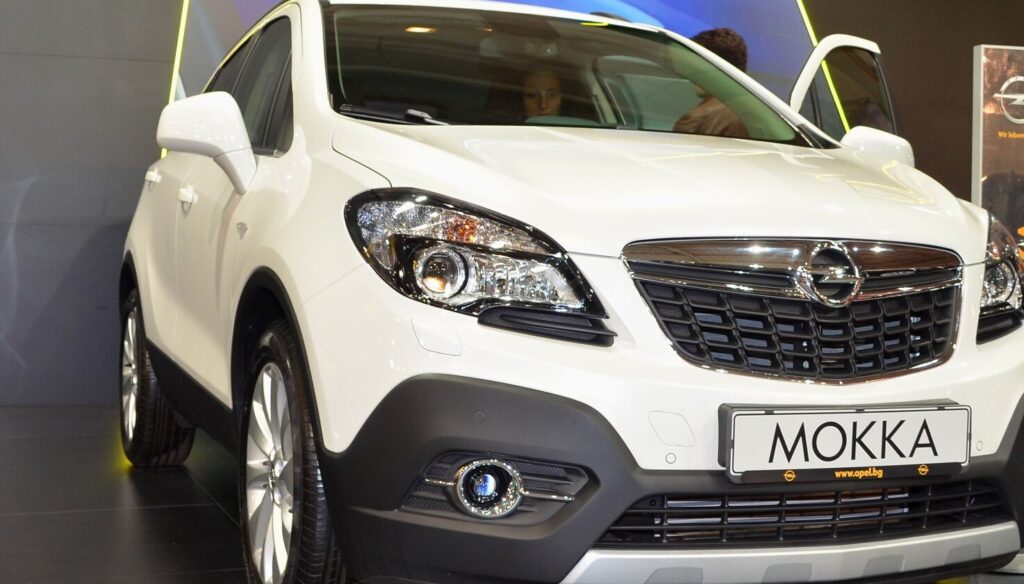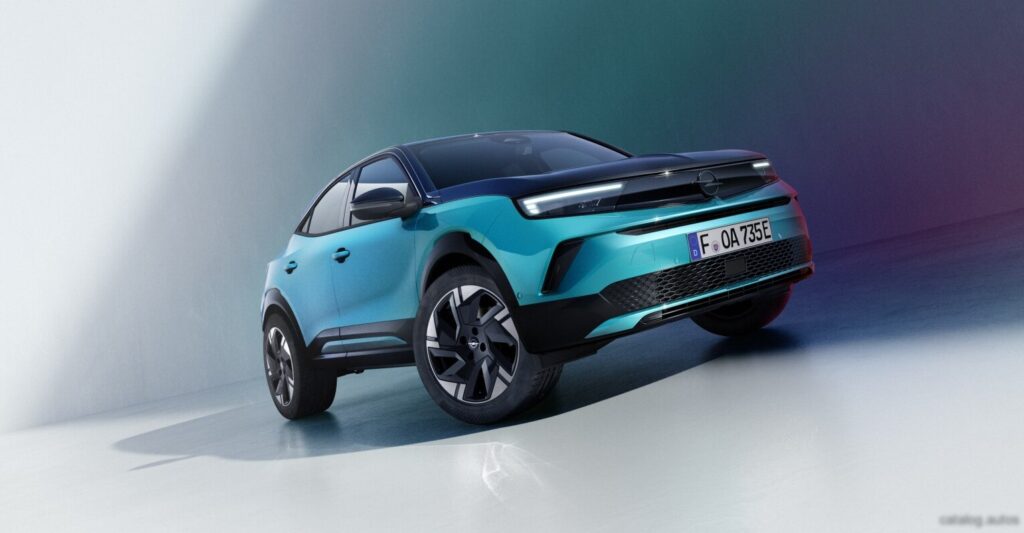
The Opel Mokka B, particularly the facelifted 2024 model year equipped with the 1.2 Turbo (145 hp) Hybrid powertrain and eDCT transmission, represents a significant step in Opel’s modernization of its compact SUV lineup. Introduced in March 2025, this variant occupies a middle ground within the Mokka B range, offering a balance between fuel efficiency, performance, and affordability. It builds upon the foundation of the Mokka B, which itself is based on the Common Modular Platform (CMP) shared with other Stellantis brands like Peugeot and Citroën. The “Hybrid” designation refers to a mild-hybrid electric vehicle (MHEV) system, designed to assist the gasoline engine and improve overall fuel economy rather than providing extended all-electric range.
Technical Specifications
| Brand | Opel |
| Model | Mokka |
| Generation | Mokka B (facelift 2024) |
| Type (Engine) | 1.2 Turbo (145 Hp) Hybrid eDCT |
| Start of production | March, 2025 |
| Powertrain Architecture | MHEV (Mild Hybrid Electric Vehicle) |
| Body type | SUV |
| Seats | 5 |
| Doors | 5 |
| Fuel consumption at Low speed (WLTP) | 4.2 l/100 km (56 US mpg, 67.3 UK mpg, 23.8 km/l) |
| Fuel consumption at Medium speed (WLTP) | 4.3 l/100 km (54.7 US mpg, 65.7 UK mpg, 23.3 km/l) |
| Fuel consumption at high speed (WLTP) | 4.5 l/100 km (52.3 US mpg, 62.8 UK mpg, 22.2 km/l) |
| Fuel consumption at very high speed (WLTP) | 5.9 l/100 km (39.9 US mpg, 47.9 UK mpg, 16.9 km/l) |
| Combined fuel consumption (WLTP) | 4.9 l/100 km (48 US mpg, 57.6 UK mpg, 20.4 km/l) |
| CO2 emissions (WLTP) | 110 g/km |
| Fuel Type | Petrol (Gasoline) |
| Acceleration 0 – 100 km/h | 8.2 sec |
| Acceleration 0 – 62 mph | 8.2 sec |
| Acceleration 0 – 60 mph | 7.8 sec |
| Maximum speed | 209 km/h (129.87 mph) |
| Emission standard | Euro 6e-bis |
| Weight-to-power ratio | 8.9 kg/Hp, 112.7 Hp/tonne |
| Weight-to-torque ratio | 5.6 kg/Nm, 178.7 Nm/tonne |
| Battery voltage | 48 V |
| Battery technology | Lithium-ion (Li-Ion) |
| Battery location | Below the floor, under the front seats |
| Electric motor power | 21 Hp @ 4265 rpm |
| Electric motor location | Integrated into the transmission |
| Electric motor type | Synchronous |
| System power | 145 Hp |
| Power | 136 Hp @ 5500 rpm |
| Power per litre | 113.4 Hp/l |
| Torque | 230 Nm @ 1750 rpm (169.64 lb.-ft. @ 1750 rpm) |
| Engine layout | Front, Transverse |
| Engine Model/Code | HN09 |
| Engine displacement | 1199 cm3 (73.17 cu. in.) |
| Number of cylinders | 3 |
| Engine configuration | Inline |
| Number of valves per cylinder | 4 |
| Fuel injection system | Direct injection |
| Engine aspiration | Turbocharger, Intercooler |
| Engine systems | Start & Stop System, Particulate filter |
| Kerb Weight | 1287 kg (2837.35 lbs.) |
| Max. weight | 1750 kg (3858.09 lbs.) |
| Max load | 463 kg (1020.74 lbs.) |
| Trunk (boot) space – minimum | 350 l (12.36 cu. ft.) |
| Trunk (boot) space – maximum | 1105 l (39.02 cu. ft.) |
| Fuel tank capacity | 44 l (11.62 US gal, 9.68 UK gal) |
| Max. roof load | 75 kg (165.35 lbs.) |
| Permitted trailer load with brakes (12%) | 1200 kg (2645.55 lbs.) |
| Permitted trailer load without brakes | 680 kg (1499.14 lbs.) |
| Permitted towbar download | 55 kg (121.25 lbs.) |
| Length | 4150 mm (163.39 in.) |
| Width | 1787 mm (70.35 in.) |
| Width including mirrors | 1987 mm (78.23 in.) |
| Height | 1535 mm (60.43 in.) |
| Wheelbase | 2557 mm (100.67 in.) |
| Front track | 1548 mm (60.94 in.) |
| Rear (Back) track | 1548 mm (60.94 in.) |
| Front overhang | 881 mm (34.69 in.) |
| Rear overhang | 712 mm (28.03 in.) |
| Minimum turning circle | 11.08 m (36.35 ft.) |
| Drive wheel | Front wheel drive |
| Number of gears and type of gearbox | 6 gears, automatic transmission eDCT |
| Front brakes | Ventilated discs |
| Rear brakes | Disc |
| Tires size | 215/65 R16; 215/60 R17; 215/55 R18; 195/60 R18 |
| Wheel rims size | 16; 17; 18 |
INTRODUCTION
The Opel Mokka B facelift, launched in 2024, represents a significant refresh of Opel’s popular subcompact SUV. The 1.2 Turbo Hybrid eDCT variant, producing 145 horsepower, arrived in March 2025. This model is positioned as a practical and efficient choice for buyers seeking a modern SUV with a degree of electrification. The Mokka B is built on the CMP platform, which allows for flexible powertrain options, including fully electric versions. The facelift brought a more aggressive front-end design, updated interior technology, and refinements to the powertrain options. This particular trim level aims to bridge the gap between the base models and the more powerful, or fully electric, versions.
Powertrain & Engine Architecture
At the heart of the Mokka B 1.2 Turbo Hybrid is the HN09 engine, a 1.2-liter, three-cylinder turbocharged gasoline engine. This engine utilizes direct fuel injection and an intercooler to maximize efficiency and power output. The engine produces 136 hp at 5500 rpm and 230 Nm (169.64 lb-ft) of torque at 1750 rpm. The “Hybrid” aspect comes from a 48-volt mild-hybrid system. This system incorporates a small electric motor and a lithium-ion battery, allowing for regenerative braking and engine start-stop functionality. The electric motor contributes an additional 21 hp at 4265 rpm. The eDCT (efficient Dual-Clutch Transmission) is a six-speed automatic transmission designed for smooth and quick gear changes, contributing to both performance and fuel economy. The engine also features a particulate filter to reduce emissions, meeting Euro 6e-bis standards.
Driving Characteristics
The 145 hp output and eDCT transmission provide adequate performance for everyday driving. Acceleration from 0-100 km/h (0-62 mph) takes approximately 8.2 seconds, and 0-60 mph is achieved in around 7.8 seconds. While not a particularly sporty vehicle, the Mokka B Hybrid offers sufficient power for merging onto highways and overtaking. The eDCT transmission provides responsive shifts, and the mild-hybrid system offers a subtle boost during acceleration. Compared to the non-hybrid 1.2 Turbo models, the Hybrid variant offers improved fuel economy, particularly in urban driving conditions. Compared to higher-output versions, such as those with more powerful engines, this variant prioritizes efficiency over outright performance. The gear ratios are tuned for fuel efficiency, meaning the engine may feel slightly strained when climbing steep hills or carrying a full load.
Equipment & Trim Levels
The Mokka B 1.2 Turbo Hybrid typically comes with a good level of standard equipment. This includes features like a touchscreen infotainment system with Apple CarPlay and Android Auto compatibility, digital instrument cluster, automatic climate control, and a suite of safety features such as lane departure warning, automatic emergency braking, and traffic sign recognition. Interior upholstery is typically cloth, with options for leather upgrades. Available optional extras include a panoramic sunroof, adaptive cruise control, and premium audio system. Trim levels vary by market, but generally offer increasing levels of luxury and technology.
Chassis & Braking
The Mokka B utilizes a front-wheel-drive configuration. The suspension consists of MacPherson struts at the front and a torsion beam at the rear. The braking system features ventilated discs at the front and solid discs at the rear. ABS (Anti-lock Braking System) is standard. The chassis is tuned for comfort, providing a relatively smooth ride over most road surfaces. Stabilizer bars are included to reduce body roll during cornering. The weight of the vehicle, around 1287 kg (2837.35 lbs), is relatively low, contributing to its agility.
Market Reception & Comparison
The Opel Mokka B facelift, and specifically the 1.2 Turbo Hybrid variant, has been generally well-received by automotive critics. Reviewers praise its stylish design, comfortable interior, and improved fuel efficiency. The mild-hybrid system is seen as a positive step towards electrification, although its impact on overall fuel economy is relatively modest. Compared to other trims in the Mokka B lineup, the Hybrid variant offers a compelling balance between price and efficiency. It’s more expensive than the base 1.2 Turbo models but less expensive than the fully electric Mokka-e. Competitors in this segment include the Peugeot 2008, Renault Captur, and Volkswagen T-Cross.
Legacy
The Opel Mokka B 1.2 Turbo Hybrid represents a transitional step in Opel’s powertrain strategy. While not a full hybrid or electric vehicle, it demonstrates Opel’s commitment to reducing emissions and improving fuel efficiency. The HN09 engine, coupled with the eDCT transmission, has proven to be a reliable combination in other Stellantis vehicles. The long-term reliability of the mild-hybrid system remains to be seen, but early indications suggest it is robust. On the used car market, the Mokka B Hybrid is expected to hold its value reasonably well, particularly as demand for fuel-efficient vehicles continues to grow.