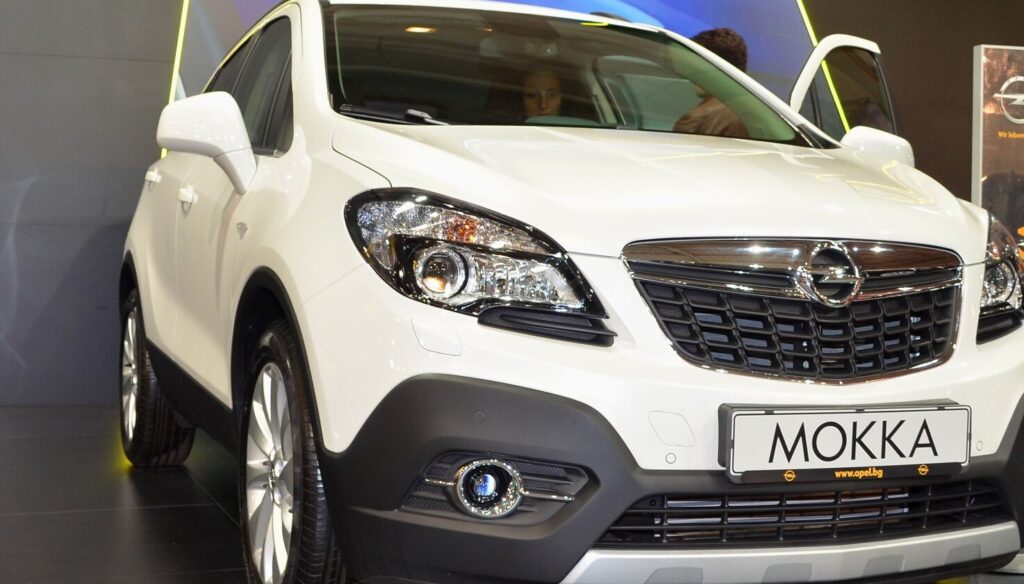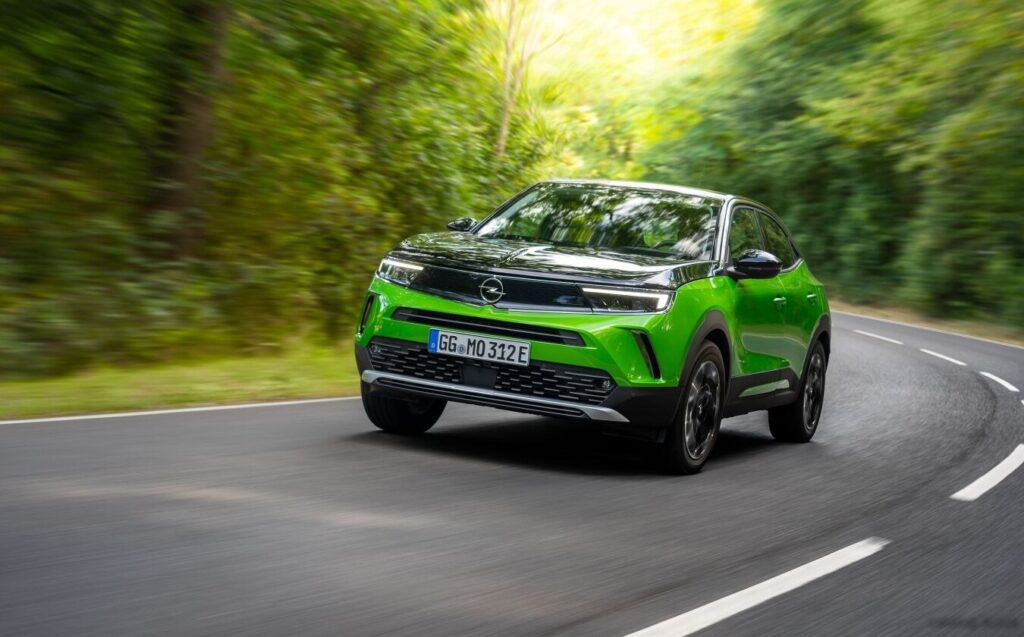
The Opel Mokka B Mokka-e 50 kWh (136 Hp) represents Opel’s entry into the fully electric subcompact SUV market. Introduced in September 2020 and produced through November 2021, this variant was a key component of the second-generation Mokka B series (internally designated as the M20). Positioned as the base electric model within the Mokka B lineup, it aimed to provide an accessible and practical electric vehicle option for European consumers. The Mokka B itself was a significant departure from its predecessor, featuring a completely redesigned exterior and interior, and adopting the PSA Group’s Common Modular Platform (CMP) which allowed for both internal combustion engine and fully electric powertrains.
Technical Specifications
| Brand | Opel |
| Model | Mokka |
| Generation | Mokka B |
| Type (Engine) | Mokka-e 50 kWh (136 Hp) |
| Start of production | September, 2020 |
| End of production | November, 2021 |
| Powertrain Architecture | BEV (Electric Vehicle) |
| Body type | SUV |
| Seats | 5 |
| Doors | 5 |
| Fuel Type | Electricity |
| Acceleration 0 – 100 km/h | 9 sec |
| Acceleration 0 – 62 mph | 9 sec |
| Acceleration 0 – 60 mph | 8.6 sec |
| Maximum speed | 150 km/h (93.21 mph) |
| Weight-to-power ratio | 11.2 kg/Hp, 89.3 Hp/tonne |
| Weight-to-torque ratio | 5.9 kg/Nm, 170.7 Nm/tonne |
| Gross battery capacity | 50 kWh |
| Net (usable) battery capacity | 45 kWh |
| Battery technology | Lithium-ion (Li-Ion) |
| Battery location | Below the floor, under the rear seats / Below the floor, under the front seats |
| All-electric range (WLTP) | 318-324 km (197.6 – 201.32 mi) |
| Average Energy consumption (WLTP) | 17.4-17.8 kWh/100 km (28 – 28.65 kWh/100 mi) |
| Average Energy consumption (MPGe) | 120 – 118 |
| Average Energy consumption (km/kWh) | 5.7 – 5.6 |
| Average Energy consumption (mi/kWh) | 3.6 – 3.5 |
| Electric motor power | 136 Hp |
| Electric motor Torque | 260 Nm (191.77 lb.-ft.) |
| Electric motor model/code | ZK01 |
| Electric motor location | Front axle, Transverse |
| Electric motor type | Synchronous |
| System power | 136 Hp |
| System torque | 260 Nm (191.77 lb.-ft.) |
| Kerb Weight | 1523 kg (3357.64 lbs.) |
| Max. weight | 2015 kg (4442.31 lbs.) |
| Max load | 492 kg (1084.67 lbs.) |
| Trunk (boot) space – minimum | 310 l (10.95 cu. ft.) |
| Trunk (boot) space – maximum | 1060 l (37.43 cu. ft.) |
| Length | 4151 mm (163.43 in.) |
| Width | 1791 mm (70.51 in.) |
| Width including mirrors | 1987 mm (78.23 in.) |
| Height | 1532 mm (60.31 in.) |
| Wheelbase | 2561 mm (100.83 in.) |
| Front track | 1548 mm (60.94 in.) |
| Rear (Back) track | 1545 mm (60.83 in.) |
| Minimum turning circle | 11.08 m (36.35 ft.) |
| Drivetrain Architecture | One electric motor drives the front wheels. |
| Drive wheel | Front wheel drive |
| Number of gears | 1 |
| Type of gearbox | automatic transmission |
| Front brakes | Ventilated discs |
| Rear brakes | Disc |
| Assisting systems | ABS (Anti-lock braking system) |
| Steering type | Steering rack and pinion |
| Power steering | Electric Steering |
| Tires size | 215/65 R16 |
| Wheel rims size | 6.5J x 16 |
Powertrain & Engine Architecture
The Mokka-e 50 kWh is powered by a single electric motor, designated ZK01, producing 136 horsepower and 260 Nm (191.77 lb.-ft.) of torque. This synchronous motor is mounted transversely at the front axle, driving the front wheels. The powertrain utilizes a 50 kWh gross (45 kWh net/usable) lithium-ion battery pack positioned under the floor, contributing to a low center of gravity. The battery pack is split between the front and rear of the vehicle to optimize weight distribution. The single-speed automatic transmission is inherent to electric vehicle design, providing seamless acceleration. The vehicle supports various charging options, including AC and DC fast charging, allowing for a significant range recovery in relatively short periods.
Driving Characteristics
The Mokka-e 50 kWh delivers brisk acceleration for its class, achieving 0-60 mph in approximately 8.6 seconds. The instant torque characteristic of electric motors provides responsive acceleration, particularly at lower speeds. Compared to potential internal combustion engine variants of the Mokka B, the Mokka-e offers a quieter and smoother driving experience. The single-speed transmission means there are no gear changes, contributing to the seamless power delivery. While the 136 hp output isn’t exceptionally powerful, it’s sufficient for everyday driving and urban commuting. The car’s weight, at around 3358 lbs, is noticeable, but the low center of gravity aids in handling. The regenerative braking system allows for one-pedal driving in certain conditions, enhancing efficiency and driver convenience.
Equipment & Trim Levels
The Mokka-e 50 kWh typically came equipped with a respectable level of standard features. These included a 7-inch touchscreen infotainment system with Apple CarPlay and Android Auto compatibility, digital instrument cluster, automatic climate control, and a suite of safety features such as lane departure warning, automatic emergency braking, and pedestrian detection. Interior upholstery was generally cloth, with options for upgraded materials available. Trim levels varied by market, but commonly included options for larger touchscreen displays, premium audio systems, and advanced driver-assistance systems like adaptive cruise control and parking assist. Exterior options included various wheel designs and paint colors.
Chassis & Braking
The Mokka-e utilizes a standard front-wheel-drive configuration. The suspension consists of MacPherson struts at the front and a torsion beam axle at the rear. Braking duties are handled by ventilated discs at the front and solid discs at the rear, coupled with an Anti-lock Braking System (ABS). The steering system is an electric power-assisted rack and pinion setup, providing light and precise steering feel. The relatively compact dimensions and optimized weight distribution contribute to agile handling characteristics.
Market Reception & Comparison
The Opel Mokka-e 50 kWh was generally well-received by automotive critics as a competent and affordable entry-level electric SUV. Its range of 197-201 miles (WLTP) was considered adequate for many daily commutes, although it lagged behind some competitors offering longer ranges. Fuel economy, expressed as kWh/100km, was competitive within its segment. Compared to the petrol-powered Mokka B variants, the Mokka-e offered a significantly lower running cost due to the reduced expense of electricity versus gasoline. However, the initial purchase price was higher. Compared to rivals like the Peugeot e-2008 (with which it shares a platform), the Mokka-e offered a similar level of performance and features, often at a slightly more competitive price point.
Legacy
The Opel Mokka-e 50 kWh played a crucial role in establishing Opel as a player in the burgeoning electric vehicle market. While early models experienced some software glitches, these were largely addressed through over-the-air updates. The powertrain has proven to be relatively reliable, with the electric motor and battery pack demonstrating good longevity. On the used car market, the Mokka-e 50 kWh represents a relatively affordable entry point into electric vehicle ownership, offering a practical and well-equipped package for urban drivers. The Mokka-e’s success paved the way for Opel to expand its electric vehicle lineup, with subsequent models offering increased range and performance.