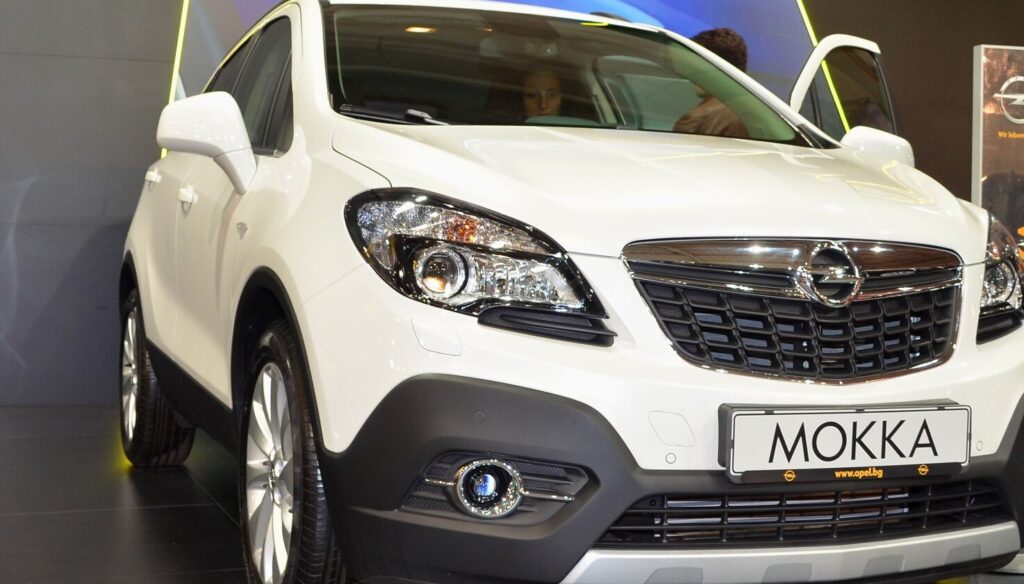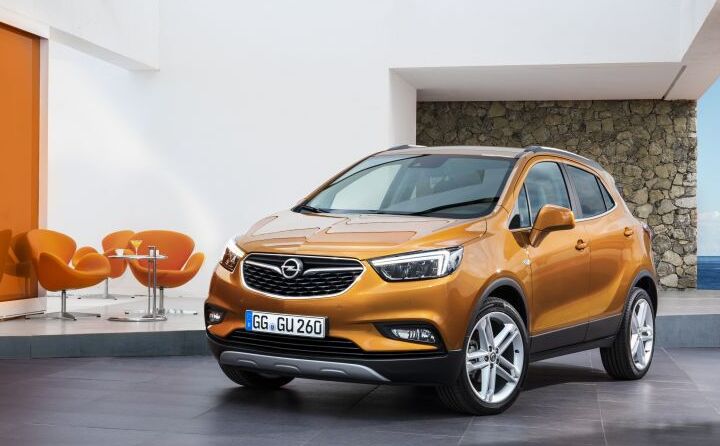
The Opel Mokka X 1.6 EcoTec, producing 136 horsepower, was a significant variant within the Mokka X (later rebranded as the Mokka) range, manufactured between March 2018 and March 2019. Positioned as a mid-range offering, it aimed to balance fuel efficiency with acceptable performance for the compact SUV segment. This model represented Opel’s entry into a rapidly growing market segment, competing with vehicles like the Nissan Juke and Renault Captur, primarily targeting European consumers seeking a stylish and practical small SUV. The Mokka X itself was a facelift of the original Mokka, bringing updated styling and improved technology.
Technical Specifications
| Brand | Opel |
| Model | Mokka |
| Generation | Mokka X |
| Type (Engine) | 1.6 EcoTec (136 Hp) |
| Start of production | March, 2018 |
| End of production | March, 2019 |
| Powertrain Architecture | Internal Combustion engine |
| Body type | SUV |
| Seats | 5 |
| Doors | 5 |
| Fuel consumption (urban) | 5.4-5.5 l/100 km (43.6 – 42.8 US mpg) |
| Fuel consumption (extra urban) | 4.5-4.6 l/100 km (52.3 – 51.1 US mpg) |
| Fuel consumption (combined) | 4.8-5.0 l/100 km (49 – 47 US mpg) |
| CO2 emissions | 127-131 g/km |
| Fuel Type | Diesel |
| Acceleration 0 – 100 km/h | 9.9 sec |
| Acceleration 0 – 62 mph | 9.9 sec |
| Acceleration 0 – 60 mph | 9.4 sec |
| Maximum speed | 190 km/h (118.06 mph) |
| Emission standard | Euro 6d-Temp |
| Weight-to-power ratio | 10.1 kg/Hp |
| Weight-to-torque ratio | 4.3 kg/Nm |
| Power | 136 Hp @ 3500-4000 rpm |
| Torque | 320 Nm @ 2000 rpm (236.02 lb.-ft. @ 2000 rpm) |
| Engine layout | Front, Transverse |
| Engine Model/Code | D16DTH |
| Engine displacement | 1598 cm3 (97.52 cu. in.) |
| Number of cylinders | 4 |
| Engine configuration | Inline |
| Cylinder Bore | 79.7 mm (3.14 in.) |
| Piston Stroke | 80.1 mm (3.15 in.) |
| Compression ratio | 16:1 |
| Number of valves per cylinder | 4 |
| Fuel injection system | Diesel Commonrail |
| Engine aspiration | Turbocharger, Intercooler |
| Engine oil capacity | 5 l (5.28 US qt | 4.4 UK qt) |
| Coolant | 6.2 l (6.55 US qt | 5.46 UK qt) |
| Kerb Weight | 1374 kg (3029.15 lbs.) |
| Max. weight | 1883 kg (4151.3 lbs.) |
| Max load | 509 kg (1122.15 lbs.) |
| Trunk (boot) space – minimum | 356 l (12.57 cu. ft.) |
| Trunk (boot) space – maximum | 1372 l (48.45 cu. ft.) |
| Fuel tank capacity | 52 l (13.74 US gal | 11.44 UK gal) |
| AdBlue tank | 9.7 l (2.56 US gal | 2.13 UK gal) |
| Max. roof load | 75 kg (165.35 lbs.) |
| Permitted trailer load with brakes (12%) | 1500 kg (3306.93 lbs.) |
| Permitted trailer load without brakes | 500 kg (1102.31 lbs.) |
| Permitted towbar download | 75 kg (165.35 lbs.) |
| Length | 4275 mm (168.31 in.) |
| Width | 1781 mm (70.12 in.) |
| Width including mirrors | 2038 mm (80.24 in.) |
| Height | 1658 mm (65.28 in.) |
| Wheelbase | 2555 mm (100.59 in.) |
| Front track | 1541 mm (60.67 in.) |
| Rear (Back) track | 1540 mm (60.63 in.) |
| Front overhang | 942 mm (37.09 in.) |
| Rear overhang | 778 mm (30.63 in.) |
| Minimum turning circle | 11.5 m (37.73 ft.) |
| Drivetrain Architecture | Front wheel drive |
| Drive wheel | Front wheel drive |
| Number of gears and type of gearbox | 6 gears, manual transmission |
| Front brakes | Disc |
| Rear brakes | Disc |
| Assisting systems | ABS (Anti-lock braking system) |
| Steering type | Steering rack and pinion |
| Power steering | Electric Steering |
| Tires size | 215/65 R16; 215/60 R17; 215/55 R18 |
| Wheel rims size | 6.5J x 16; 7J x 17; 7J x 18 |
Powertrain & Engine Architecture
The Mokka X 1.6 EcoTec 136 Hp variant utilized the D16DTH engine, a 1.6-liter inline-four cylinder diesel engine. This engine was part of Opel’s ‘EcoTec’ family, designed for improved efficiency and reduced emissions. It featured a turbocharger with intercooling to boost power output, and a common-rail direct fuel injection system for precise fuel delivery. The engine produced 136 horsepower at 3500-4000 rpm and 320 Nm (236 lb-ft) of torque at 2000 rpm. The engine’s relatively high compression ratio of 16:1 contributed to its efficiency, but also required high-quality diesel fuel. The engine was paired with a six-speed manual transmission, delivering power to the front wheels. While an automatic transmission was available on other Mokka X trims, it wasn’t offered with this specific engine.
Driving Characteristics
The 1.6-liter diesel engine, coupled with the six-speed manual gearbox, provided adequate performance for everyday driving. Acceleration from 0-60 mph took approximately 9.4 seconds, and top speed was 118 mph. However, it wasn’t a particularly sporty vehicle. The engine’s torque was readily available from low RPMs, making it suitable for city driving and overtaking maneuvers. The gear ratios were well-spaced, allowing for comfortable cruising on the highway. Compared to the more powerful petrol versions of the Mokka X, the 1.6 diesel offered better fuel economy but lacked the same level of outright acceleration. The manual transmission provided a more engaging driving experience than the automatic options available on other trims, but required more driver involvement.
Equipment & Trim Levels
The 1.6 EcoTec 136 Hp trim typically included standard features such as air conditioning, a touchscreen infotainment system with Bluetooth connectivity, alloy wheels, and electric windows. Safety features included ABS, ESP (Electronic Stability Program), and multiple airbags. Higher trim levels offered additional features like parking sensors, a rearview camera, heated seats, and a more advanced infotainment system with navigation. Interior upholstery was typically cloth, with options for leather upgrades. The dashboard layout was functional and straightforward, prioritizing usability over luxury.
Chassis & Braking
The Mokka X featured a front-wheel-drive chassis with independent suspension at the front and a torsion beam suspension at the rear. The front brakes were ventilated discs, while the rear brakes were solid discs. The steering was electrically assisted, providing light and precise control. The suspension setup was tuned for comfort, absorbing bumps and imperfections in the road surface effectively. Stabilizer bars were fitted to both the front and rear axles to reduce body roll during cornering. The relatively lightweight construction of the Mokka X contributed to its agile handling.
Market Reception & Comparison
The Opel Mokka X 1.6 EcoTec was generally well-received by critics for its fuel efficiency and practicality. However, some reviewers noted that the engine could be somewhat noisy and lacked the refinement of some competitors. Compared to the petrol versions of the Mokka X, the diesel offered significantly better fuel economy, making it a popular choice for drivers covering long distances. The manual transmission was praised for its smooth operation and precise shift quality. In terms of reliability, the D16DTH engine proved to be generally dependable, although some owners reported issues with the diesel particulate filter (DPF) system, a common concern with modern diesel engines.
Legacy
The Opel Mokka X 1.6 EcoTec remains a relatively common sight on European roads. The D16DTH engine, while not known for being exceptionally powerful, has proven to be reasonably durable with proper maintenance. On the used car market, these models offer good value for money, providing a practical and fuel-efficient option for buyers seeking a compact SUV. The Mokka X, and subsequently the Mokka, helped establish Opel as a key player in the competitive small SUV segment, paving the way for future models like the Mokka-e, the all-electric version.