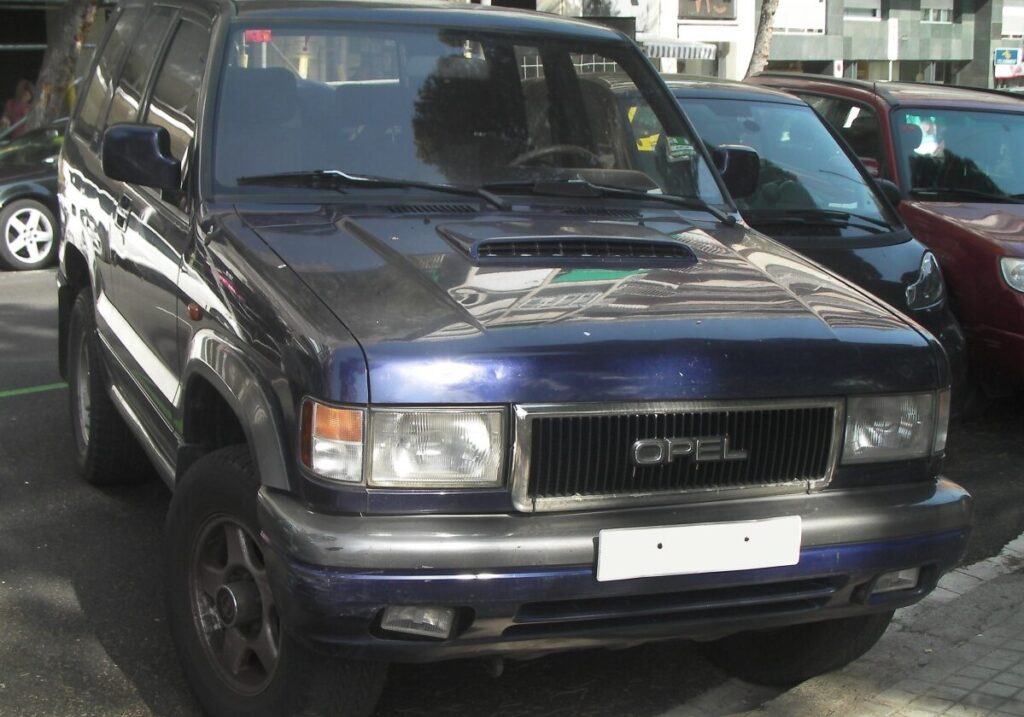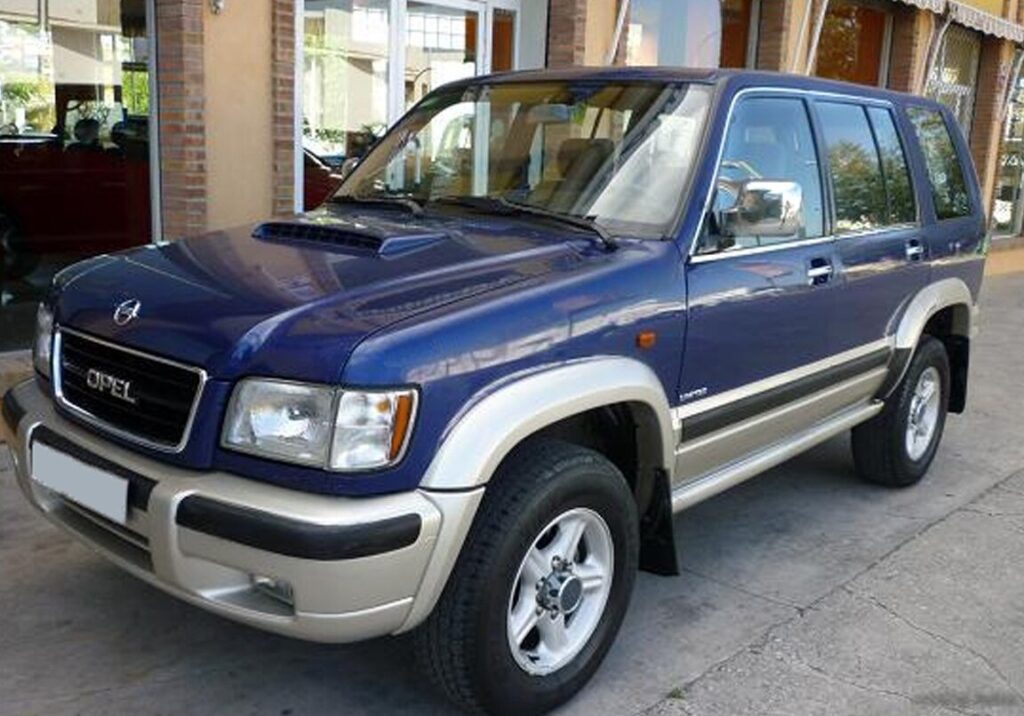
The Opel Monterey, particularly the facelifted version introduced in 1998, represented Opel’s entry into the mid-size SUV segment. Produced from May 1998 to June 1999, the Monterey was largely based on the Isuzu Trooper, a result of Opel’s collaboration with Isuzu. The LTD 3.0 DTI 4×4 variant, equipped with a 3.0-liter turbocharged diesel engine producing 159 horsepower, was positioned as a relatively premium offering within the Monterey lineup, aimed at buyers needing space, all-wheel drive capability, and reasonable fuel economy. It served as a competitor to vehicles like the Mitsubishi Pajero and Toyota Land Cruiser in the European market.
Technical Specifications
| Brand | Opel |
| Model | Monterey |
| Generation | Monterey (facelift 1998) |
| Type (Engine) | LTD 3.0 DTI (159 Hp) 4×4 |
| Start of production | May, 1998 |
| End of production | June, 1999 |
| Powertrain Architecture | Internal Combustion engine |
| Body type | SUV |
| Seats | 7 |
| Doors | 5 |
| Fuel consumption (urban) | 14 l/100 km (16.8 US mpg, 20.2 UK mpg, 7.1 km/l) |
| Fuel consumption (extra urban) | 9.6 l/100 km (24.5 US mpg, 29.4 UK mpg, 10.4 km/l) |
| Fuel Type | Diesel |
| Acceleration 0 – 100 km/h | 16.5 sec |
| Acceleration 0 – 62 mph | 16.5 sec |
| Acceleration 0 – 60 mph | 15.7 sec |
| Maximum speed | 160 km/h (99.42 mph) |
| Weight-to-power ratio | 12.8 kg/Hp, 78.1 Hp/tonne |
| Weight-to-torque ratio | 6.1 kg/Nm, 163.6 Nm/tonne |
| Power | 159 Hp @ 3900 rpm |
| Power per litre | 53 Hp/l |
| Torque | 333 Nm @ 2000 rpm (245.61 lb.-ft. @ 2000 rpm) |
| Engine layout | Front, Longitudinal |
| Engine Model/Code | 4JX1 |
| Engine displacement | 2999 cm3 (183.01 cu. in.) |
| Number of cylinders | 4 |
| Engine configuration | Inline |
| Cylinder Bore | 95.4 mm (3.76 in.) |
| Piston Stroke | 104.9 mm (4.13 in.) |
| Compression ratio | 19:1 |
| Number of valves per cylinder | 4 |
| Fuel injection system | Diesel Commonrail |
| Engine aspiration | Turbocharger |
| Valvetrain | DOHC |
| Engine oil capacity | 6 l (6.34 US qt | 5.28 UK qt) |
| Coolant | 8.6 l (9.09 US qt | 7.57 UK qt) |
| Kerb Weight | 2035 kg (4486.41 lbs.) |
| Max. weight | 2600 kg (5732.02 lbs.) |
| Max load | 565 kg (1245.61 lbs.) |
| Trunk (boot) space – minimum | 1303 l (46.02 cu. ft.) |
| Trunk (boot) space – maximum | 2548 l (89.98 cu. ft.) |
| Fuel tank capacity | 85 l (22.45 US gal | 18.7 UK gal) |
| Length | 4795 mm (188.78 in.) |
| Width | 1835 mm (72.24 in.) |
| Height | 1840 mm (72.44 in.) |
| Wheelbase | 2760 mm (108.66 in.) |
| Front track | 1515 mm (59.65 in.) |
| Rear (Back) track | 1520 mm (59.84 in.) |
| Drive wheel | All wheel drive (4×4) |
| Number of gears and type of gearbox | 5 gears, manual transmission |
| Front suspension | Torsion |
| Rear suspension | Trailing arm |
| Front brakes | Ventilated discs |
| Rear brakes | Ventilated discs |
| Assisting systems | ABS (Anti-lock braking system) |
| Power steering | Hydraulic Steering |
| Tires size | 215/80 R16 |
| Wheel rims size | 16 |
Powertrain & Engine Architecture
The heart of the Monterey LTD 3.0 DTI was the 4JX1, a 3.0-liter inline-four cylinder diesel engine. This engine utilized a direct injection system with a common rail setup, a relatively advanced technology for its time, allowing for precise fuel delivery and improved combustion efficiency. The turbocharger, coupled with intercooling, boosted power output to 159 horsepower at 3900 rpm and 333 Nm (245.61 lb-ft) of torque at 2000 rpm. The engine featured a double overhead camshaft (DOHC) valvetrain with four valves per cylinder, contributing to its relatively high specific output for a diesel engine of that era. The engine was mounted longitudinally in the chassis. The 5-speed manual transmission was the only gearbox option available for this variant.
Driving Characteristics
The 159 hp diesel engine, while providing adequate power for everyday driving and towing, wasn’t known for its blistering acceleration. The 0-60 mph time of around 15.7 seconds reflects this. The engine’s strength lay in its torque delivery, making it capable of handling loads and providing reasonable performance when fully laden. The manual transmission offered drivers more control compared to an automatic, but the gear ratios were tuned for fuel efficiency and usability rather than outright performance. Compared to the gasoline-powered Monterey variants, the 3.0 DTI offered significantly better fuel economy, but lacked the responsiveness of the petrol engines.
Equipment & Trim Levels
The LTD trim level represented a mid-range offering in the Monterey lineup. Standard equipment typically included air conditioning, power windows, central locking, and an AM/FM radio. The interior featured cloth upholstery, and the dashboard layout was functional but not particularly luxurious. Optional extras could include a sunroof, upgraded audio system, and alloy wheels. The seven-seat configuration was standard, providing ample space for passengers and cargo.
Chassis & Braking
The Monterey utilized a body-on-frame construction, typical of SUVs of that era. The front suspension employed a torsion bar setup, while the rear suspension utilized a trailing arm design. This configuration provided a comfortable ride, but wasn’t particularly sporty in handling. The braking system consisted of ventilated discs on all four wheels, coupled with an Anti-lock Braking System (ABS) for improved stopping power and stability. Hydraulic power steering was standard, making maneuvering the large SUV relatively easy.
Market Reception & Comparison
The Opel Monterey, and specifically the 3.0 DTI variant, received mixed reviews. Critics praised its spacious interior, all-wheel drive capability, and relatively fuel-efficient diesel engine. However, it was often criticized for its somewhat agricultural driving experience, dated interior design, and relatively slow acceleration. Compared to other trims, the 3.0 DTI offered a good balance between performance, fuel economy, and price. The gasoline-powered versions were quicker but less economical, while lower-powered diesel variants were even slower but more affordable.
Legacy
The Opel Monterey, while not a resounding commercial success, remains a relatively affordable and capable used SUV. The 4JX1 diesel engine, when properly maintained, is known for its durability and longevity. However, potential buyers should be aware of common diesel engine issues, such as turbocharger wear and injector problems. Parts availability can be a challenge in some regions. Today, the Monterey is often sought after by enthusiasts looking for a rugged and practical SUV with a unique character. Its status as a relatively rare vehicle adds to its appeal among collectors.