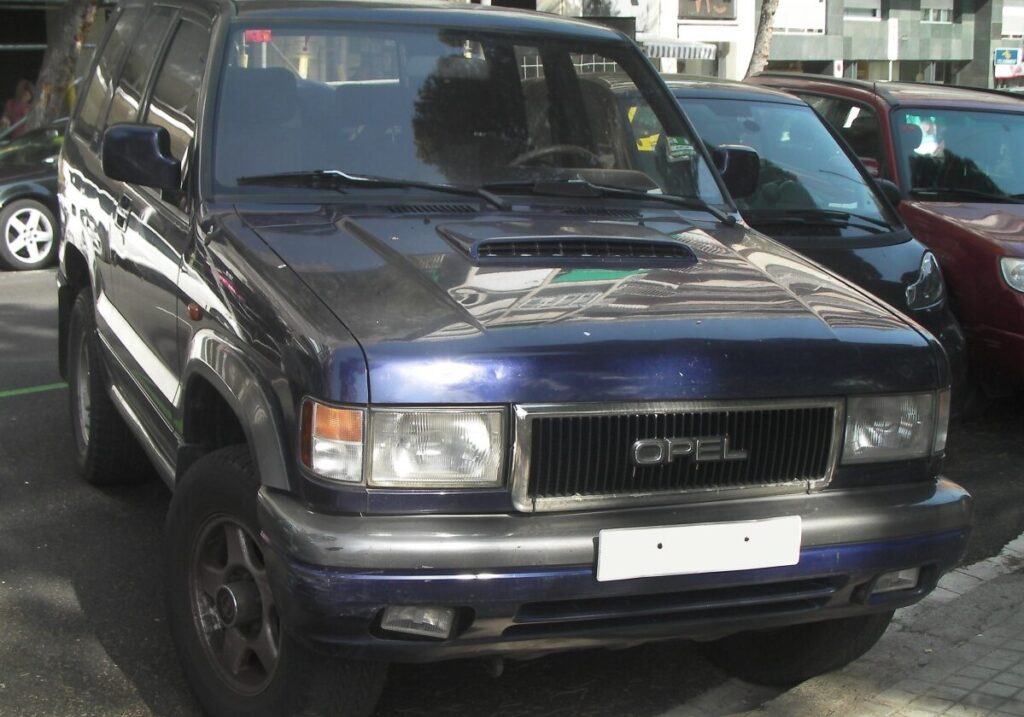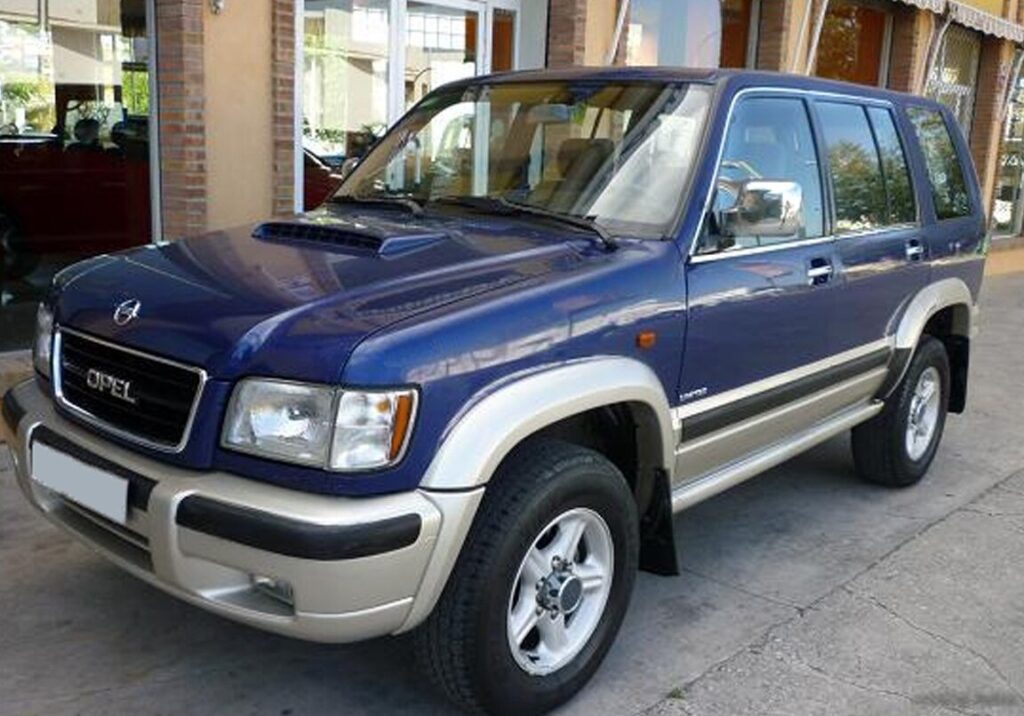
The Opel Monterey, particularly the facelifted version introduced in May 1998 and produced through June 1999, represented Opel’s entry into the mid-size SUV segment. This iteration, specifically the LTD 3.5 V6 24V 4×4 model, was positioned as the range-topping variant, offering a blend of off-road capability and relative luxury. The Monterey was essentially a rebadged Isuzu Trooper, a result of Opel’s collaboration with Isuzu. It aimed to appeal to buyers seeking a versatile vehicle for both on-road comfort and occasional off-road adventures, primarily within the European market. The 1998 facelift brought cosmetic updates and refinements to the original Monterey, enhancing its appeal.
Technical Specifications
| Brand | Opel |
| Model | Monterey |
| Generation | Monterey (facelift 1998) |
| Type (Engine) | LTD 3.5 V6 24V (215 Hp) 4×4 |
| Start of production | May, 1998 |
| End of production | June, 1999 |
| Powertrain Architecture | Internal Combustion engine |
| Body type | SUV |
| Seats | 5 |
| Doors | 5 |
| Fuel consumption (urban) | 18.7 l/100 km (12.6 US mpg) |
| Fuel consumption (extra urban) | 10.7 l/100 km (22 US mpg) |
| Fuel Type | Petrol (Gasoline) |
| Acceleration 0 – 100 km/h | 11.8 sec |
| Acceleration 0 – 62 mph | 11.8 sec |
| Acceleration 0 – 60 mph | 11.2 sec |
| Maximum speed | 180 km/h (111.85 mph) |
| Weight-to-power ratio | 9 kg/Hp |
| Weight-to-torque ratio | 6.3 kg/Nm |
| Power | 215 Hp @ 5400 rpm |
| Torque | 310 Nm @ 3000 rpm (228.64 lb.-ft. @ 3000 rpm) |
| Engine layout | Front, Longitudinal |
| Engine Model/Code | 6VE1 |
| Engine displacement | 3494 cm3 (213.22 cu. in.) |
| Number of cylinders | 6 |
| Engine configuration | V-engine |
| Cylinder Bore | 93.4 mm (3.68 in.) |
| Piston Stroke | 85 mm (3.35 in.) |
| Compression ratio | 9.4:1 |
| Number of valves per cylinder | 4 |
| Fuel injection system | Multi-port manifold injection |
| Engine aspiration | Naturally aspirated engine |
| Valvetrain | OHC |
| Engine oil capacity | 5.3 l (5.6 US qt | 4.66 UK qt) |
| Coolant | 8.5 l (8.98 US qt | 7.48 UK qt) |
| Kerb Weight | 1945 kg (4287.99 lbs.) |
| Max. weight | 2600 kg (5732.02 lbs.) |
| Max load | 655 kg (1444.03 lbs.) |
| Fuel tank capacity | 85 l (22.45 US gal | 18.7 UK gal) |
| Length | 4795 mm (188.78 in.) |
| Width | 1835 mm (72.24 in.) |
| Height | 1840 mm (72.44 in.) |
| Wheelbase | 2760 mm (108.66 in.) |
| Front track | 1515 mm (59.65 in.) |
| Rear track | 1520 mm (59.84 in.) |
| Drive wheel | All wheel drive (4×4) |
| Number of gears | 5 gears, manual transmission |
| Front suspension | Torsion |
| Rear suspension | Trailing arm |
| Front brakes | Ventilated discs |
| Rear brakes | Disc |
| Assisting systems | ABS (Anti-lock braking system) |
| Power steering | Hydraulic Steering |
| Tires size | 215/80 R16 |
| Wheel rims size | 16 |
Powertrain & Engine Architecture
The heart of the Monterey LTD 3.5 V6 was the 6VE1 engine, a 3.5-liter naturally aspirated V6. This engine, sourced from Isuzu, featured a 60-degree V-angle and a cast iron block with aluminum cylinder heads. It employed multi-port fuel injection and an overhead camshaft (OHC) valvetrain with four valves per cylinder. The 24-valve configuration contributed to its respectable power output of 215 horsepower at 5400 rpm and 310 Nm (228.64 lb-ft) of torque at 3000 rpm. The engine’s longitudinal mounting and the availability of a five-speed manual transmission (as equipped in this variant) allowed for efficient power delivery. While an automatic transmission was offered on other Monterey trims, the LTD 3.5 V6 was primarily sold with the manual, catering to drivers who preferred more control.
Driving Characteristics
The 1998 Opel Monterey LTD 3.5 V6 4×4, with its manual transmission, offered a reasonably engaging driving experience for an SUV of its size. Acceleration to 60 mph took around 11.2 seconds, and it reached a top speed of 111.85 mph. The V6 engine provided adequate power for highway cruising and tackling moderate off-road terrain. The manual gearbox allowed drivers to maximize engine performance, especially when navigating challenging conditions. Compared to potential automatic transmission versions, the manual offered a more direct connection to the powertrain and improved fuel efficiency. However, it wasn’t a particularly nimble vehicle due to its weight and body-on-frame construction. The 4×4 system, typically part-time with selectable 2H, 4H, and 4L modes, provided enhanced traction in slippery conditions.
Equipment & Trim Levels
The LTD trim level represented the highest specification available for the Monterey. Standard features included air conditioning, power windows and locks, central locking, and an upgraded audio system. Interior upholstery was typically cloth, though leather was available as an option. The dashboard layout was functional but not particularly luxurious, reflecting the vehicle’s utilitarian origins. Optional extras could include a sunroof, alloy wheels, and a more sophisticated sound system. The LTD trim aimed to provide a comfortable and well-equipped interior without venturing into the premium SUV segment.
Chassis & Braking
The Monterey utilized a traditional body-on-frame construction, which contributed to its robust nature and off-road capability. Front suspension consisted of torsion bars, while the rear employed a trailing arm setup. This suspension configuration provided a reasonable ride quality, although it wasn’t as refined as more modern independent suspension systems. Braking duties were handled by ventilated discs at the front and solid discs at the rear. An Anti-lock Braking System (ABS) was standard, enhancing safety during emergency braking situations. Hydraulic power steering provided relatively light and easy steering input.
Market Reception & Comparison
The Opel Monterey faced competition from established SUVs like the Mitsubishi Pajero, Toyota Land Cruiser, and Nissan Patrol in the European market. Critics generally praised its off-road capability and spacious interior, but noted its relatively basic interior appointments and somewhat unrefined driving experience compared to more car-like SUVs. The 3.5-liter V6 engine was considered adequate, but fuel economy was a significant drawback, averaging around 18.7 l/100 km in urban driving. Compared to the lower-powered four-cylinder Monterey variants, the LTD 3.5 V6 offered a substantial performance upgrade, but at the cost of increased fuel consumption and a higher purchase price.
Legacy
The Opel Monterey, while not a massive sales success, established Opel as a player in the growing SUV market. The 3.5-liter V6 engine proved to be relatively reliable, although regular maintenance was crucial. Today, the Monterey is a relatively rare sight on the roads, and well-maintained examples are sought after by collectors and enthusiasts. The vehicle’s simplicity and robust construction make it a potentially durable classic, but finding parts can be challenging due to its limited production run and reliance on Isuzu components. The Monterey represents a unique chapter in Opel’s history, showcasing their attempt to capitalize on the burgeoning SUV trend of the late 1990s.