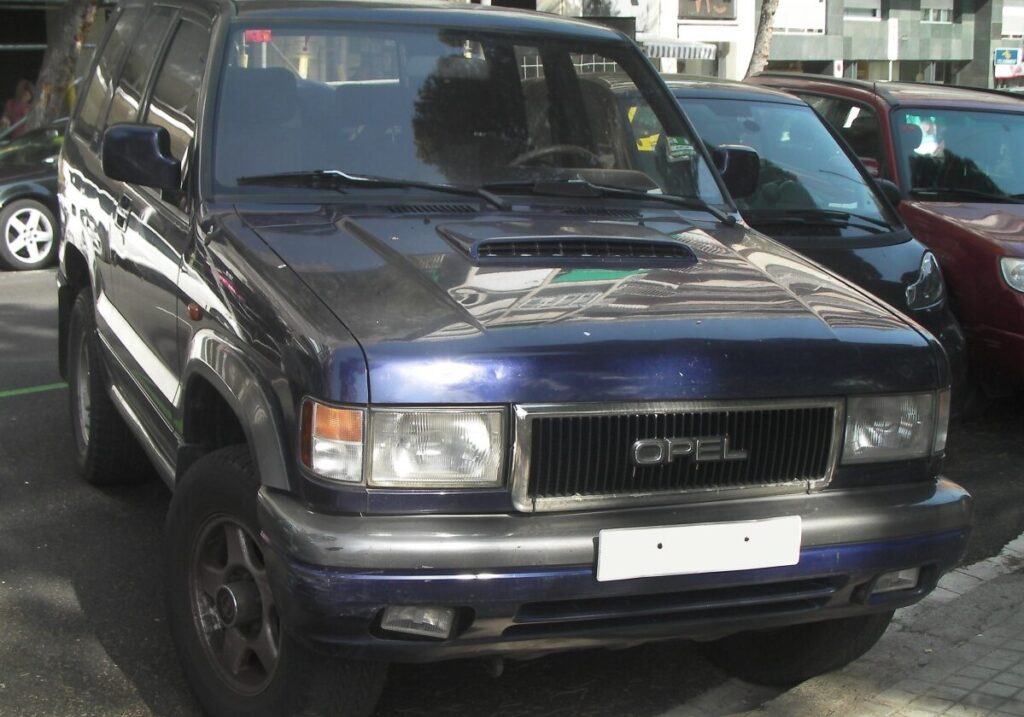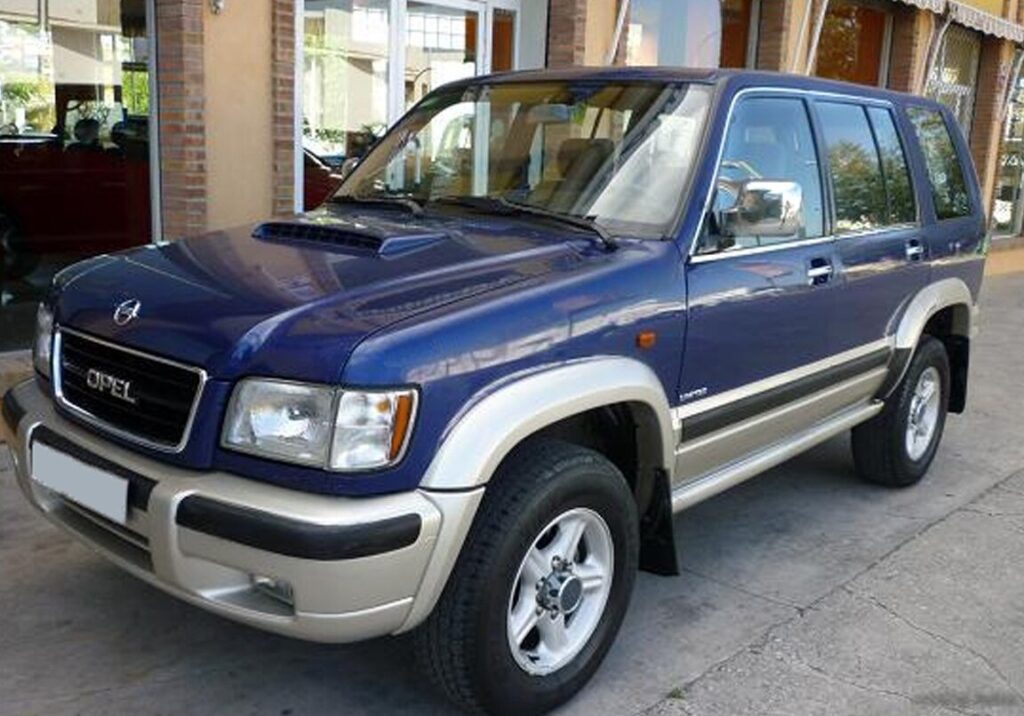
The Opel Monterey, particularly the facelifted version introduced in May 1998, represented Opel’s entry into the mid-size SUV segment. This iteration, running through June 1999, was largely based on the Isuzu Trooper/Bighorn, a result of GM’s partnership with Isuzu. The RS 3.5 V6 24V 4×4 variant, producing 215 horsepower, was the top-of-the-line model, offering a blend of performance and off-road capability. Positioned as the premium offering, it aimed to compete with established SUVs in the European market, though its relatively short production run limited its overall impact. The Monterey, and specifically this RS trim, was never officially sold in the United States.
Technical Specifications
| Brand | Opel |
| Model | Monterey |
| Generation | Monterey (facelift 1998) |
| Type (Engine) | RS 3.5 V6 24V (215 Hp) 4×4 |
| Start of production | May, 1998 |
| End of production | June, 1999 |
| Powertrain Architecture | Internal Combustion engine |
| Body type | SUV |
| Seats | 5 |
| Doors | 3 |
| Fuel consumption (urban) | 18.7 l/100 km (12.6 US mpg) |
| Fuel consumption (extra urban) | 10.7 l/100 km (22 US mpg) |
| Fuel Type | Petrol (Gasoline) |
| Acceleration 0 – 100 km/h | 11.3 sec |
| Acceleration 0 – 62 mph | 11.3 sec |
| Acceleration 0 – 60 mph | 10.7 sec |
| Maximum speed | 180 km/h (111.85 mph) |
| Weight-to-power ratio | 8.7 kg/Hp |
| Weight-to-torque ratio | 6 kg/Nm |
| Power | 215 Hp @ 5400 rpm |
| Torque | 310 Nm @ 3000 rpm (228.64 lb.-ft. @ 3000 rpm) |
| Engine layout | Front, Longitudinal |
| Engine Model/Code | 6VE1 |
| Engine displacement | 3494 cm3 (213.22 cu. in.) |
| Number of cylinders | 6 |
| Engine configuration | V-engine |
| Cylinder Bore | 93.4 mm (3.68 in.) |
| Piston Stroke | 85 mm (3.35 in.) |
| Compression ratio | 9.4:1 |
| Number of valves per cylinder | 4 |
| Fuel injection system | Multi-port manifold injection |
| Engine aspiration | Naturally aspirated engine |
| Valvetrain | OHC |
| Engine oil capacity | 5.3 l (5.6 US qt | 4.66 UK qt) |
| Coolant | 8.5 l (8.98 US qt | 7.48 UK qt) |
| Kerb Weight | 1865 kg (4111.62 lbs.) |
| Max. weight | 2600 kg (5732.02 lbs.) |
| Max load | 735 kg (1620.4 lbs.) |
| Trunk (boot) space – minimum | 769 l (27.16 cu. ft.) |
| Trunk (boot) space – maximum | 2069 l (73.07 cu. ft.) |
| Fuel tank capacity | 85 l (22.45 US gal | 18.7 UK gal) |
| Length | 4365 mm (171.85 in.) |
| Width | 1835 mm (72.24 in.) |
| Height | 1830 mm (72.05 in.) |
| Wheelbase | 2330 mm (91.73 in.) |
| Front track | 1515 mm (59.65 in.) |
| Rear (Back) track | 1520 mm (59.84 in.) |
| Drive wheel | All wheel drive (4×4) |
| Number of gears and type of gearbox | 5 gears, manual transmission |
| Front suspension | Torsion |
| Rear suspension | Trailing arm |
| Front brakes | Ventilated discs |
| Rear brakes | Ventilated discs |
| Assisting systems | ABS (Anti-lock braking system) |
| Power steering | Hydraulic Steering |
| Tires size | 215/80 R16 |
| Wheel rims size | 16 |
INTRODUCTION
The Opel Monterey (facelift 1998) RS 3.5 V6 24V 4×4 represents a relatively short-lived but ambitious attempt by Opel to establish a foothold in the growing SUV market of the late 1990s. Based on the Isuzu Trooper, the Monterey benefitted from Isuzu’s established four-wheel-drive technology. The “facelift” designation refers to styling updates and minor mechanical revisions applied in 1998. This particular RS variant, with its 3.5-liter V6 engine, was the range-topping model, offering increased power and a more comprehensive equipment list compared to lower-spec versions. It was built on the GM/Isuzu 1HX0 platform, shared with the Isuzu Bighorn and Trooper.
Powertrain & Engine Architecture
The heart of the Monterey RS is the 6VE1 3.5-liter V6 engine. This naturally aspirated engine, producing 215 horsepower at 5400 rpm and 310 Nm (228.64 lb-ft) of torque at 3000 rpm, features a 9.4:1 compression ratio and a multi-port fuel injection system. The engine utilizes an overhead camshaft (OHC) valvetrain with four valves per cylinder. The engine is longitudinally mounted in the chassis, contributing to a more balanced weight distribution. The RS model was exclusively offered with a 5-speed manual transmission, chosen for its durability and driver engagement. This transmission was designed to handle the engine’s torque output and provide adequate gearing for both on-road and off-road driving. The 6VE1 engine is known for its relatively simple design, making it reasonably straightforward to maintain, though parts availability can be a challenge today.
Driving Characteristics
The Monterey RS 3.5 V6 4×4 offered a noticeable step up in performance compared to the lower-powered, four-cylinder versions of the Monterey. The 215 horsepower engine provided adequate acceleration, with a 0-60 mph time of around 10.7 seconds. While not a sports car, the Monterey RS felt reasonably sprightly for its size and weight. The manual transmission allowed for greater driver control, and the gear ratios were well-suited for both highway cruising and tackling challenging terrain. The four-wheel-drive system, selectable between 2H, 4H, and 4L, provided excellent traction in various conditions. However, the Monterey’s high center of gravity and relatively soft suspension meant that it wasn’t particularly agile in corners. The steering felt somewhat vague, and body roll was noticeable. Overall, the driving experience was more focused on comfort and capability than outright performance.
Equipment & Trim Levels
As the top-of-the-line model, the Monterey RS came equipped with a generous array of standard features. These typically included air conditioning, power windows and locks, central locking, and an upgraded audio system. Interior upholstery was typically cloth or a combination of cloth and vinyl, with a focus on durability rather than luxury. Optional extras included a sunroof, leather upholstery, and upgraded sound systems. The dashboard layout was functional but somewhat dated, even for the late 1990s. The RS trim also featured exterior enhancements such as alloy wheels and body-colored bumpers and side moldings.
Chassis & Braking
The Monterey’s chassis was based on a body-on-frame construction, providing robust durability and off-road capability. The front suspension utilized a torsion bar setup, while the rear suspension employed a trailing arm design. This configuration offered a comfortable ride, but it wasn’t particularly sophisticated. The Monterey RS was equipped with ventilated disc brakes on all four wheels, providing adequate stopping power. An anti-lock braking system (ABS) was standard, enhancing safety. The steering was hydraulically assisted, but it lacked the precision and feedback of more modern systems. The tires, typically 215/80 R16, were chosen for their all-terrain capability.
Market Reception & Comparison
The Opel Monterey, and particularly the RS variant, received mixed reviews from automotive critics. While praised for its spacious interior, capable four-wheel-drive system, and relatively powerful engine, it was often criticized for its dated styling, vague handling, and high fuel consumption. Compared to other SUVs in its class, such as the Toyota Land Cruiser or the Mitsubishi Pajero, the Monterey felt less refined and less technologically advanced. The lower-powered Monterey variants, with their four-cylinder engines, offered better fuel economy but lacked the performance of the RS model. The Monterey’s relatively short production run and limited marketing support also contributed to its modest sales figures.
Legacy
The Opel Monterey RS 3.5 V6 4×4, while not a commercial success, has gained a small but dedicated following among enthusiasts. The 6VE1 engine is known for its reliability, provided it is properly maintained. However, finding replacement parts can be challenging due to the Monterey’s limited production run. Today, well-maintained examples of the Monterey RS are becoming increasingly collectible, particularly among those seeking a rugged and capable SUV with a unique character. The Monterey represents a fascinating chapter in Opel’s history, showcasing the company’s attempt to enter the competitive SUV market during a period of rapid growth and innovation.