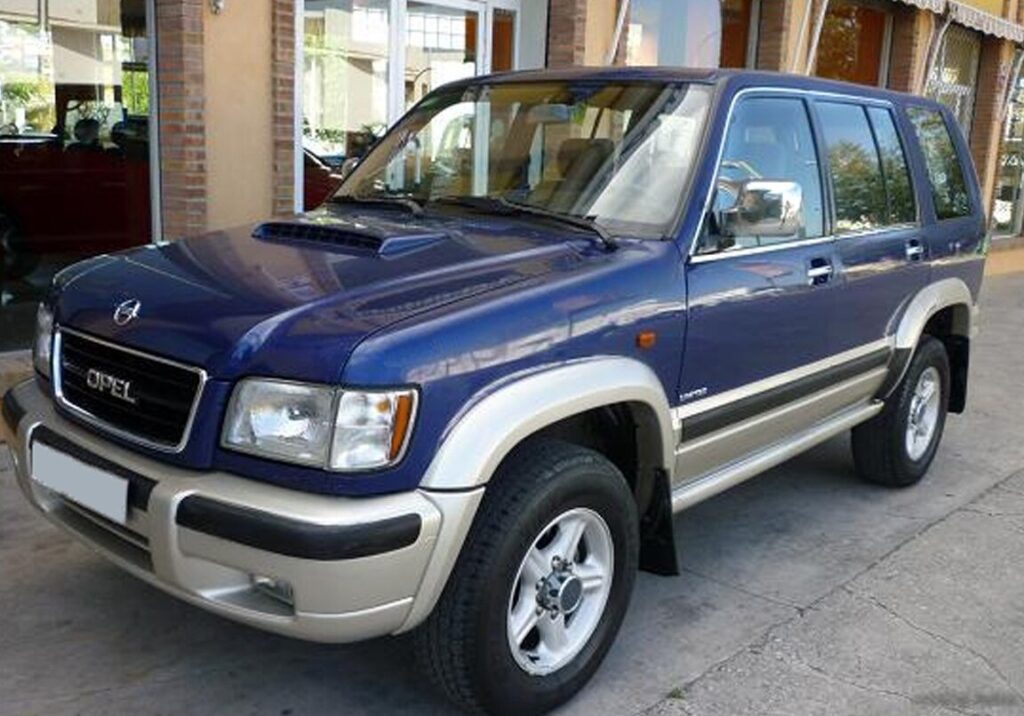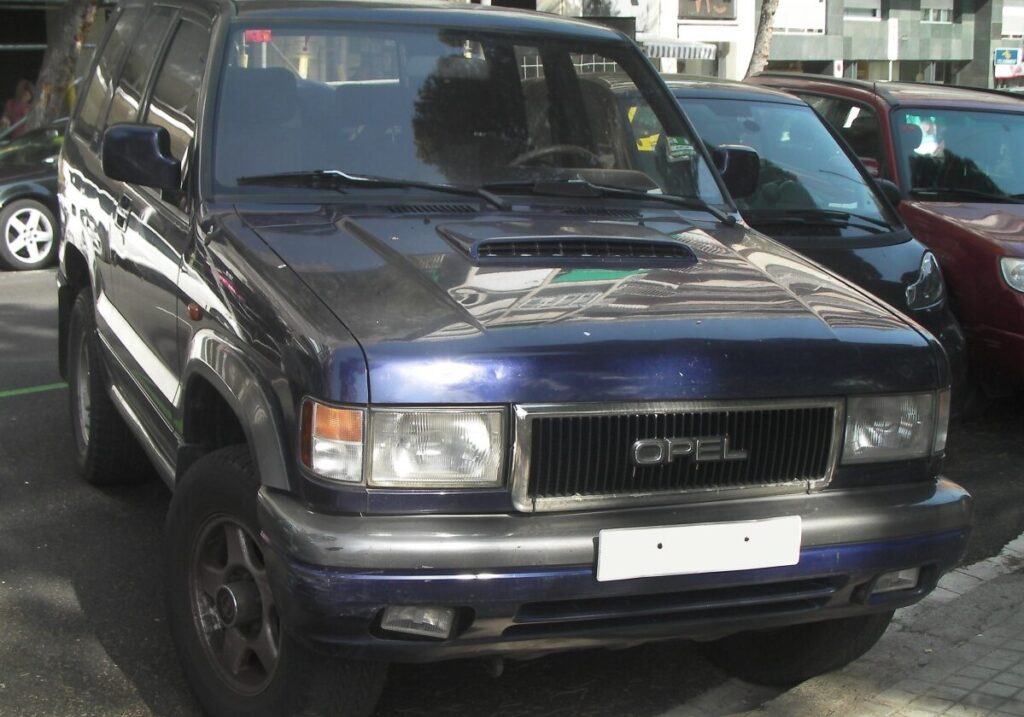
The Opel Monterey LTD 3.2i V6 24V 4×4, produced from May 1992 to April 1998, represents Opel’s entry into the mid-size SUV market. Positioned as a more luxurious and capable offering within the Monterey range, the LTD 3.2i was the top-tier trim level, distinguished by its larger displacement V6 engine and standard four-wheel drive. It was primarily marketed in Europe, aiming to compete with vehicles like the Mitsubishi Pajero and Toyota Land Cruiser, offering a blend of on-road comfort and off-road capability. The Monterey itself was a rebadged Isuzu Trooper, a result of GM’s partnership with Isuzu. This collaboration allowed Opel to quickly enter the growing SUV segment without extensive independent development.
Technical Specifications
| Brand | Opel |
| Model | Monterey |
| Generation | Monterey |
| Type (Engine) | LTD 3.2i V6 24V (177 Hp) 4×4 |
| Start of production | May, 1992 |
| End of production | April, 1998 |
| Powertrain Architecture | Internal Combustion engine |
| Body type | SUV |
| Seats | 5 |
| Doors | 5 |
| Fuel consumption (combined) | 14.4 l/100 km (16.3 US mpg, 19.6 UK mpg, 6.9 km/l) |
| Fuel Type | Petrol (Gasoline) |
| Acceleration 0 – 100 km/h | 11.5 sec |
| Acceleration 0 – 62 mph | 11.5 sec |
| Acceleration 0 – 60 mph | 10.9 sec |
| Maximum speed | 170 km/h (105.63 mph) |
| Weight-to-power ratio | 10.6 kg/Hp, 94.1 Hp/tonne |
| Weight-to-torque ratio | 7.2 kg/Nm, 138.3 Nm/tonne |
| Power | 177 Hp @ 5200 rpm |
| Power per litre | 55.9 Hp/l |
| Torque | 260 Nm @ 3750 rpm (191.77 lb.-ft. @ 3750 rpm) |
| Engine layout | Front, Longitudinal |
| Engine Model/Code | 6VD1 |
| Engine displacement | 3165 cm3 (193.14 cu. in.) |
| Number of cylinders | 6 |
| Engine configuration | V-engine |
| Cylinder Bore | 93.4 mm (3.68 in.) |
| Piston Stroke | 77 mm (3.03 in.) |
| Compression ratio | 9.3:1 |
| Number of valves per cylinder | 4 |
| Fuel injection system | Multi-port manifold injection |
| Engine aspiration | Naturally aspirated engine |
| Valvetrain | OHC |
| Engine oil capacity | 5.3 l (5.6 US qt | 4.66 UK qt) |
| Coolant | 8.5 l (8.98 US qt | 7.48 UK qt) |
| Kerb Weight | 1880 kg (4144.69 lbs.) |
| Max. weight | 2600 kg (5732.02 lbs.) |
| Max load | 720 kg (1587.33 lbs.) |
| Trunk (boot) space – minimum | 1464 l (51.7 cu. ft.) |
| Trunk (boot) space – maximum | 2548 l (89.98 cu. ft.) |
| Fuel tank capacity | 85 l (22.45 US gal | 18.7 UK gal) |
| Length | 4700 mm (185.04 in.) |
| Width | 1745 mm (68.7 in.) |
| Height | 1840 mm (72.44 in.) |
| Wheelbase | 2760 mm (108.66 in.) |
| Front track | 1455 mm (57.28 in.) |
| Rear (Back) track | 1460 mm (57.48 in.) |
| Drive wheel | All wheel drive (4×4) |
| Number of gears and type of gearbox | 5 gears, manual transmission |
| Front suspension | Double wishbone |
| Rear suspension | Coil spring |
| Front brakes | Ventilated discs |
| Rear brakes | Ventilated discs |
| Assisting systems | ABS (Anti-lock braking system), Hydraulic Steering |
| Tires size | 245/70 R16 |
| Wheel rims size | 16 |
Powertrain & Engine Architecture
The heart of the Monterey LTD 3.2i is the 6VD1 engine, a 3.2-liter V6 producing 177 horsepower at 5200 rpm and 260 Nm (191.77 lb-ft) of torque at 3750 rpm. This engine, sourced from Isuzu, features a 9.3:1 compression ratio and utilizes a multi-port fuel injection system. The engine’s valvetrain employs an overhead camshaft (OHC) design, contributing to its relatively smooth operation. The 6VD1 is a naturally aspirated engine, meaning it doesn’t rely on turbocharging or supercharging for increased power. The engine is mounted longitudinally in the chassis, a common configuration for four-wheel-drive vehicles. The standard transmission for the LTD 3.2i was a five-speed manual gearbox, providing drivers with direct control over the engine’s power. While an automatic transmission was offered on other Monterey trims, it wasn’t available with the 3.2L engine.
Driving Characteristics
The 3.2i V6, paired with the five-speed manual transmission, offered a reasonable balance of performance and usability. Acceleration to 60 mph took approximately 10.9 seconds, and the vehicle had a top speed of 170 km/h (105.63 mph). While not exceptionally quick, the engine provided sufficient power for highway cruising and moderate off-road excursions. The manual transmission allowed drivers to maximize the engine’s torque, particularly useful when navigating challenging terrain. Compared to the lower-powered 2.8-liter four-cylinder Monterey models, the 3.2i offered a noticeable improvement in acceleration and overall responsiveness. However, it lacked the low-end grunt of a diesel engine, making it less ideal for heavy towing or extremely demanding off-road conditions. The gear ratios were fairly well-spaced, providing adequate power in most situations, but the engine did need to be revved to access its peak performance.
Equipment & Trim Levels
The Monterey LTD 3.2i represented the highest trim level available. Standard features included power windows, power door locks, air conditioning, and an upgraded audio system. The interior typically featured cloth upholstery, although leather was available as an optional extra. The dashboard layout was functional and straightforward, with clearly labeled controls. Optional extras included a sunroof, alloy wheels, and a more sophisticated sound system. The LTD trim also benefited from exterior enhancements such as body-colored bumpers and side moldings. The focus was on providing a comfortable and well-equipped SUV for families and individuals seeking a versatile vehicle.
Chassis & Braking
The Monterey LTD 3.2i utilized a body-on-frame construction, providing a robust and durable chassis. The front suspension employed a double wishbone setup, while the rear suspension featured coil springs. This configuration aimed to balance ride comfort with off-road capability. Braking duties were handled by ventilated discs on all four wheels, providing adequate stopping power. An anti-lock braking system (ABS) was standard, enhancing safety and control during emergency braking situations. Hydraulic power steering was also standard, making the vehicle easier to maneuver, especially at low speeds. The 4×4 system was typically part-time, allowing drivers to switch between two-wheel drive and four-wheel drive as needed.
Market Reception & Comparison
The Opel Monterey LTD 3.2i V6 received mixed reviews from automotive critics. While praised for its spacious interior, comfortable ride, and capable four-wheel-drive system, it was often criticized for its relatively high fuel consumption (14.4 l/100 km) and somewhat dated design. Compared to the lower-powered Monterey models, the 3.2i offered a significant performance upgrade, but it came at a higher price point. The manual transmission was appreciated by enthusiasts, but some buyers preferred the convenience of an automatic. In terms of reliability, the Monterey generally proved to be a reasonably dependable vehicle, although some owners reported issues with the electrical system and certain engine components.
Legacy
The Opel Monterey, and specifically the LTD 3.2i V6 4×4, occupies a niche position in the history of Opel. While not a massive sales success, it represented Opel’s attempt to compete in the burgeoning SUV market of the 1990s. Today, the Monterey is a relatively rare sight on the roads, and well-maintained examples are becoming increasingly sought after by collectors and enthusiasts. The 6VD1 engine, while not known for its exceptional performance, is generally considered to be a durable and reliable unit. The Monterey’s body-on-frame construction and four-wheel-drive system make it a capable off-road vehicle, and its spacious interior and comfortable ride make it a practical choice for families. The LTD 3.2i, as the top-tier trim level, remains the most desirable version of the Monterey for many enthusiasts.