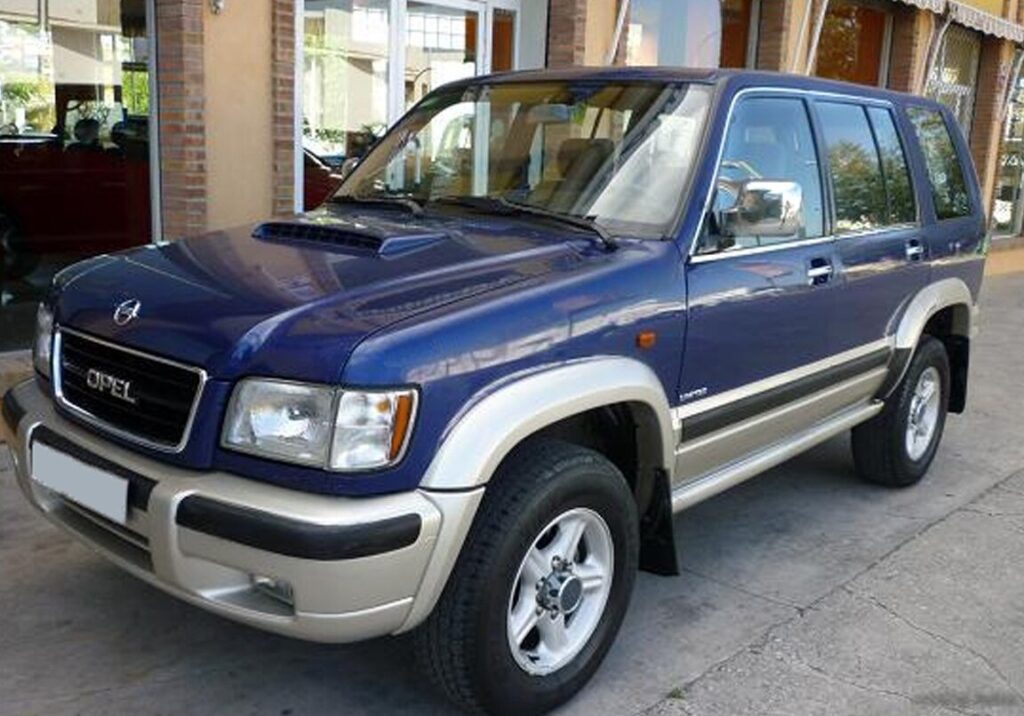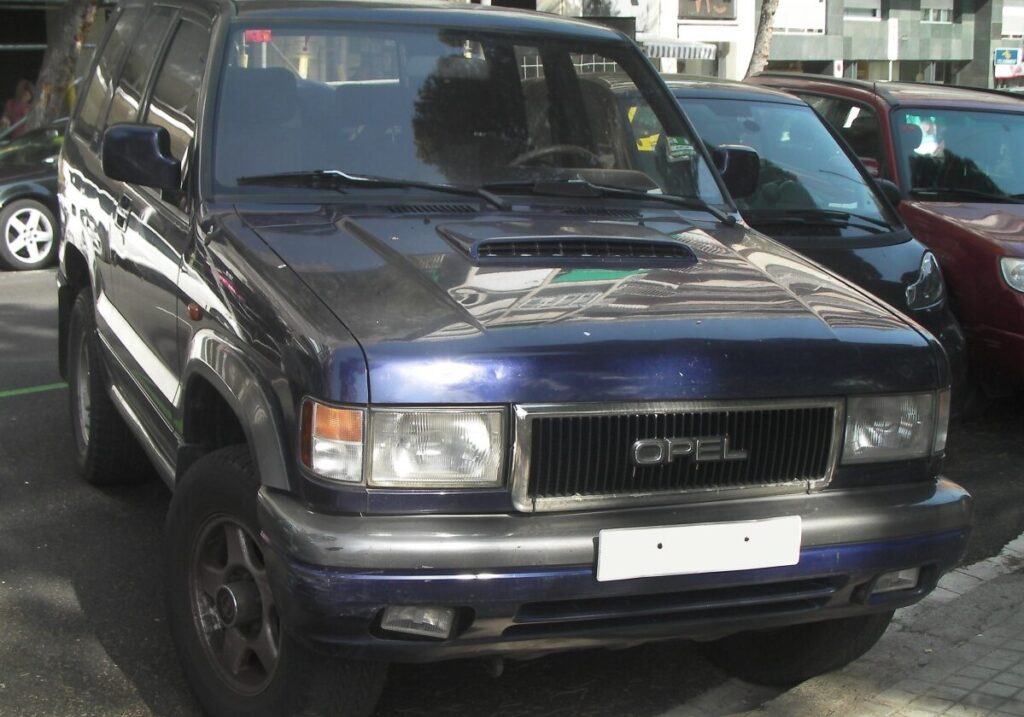
The Opel Monterey RS 3.1 TD 4×4, produced from May 1992 to April 1998, was a mid-size SUV positioned as a robust, off-road capable vehicle within Opel’s lineup. It represented Opel’s entry into the growing SUV market of the early 1990s, largely aimed at buyers seeking a practical and durable vehicle for both on and off-road use. The Monterey shared its platform and many components with the Isuzu Trooper, a result of a collaboration between Opel (then part of General Motors) and Isuzu. This particular variant, the RS 3.1 TD with 114 horsepower, occupied a middle ground in the Monterey range, offering a balance between performance, fuel economy, and affordability. It sat below the more powerful gasoline-powered versions and above the base-level diesel models.
Technical Specifications
| Brand | Opel |
| Model | Monterey |
| Generation | Monterey |
| Type (Engine) | RS 3.1 TD (114 Hp) 4×4 |
| Start of production | May, 1992 |
| End of production | April, 1998 |
| Powertrain Architecture | Internal Combustion engine |
| Body type | SUV |
| Seats | 5 |
| Doors | 3 |
| Fuel consumption (combined) | 11.3 l/100 km (20.8 US mpg, 25 UK mpg, 8.8 km/l) |
| Fuel Type | Diesel |
| Acceleration 0 – 100 km/h | 16.6 sec |
| Acceleration 0 – 62 mph | 16.6 sec |
| Acceleration 0 – 60 mph | 15.8 sec |
| Maximum speed | 150 km/h (93.21 mph) |
| Weight-to-power ratio | 16.7 kg/Hp (60 Hp/tonne) |
| Weight-to-torque ratio | 7.3 kg/Nm (136.8 Nm/tonne) |
| Power | 114 Hp @ 3600 rpm |
| Power per litre | 37.3 Hp/l |
| Torque | 260 Nm @ 2000 rpm (191.77 lb.-ft. @ 2000 rpm) |
| Engine layout | Front, Longitudinal |
| Engine Model/Code | 4JG2-TC |
| Engine displacement | 3059 cm3 (186.67 cu. in.) |
| Number of cylinders | 4 |
| Engine configuration | Inline |
| Cylinder Bore | 95.4 mm (3.76 in.) |
| Piston Stroke | 107 mm (4.21 in.) |
| Compression ratio | 20:1 |
| Number of valves per cylinder | 2 |
| Fuel injection system | Precombustion chamber injection |
| Engine aspiration | Turbocharger |
| Valvetrain | OHC |
| Engine oil capacity | 6 l (6.34 US qt | 5.28 UK qt) |
| Coolant | 8.6 l (9.09 US qt | 7.57 UK qt) |
| Kerb Weight | 1900 kg (4188.78 lbs.) |
| Max. weight | 2500 kg (5511.56 lbs.) |
| Max load | 600 kg (1322.77 lbs.) |
| Trunk (boot) space – minimum | 1339 l (47.29 cu. ft.) |
| Trunk (boot) space – maximum | 1934 l (68.3 cu. ft.) |
| Fuel tank capacity | 85 l (22.45 US gal | 18.7 UK gal) |
| Length | 4270 mm (168.11 in.) |
| Width | 1745 mm (68.7 in.) |
| Height | 1835 mm (72.24 in.) |
| Wheelbase | 2330 mm (91.73 in.) |
| Front track | 1455 mm (57.28 in.) |
| Rear (Back) track | 1460 mm (57.48 in.) |
| Drive wheel | All wheel drive (4×4) |
| Number of gears and type of gearbox | 5 gears, manual transmission |
| Front suspension | Double wishbone |
| Rear suspension | Coil spring |
| Front brakes | Ventilated discs |
| Rear brakes | Ventilated discs |
| Assisting systems | ABS (Anti-lock braking system), Hydraulic Steering |
| Tires size | 245/70 R16 |
| Wheel rims size | 16 |
Powertrain & Engine Architecture
The heart of the Monterey RS 3.1 TD was the 4JG2-TC, a 3.1-liter (3059 cc) inline-four cylinder diesel engine. This engine, sourced from Isuzu, featured a robust cast iron block and head. The “TC” designation indicated the presence of a turbocharger with an intercooler, which significantly boosted power output compared to naturally aspirated versions. The engine employed a precombustion chamber injection system, a common diesel technology of the era, which improved combustion efficiency and reduced engine noise. The overhead camshaft (OHC) valvetrain operated two valves per cylinder. The 4JG2-TC produced 114 horsepower at 3600 rpm and 260 Nm (191.77 lb-ft) of torque at 2000 rpm. The engine was mated to a five-speed manual transmission, delivering power to all four wheels via a part-time four-wheel drive system.
Driving Characteristics
The 114 hp diesel engine in the Monterey RS 3.1 TD 4×4 provided adequate, but not exhilarating, performance. Acceleration from 0 to 60 mph took around 15.8 seconds, and top speed was limited to 93.21 mph. The engine’s strength lay in its torque, making it well-suited for towing and off-road driving. The five-speed manual transmission offered a reasonable spread of gears, but the relatively low horsepower meant that frequent downshifts were necessary when climbing hills or overtaking. Compared to the gasoline-powered Monterey variants, the diesel offered significantly better fuel economy, but at the expense of outright speed. The 4×4 system, selectable between 2H, 4H, and 4L, provided good traction in challenging conditions. The vehicle’s high center of gravity and relatively soft suspension resulted in noticeable body roll during cornering.
Equipment & Trim Levels
The RS 3.1 TD trim level generally included features such as power steering, ABS brakes, and a basic audio system. Interior appointments were functional rather than luxurious, with durable cloth upholstery and a straightforward dashboard layout. Optional extras included air conditioning, power windows, and a sunroof. The Monterey’s interior offered ample space for five passengers, and the rear seats could be folded down to increase cargo capacity. The 3-door configuration meant access to the rear seats was somewhat restricted.
Chassis & Braking
The Monterey utilized a body-on-frame construction, providing a robust and durable chassis. The front suspension consisted of a double wishbone setup, while the rear employed a coil spring arrangement. Brakes were ventilated discs on all four wheels, providing adequate stopping power for the vehicle’s weight. The relatively simple suspension setup prioritized durability and off-road capability over sporty handling. The vehicle rode on 16-inch wheels with 245/70 R16 tires.
Market Reception & Comparison
The Opel Monterey RS 3.1 TD 4×4 was generally well-received as a practical and capable SUV. Critics praised its robust construction, off-road ability, and fuel-efficient diesel engine. However, it was often criticized for its relatively slow acceleration and somewhat basic interior. Compared to other SUVs on the market at the time, such as the Toyota Land Cruiser and the Nissan Patrol, the Monterey offered a more affordable entry point, but lacked the same level of refinement and brand prestige. Against its direct competitor, the Isuzu Trooper (with which it shared many components), the Monterey often represented a slightly more value-oriented option.
Legacy
The Opel Monterey, while not a sales blockbuster, established Opel as a player in the burgeoning SUV market. The 4JG2-TC diesel engine proved to be a reliable and durable powerplant, and many examples remain on the road today. However, due to its age, finding parts can sometimes be challenging. The Monterey’s simple construction and robust drivetrain make it a popular choice for restoration projects and off-road enthusiasts. In the used car market, the Monterey RS 3.1 TD 4×4 is often sought after by those looking for a dependable and affordable 4×4 vehicle with a classic appeal.