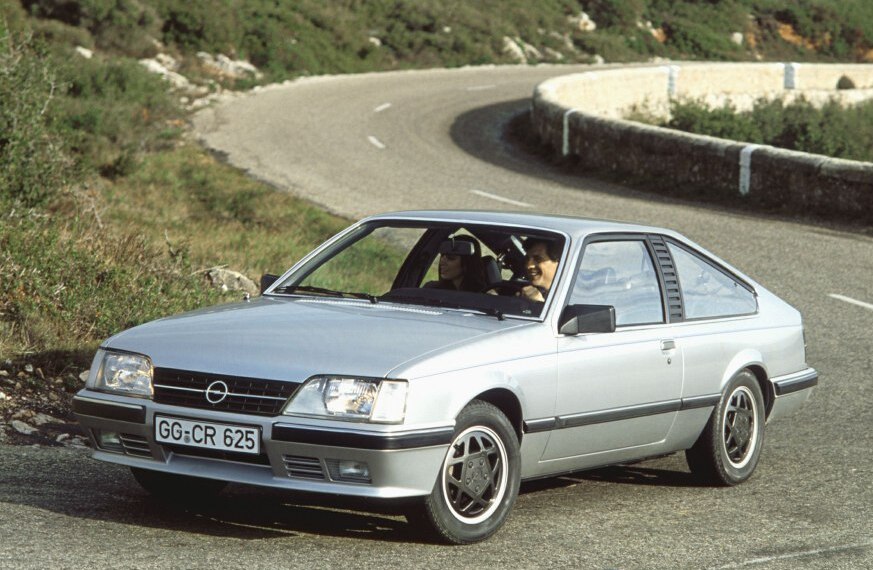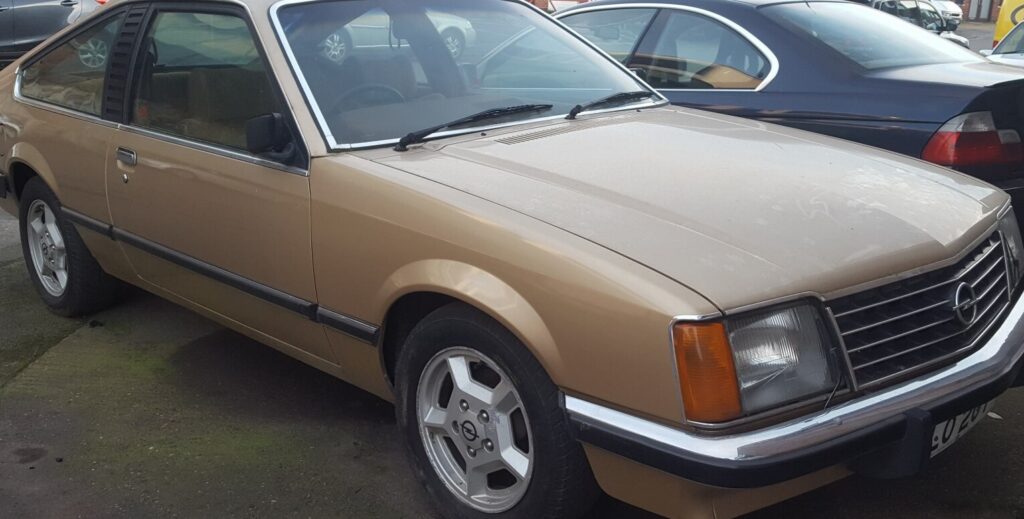
The Opel Monza A1 2.8, produced between April 1978 and August 1981, represented a significant offering in Opel’s lineup as a stylish and relatively luxurious coupe. Positioned as a grand tourer, the Monza A1 aimed to provide comfortable, high-speed transportation, competing with vehicles like the Ford Capri and BMW 3-Series coupes. It was built on the GM’s ‘M’ platform, shared with other Opel and Vauxhall models, and was notable for its sleek, aerodynamic design penned by David Holls. The 2.8-liter variant, producing 140 horsepower, occupied a mid-range position within the Monza lineup, offering a balance between performance and affordability.
Technical Specifications
| Brand | Opel |
| Model | Monza |
| Generation | Monza A1 |
| Type (Engine) | 2.8 (140 Hp) |
| Start of production | April, 1978 |
| End of production | August, 1981 |
| Powertrain Architecture | Internal Combustion engine |
| Body type | Coupe |
| Seats | 4 |
| Doors | 3 |
| Fuel consumption (combined) | 10.8 l/100 km |
| Fuel consumption (US mpg) | 21.8 US mpg |
| Fuel consumption (UK mpg) | 26.2 UK mpg |
| Fuel consumption (km/l) | 9.3 km/l |
| Fuel Type | Petrol (Gasoline) |
| Acceleration 0 – 100 km/h | 10 sec |
| Acceleration 0 – 62 mph | 10 sec |
| Acceleration 0 – 60 mph | 9.5 sec |
| Maximum speed | 195 km/h (121.17 mph) |
| Weight-to-power ratio | 9.8 kg/Hp, 101.8 Hp/tonne |
| Weight-to-torque ratio | 6.4 kg/Nm, 155.6 Nm/tonne |
| Power | 140 Hp @ 5200 rpm |
| Power per litre | 50.3 Hp/l |
| Torque | 214 Nm @ 3400 rpm (157.84 lb.-ft. @ 3400 rpm) |
| Engine layout | Front, Longitudinal |
| Engine Model/Code | 28H |
| Engine displacement | 2784 cm3 (169.89 cu. in.) |
| Number of cylinders | 6 |
| Engine configuration | Inline |
| Cylinder Bore | 92 mm (3.62 in.) |
| Piston Stroke | 69.8 mm (2.75 in.) |
| Compression ratio | 9.4:1 |
| Number of valves per cylinder | 2 |
| Fuel injection system | Carburettor |
| Engine aspiration | Naturally aspirated engine |
| Valvetrain | SOHC |
| Engine oil capacity | 5.5 l (5.81 US qt | 4.84 UK qt) |
| Kerb Weight | 1375 kg (3031.36 lbs.) |
| Max. weight | 1900 kg (4188.78 lbs.) |
| Max load | 525 kg (1157.43 lbs.) |
| Trunk (boot) space – minimum | 425 l (15.01 cu. ft.) |
| Trunk (boot) space – maximum | 765 l (27.02 cu. ft.) |
| Fuel tank capacity | 70 l (18.49 US gal | 15.4 UK gal) |
| Permitted trailer load with brakes (12%) | 1700 kg (3747.86 lbs.) |
| Permitted trailer load without brakes | 700 kg (1543.24 lbs.) |
| Length | 4692 mm (184.72 in.) |
| Width | 1734 mm (68.27 in.) |
| Height | 1380 mm (54.33 in.) |
| Wheelbase | 2668 mm (105.04 in.) |
| Front track | 1443 mm (56.81 in.) |
| Rear (Back) track | 1472 mm (57.95 in.) |
| Ride height (ground clearance) | 140 mm (5.51 in.) |
| Drag coefficient (Cd) | 0.41 |
| Minimum turning circle (turning diameter) | 9.85 m (32.32 ft.) |
| Drivetrain Architecture | The Internal combustion engine (ICE) drives the rear wheels of the vehicle. |
| Drive wheel | Rear wheel drive |
| Number of gears and type of gearbox | 4 gears, manual transmission |
| Front suspension | Independent, type McPherson with coil spring and anti-roll bar |
| Rear suspension | Trailing arm |
| Front brakes | Ventilated discs |
| Rear brakes | Disc |
| Steering type | Cone worm with recirculation balls |
| Power steering | Hydraulic Steering |
| Tires size | 195/70 R14 |
Powertrain & Engine Architecture
The heart of the Monza A1 2.8 was the 2784cc inline-six cylinder engine, designated the 28H. This engine, a descendant of Opel’s long-running six-cylinder family, featured a single overhead camshaft (SOHC) valvetrain operating two valves per cylinder. Unlike later fuel-injected versions, the 1978-1981 2.8 utilized a carburetor for fuel delivery, a relatively common practice at the time. This carburetor setup, while simpler than fuel injection, contributed to the engine’s characteristic power delivery and sound. The engine’s longitudinal mounting and rear-wheel drive configuration were hallmarks of traditional European sports coupes. The four-speed manual transmission was the standard offering, providing a direct connection between the engine and the rear wheels. The engine produced 140 horsepower at 5200 rpm and 214 Nm (157.84 lb-ft) of torque at 3400 rpm.
Driving Characteristics
The Monza A1 2.8 with the manual transmission offered a respectable, if not blistering, driving experience. Acceleration to 60 mph took around 9.5 seconds, and the car could reach a top speed of 195 km/h (121 mph). The engine’s torque peak at 3400 rpm meant that usable power was available across a broad range, making it suitable for both relaxed cruising and more spirited driving. The four-speed gearbox, while not offering the close ratios of a five-speed, was well-matched to the engine’s characteristics. Compared to the later 2.3-liter four-cylinder models, the 2.8 offered significantly more power and torque, resulting in a more effortless driving experience. However, it lacked the ultimate performance of the later fuel-injected versions or the more powerful 3.0-liter six-cylinder engine.
Equipment & Trim Levels
The Monza A1 2.8 was generally well-equipped for its time, though trim levels varied depending on the market. Standard features typically included cloth upholstery, a basic stereo system, and power-assisted steering. Optional extras included a sunroof, upgraded stereo systems, and leather upholstery. The interior design was functional and driver-focused, with a clear instrument panel and comfortable seating. The Monza aimed for a more upscale feel than some of its competitors, with attention paid to interior materials and build quality.
Chassis & Braking
The Monza A1 featured independent front suspension with McPherson struts and coil springs, providing a comfortable ride and good handling. The rear suspension utilized a trailing arm setup. Braking was accomplished via ventilated discs at the front and discs at the rear, offering adequate stopping power for the car’s weight and performance. The steering was a recirculating ball system with hydraulic assistance, providing a reasonable level of feel and precision. The car’s relatively long wheelbase contributed to its stability at high speeds.
Market Reception & Comparison
The Opel Monza A1 2.8 was generally well-received by automotive critics. It was praised for its stylish design, comfortable ride, and strong engine. However, some critics noted that the carburetor-equipped engine wasn’t as refined or fuel-efficient as contemporary fuel-injected engines. Compared to the four-cylinder Monza variants, the 2.8 offered a significant performance upgrade, but at a higher price point. Fuel economy was typical for a large-displacement coupe of the era, averaging around 21.8 US mpg. Reliability was generally good, though carburetor maintenance could be required over time.
Legacy
The Opel Monza A1 2.8 holds a respected place among classic European coupes. While not as common as some of its rivals, it remains a sought-after vehicle by enthusiasts. The 28H engine, while not the most technologically advanced, is known for its durability and relatively simple maintenance requirements. Today, well-maintained examples of the Monza A1 2.8 are appreciating in value, attracting collectors and drivers who appreciate its classic styling and driving experience. The Monza’s influence can be seen in later Opel models, and it remains a symbol of a bygone era of stylish, rear-wheel-drive coupes.