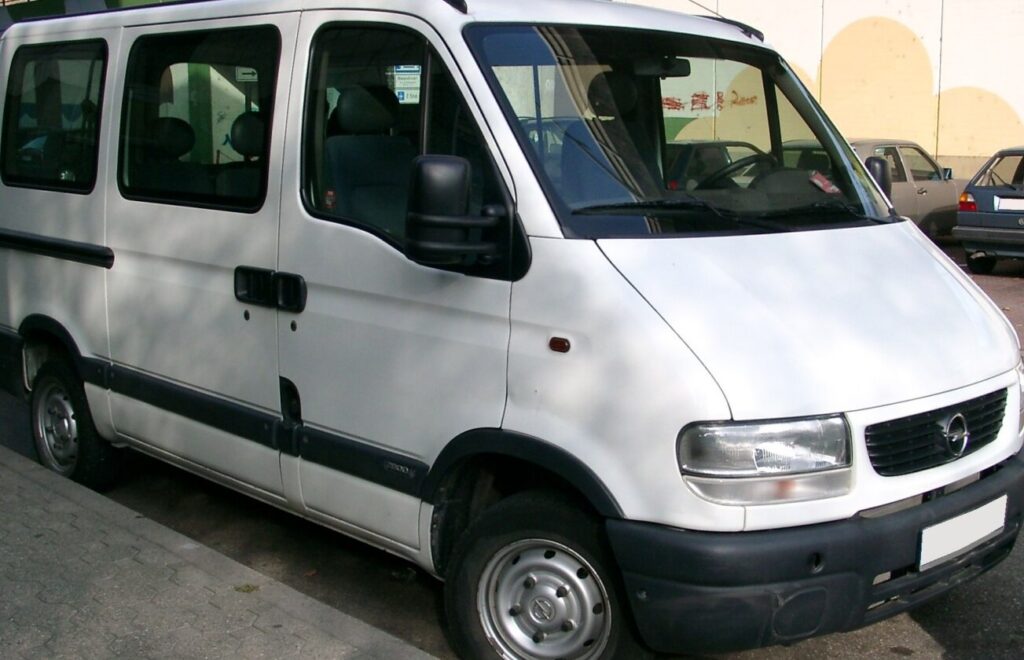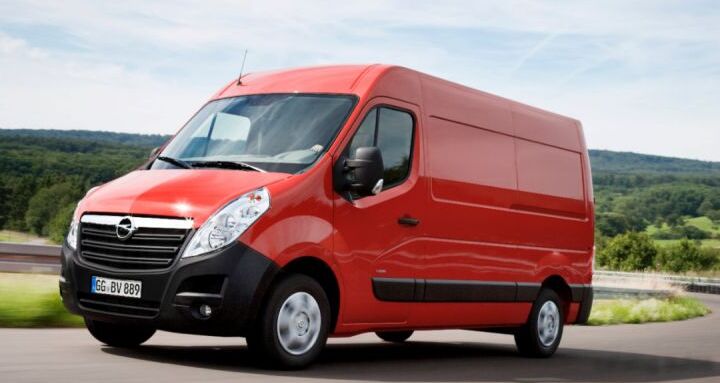
The Opel Movano B 2.3 BiTurbo (136 hp) start/stop, produced from 2010 to 2019, represents a significant iteration of Opel’s large van offering. Positioned within the Movano B generation (launched in 2010), this variant catered to commercial users and fleet operators requiring a balance of power, fuel efficiency, and load-carrying capacity. It served as a mid-range option within the Movano lineup, slotting between the lower-powered single-turbo diesel engines and the higher-output versions aimed at more demanding applications. The Movano B, in general, was Opel’s competitor to vans like the Mercedes-Benz Sprinter, Ford Transit, and Volkswagen Crafter, offering a versatile platform for various commercial needs.
Technical Specifications
| Brand | Opel |
| Model | Movano |
| Generation | Movano B |
| Type (Engine) | 2.3 BiTurbo (136 Hp) start/stop |
| Start of production | 2010 |
| End of production | 2019 |
| Powertrain Architecture | Internal Combustion engine |
| Body type | Minivan |
| Seats | 3 |
| Doors | 5 |
| Fuel consumption (urban) | 7.5-7.2 l/100 km (31.4 – 32.7 US mpg) |
| Fuel consumption (extra urban) | 6.9-6.5 l/100 km (34.1 – 36.2 US mpg) |
| Fuel consumption (combined) | 7.2-6.8 l/100 km (32.7 – 34.6 US mpg) |
| CO2 emissions | 188-177 g/km |
| Fuel Type | Diesel |
| Emission standard | Euro 5 |
| Power | 136 Hp @ 3500 rpm |
| Torque | 340 Nm @ 1500-2500 rpm (250.77 lb.-ft. @ 1500-2500 rpm) |
| Engine layout | Front, Transverse |
| Engine Model/Code | M9T-702 |
| Engine displacement | 2298 cm3 (140.23 cu. in.) |
| Number of cylinders | 4 |
| Engine configuration | Inline |
| Compression ratio | 16:1 |
| Number of valves per cylinder | 4 |
| Fuel injection system | Diesel Commonrail |
| Engine aspiration | BiTurbo, Intercooler |
| Engine oil capacity | 8 l (8.45 US qt | 7.04 UK qt) |
| Trunk (boot) space – minimum | 8000 l (282.52 cu. ft.) |
| Trunk (boot) space – maximum | 17000 l (600.35 cu. ft.) |
| Fuel tank capacity | 80 l (21.13 US gal | 17.6 UK gal) |
| Permitted trailer load with brakes (12%) | 2500 kg (5511.56 lbs.) |
| Permitted trailer load without brakes | 750 kg (1653.47 lbs.) |
| Length | 5048 mm (198.74 in.) |
| Width | 2070 mm (81.5 in.) |
| Width including mirrors | 2470 mm (97.24 in.) |
| Height | 2307-2500 mm (90.83 – 98.43 in.) |
| Wheelbase | 3182 mm (125.28 in.) |
| Front track | 1750 mm (68.9 in.) |
| Rear (Back) track | 1730 mm (68.11 in.) |
| Minimum turning circle | 12.00 m (39.37 ft.) |
| Drivetrain Architecture | Front wheel drive |
| Number of gears and type of gearbox | 6 gears, manual transmission |
| Front brakes | Disc |
| Assisting systems | ABS (Anti-lock braking system) |
| Steering type | Steering rack and pinion |
Powertrain & Engine Architecture
The heart of the Movano B 2.3 BiTurbo is the M9T-702 engine, a 2.3-liter inline-four cylinder diesel. This engine utilizes a sophisticated bi-turbocharger setup – a smaller turbo for quick response at low engine speeds and a larger turbo for sustained power at higher RPMs. This configuration aimed to mitigate the typical turbo lag associated with larger turbos, providing a broader, more usable powerband. The engine employs a common rail direct fuel injection system, delivering fuel directly into the combustion chamber at extremely high pressure for improved combustion efficiency and reduced emissions. The 16:1 compression ratio is typical for a diesel engine, contributing to its thermal efficiency. The engine’s 136 horsepower peak is reached at 3500 rpm, while its 340 Nm (250.77 lb-ft) of torque is available from a low 1500 rpm, extending to 2500 rpm. This broad torque curve is particularly beneficial for a commercial vehicle, providing strong pulling power and reducing the need for frequent gear changes. The engine also incorporates an intercooler to cool the intake air, further increasing power and efficiency. The standard transmission for this variant was a six-speed manual gearbox.
Driving Characteristics
The 2.3 BiTurbo engine, paired with the six-speed manual transmission, offered a noticeable step up in performance compared to the single-turbo versions of the Movano B. While not a sports van, the 136 hp and 340 Nm of torque provided adequate power for carrying substantial loads and maintaining reasonable speeds on highways. The bi-turbo setup minimized turbo lag, making the engine feel responsive even when fully loaded. The six-speed gearbox allowed for efficient cruising at highway speeds, keeping engine RPMs relatively low and contributing to improved fuel economy. Compared to higher-output versions of the Movano, this variant prioritized fuel efficiency and drivability over outright performance. The gear ratios were tuned for maximizing torque and minimizing fuel consumption, rather than achieving rapid acceleration.
Equipment & Trim Levels
The Movano B 2.3 BiTurbo (136 hp) start/stop was typically offered in a relatively basic trim level, reflecting its commercial focus. Standard equipment generally included power steering, a driver’s airbag, ABS brakes, and a basic audio system. Interior upholstery was typically durable cloth. Optional extras included air conditioning, electric windows, a passenger airbag, and a more advanced audio system with Bluetooth connectivity. The van’s interior was designed for practicality and ease of cleaning, with hard-wearing materials used throughout. The dashboard layout was functional and straightforward, prioritizing ergonomics and ease of use.
Chassis & Braking
The Movano B featured a robust ladder-frame chassis, providing a solid foundation for carrying heavy loads. The front suspension utilized coil springs and a stabilizer bar, while the rear suspension employed leaf springs. This setup prioritized load-carrying capacity and durability over ride comfort. The front brakes were disc brakes, providing adequate stopping power, while the rear brakes were typically drum brakes, a cost-saving measure common in commercial vehicles. ABS (Anti-lock Braking System) was standard, enhancing safety during emergency braking situations.
Market Reception & Comparison
The Opel Movano B 2.3 BiTurbo (136 hp) start/stop was generally well-received by commercial vehicle operators. Critics praised its fuel efficiency, strong torque output, and robust construction. Compared to the lower-powered single-turbo versions, the BiTurbo offered a significant improvement in performance, making it more suitable for demanding applications. However, it wasn’t as refined or powerful as the higher-output versions. Fuel economy figures of 7.2-6.8 l/100 km (32.7 – 34.6 US mpg) were competitive within its segment. Reliability was generally good, although some owners reported issues with the diesel particulate filter (DPF) system, a common concern with modern diesel engines.
Legacy
The Opel Movano B 2.3 BiTurbo (136 hp) start/stop remains a relatively common sight on European roads today. The M9T-702 engine, while not without its quirks, has proven to be reasonably durable with proper maintenance. On the used car market, these vans represent a cost-effective option for businesses and individuals requiring a large, capable van. The availability of spare parts is generally good, and the relatively simple mechanical design makes them relatively easy to repair. However, potential buyers should be aware of the potential for DPF issues and ensure that the van has been regularly serviced.