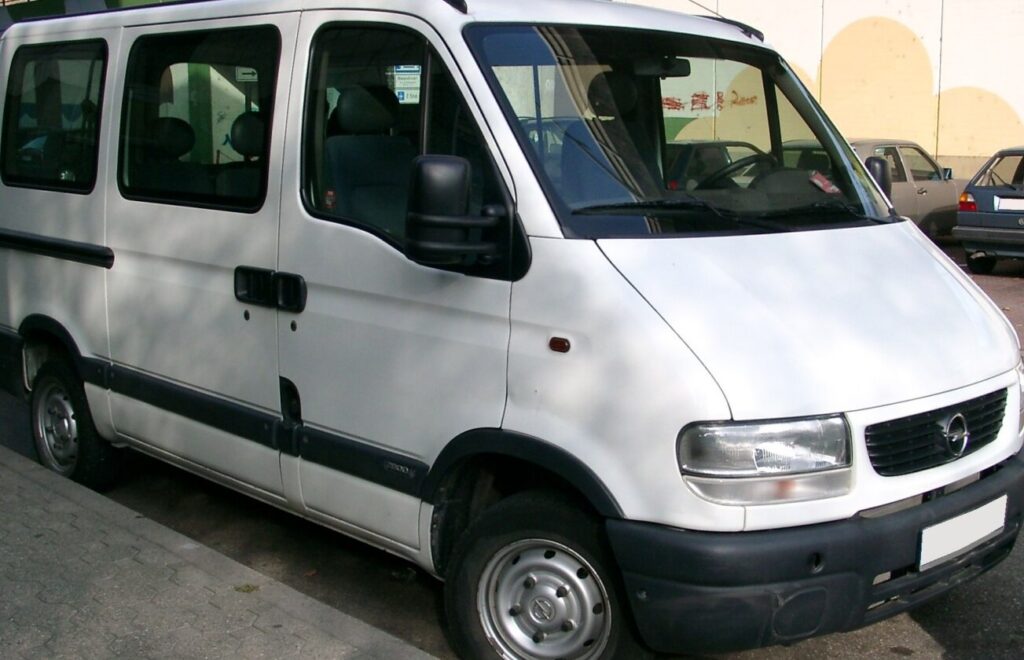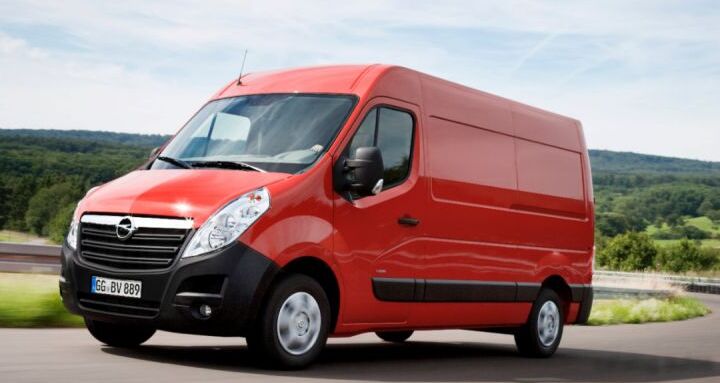
The Opel Movano B 2.3 BiTurbo (163 hp) start/stop, produced from 2010 to 2019, represents a significant iteration of Opel’s large van offering. Positioned within the Movano B generation (launched in 2010), this variant catered to commercial users and businesses requiring a robust and relatively fuel-efficient large-capacity van. It served as a workhorse, offering a balance between performance, load capacity, and running costs. The Movano B, in general, was Opel’s competitor to vehicles like the Mercedes-Benz Sprinter, Ford Transit, and Volkswagen Crafter, aiming to provide a practical and durable solution for various commercial applications. This specific 2.3 BiTurbo engine and 6-speed manual transmission combination was a popular choice, offering a step up in power and torque compared to lower-spec models.
Technical Specifications
| Brand | Opel |
| Model | Movano |
| Generation | Movano B |
| Type (Engine) | 2.3 BiTurbo (163 Hp) start/stop |
| Start of production | 2010 |
| End of production | 2019 |
| Powertrain Architecture | Internal Combustion engine |
| Body type | Minivan |
| Seats | 3 |
| Doors | 5 |
| Fuel consumption (urban) | 7.5-7.2 l/100 km (31.4 – 32.7 US mpg) |
| Fuel consumption (extra urban) | 6.9-6.5 l/100 km (34.1 – 36.2 US mpg) |
| Fuel consumption (combined) | 7.2-6.8 l/100 km (32.7 – 34.6 US mpg) |
| CO2 emissions | 188-177 g/km |
| Fuel Type | Diesel |
| Emission standard | Euro 5 |
| Power | 163 Hp @ 3500 rpm |
| Torque | 360 Nm @ 1500-3000 rpm (265.52 lb.-ft. @ 1500-3000 rpm) |
| Engine layout | Front, Transverse |
| Engine Model/Code | M9T-702, M9T 708 |
| Engine displacement | 2298 cm3 (140.23 cu. in.) |
| Number of cylinders | 4 |
| Engine configuration | Inline |
| Compression ratio | 16:1 |
| Number of valves per cylinder | 4 |
| Fuel injection system | Diesel Commonrail |
| Engine aspiration | BiTurbo, Intercooler |
| Engine oil capacity | 8 l (8.45 US qt | 7.04 UK qt) |
| Trunk (boot) space (minimum) | 8000 l (282.52 cu. ft.) |
| Trunk (boot) space (maximum) | 17000 l (600.35 cu. ft.) |
| Fuel tank capacity | 80 l (21.13 US gal | 17.6 UK gal) |
| Permitted trailer load (braked) | 2500 kg (5511.56 lbs.) |
| Permitted trailer load (unbraked) | 750 kg (1653.47 lbs.) |
| Length | 5048 mm (198.74 in.) |
| Width | 2070 mm (81.5 in.) |
| Width (including mirrors) | 2470 mm (97.24 in.) |
| Height | 2307-2500 mm (90.83 – 98.43 in.) |
| Wheelbase | 3182 mm (125.28 in.) |
| Front track | 1750 mm (68.9 in.) |
| Rear track | 1730 mm (68.11 in.) |
| Minimum turning circle | 12.00 m (39.37 ft.) |
| Drivetrain | Front wheel drive |
| Number of gears | 6 |
| Gearbox type | Manual |
| Front brakes | Disc |
| Assisting systems | ABS (Anti-lock braking system) |
| Steering type | Steering rack and pinion |
Powertrain & Engine Architecture
The heart of the Movano B 2.3 BiTurbo is the M9T engine family, specifically the M9T-702 or M9T-708 variants. This 2.3-liter inline-four diesel engine utilizes a common rail direct injection system, delivering fuel directly into the combustion chamber at extremely high pressure for optimized combustion. The “BiTurbo” designation indicates the presence of two turbochargers – a smaller turbocharger for quick response at low engine speeds and a larger turbocharger for increased power at higher RPMs. This configuration minimizes turbo lag and provides a broader, more usable powerband. An intercooler is also incorporated to cool the compressed air from the turbochargers, further increasing power and efficiency. The engine produces 163 horsepower at 3500 rpm and a substantial 360 Nm (265.52 lb-ft) of torque between 1500 and 3000 rpm. This torque output is particularly beneficial for a van designed for hauling heavy loads. The 6-speed manual transmission was the standard offering for this engine, providing a good balance between fuel economy and driver control.
Driving Characteristics
The 2.3 BiTurbo engine, paired with the 6-speed manual transmission, offered a noticeable improvement in performance compared to the lower-powered engine options available in the Movano B range. While not a sports van by any means, the 163 hp and 360 Nm of torque provided sufficient power for fully loaded operation, even on inclines. The twin-turbo setup minimized turbo lag, resulting in a relatively responsive driving experience. The gear ratios in the 6-speed manual were well-suited to the engine’s characteristics, allowing for comfortable cruising at highway speeds while still providing ample torque for low-speed maneuvering and hauling. Compared to the single-turbo versions, the BiTurbo felt more effortless, especially when carrying a significant payload. However, it’s important to note that the Movano B, even with the more powerful engine, is still a large, heavy vehicle, and its handling is geared towards practicality and stability rather than sporty dynamics.
Equipment & Trim Levels
The Movano B 2.3 BiTurbo (163 hp) typically came with a fairly comprehensive standard equipment list, geared towards commercial use. This included features like air conditioning, a driver’s airbag, power windows, and central locking. Depending on the specific trim level (often denoted by load capacity and body style variations), additional features could include a passenger airbag, a radio with CD player, and electric mirrors. Interior upholstery was typically durable and practical, often consisting of hard-wearing cloth. Optional extras included navigation systems, parking sensors, and upgraded audio systems. The focus was on functionality and durability rather than luxury.
Chassis & Braking
The Movano B utilized a robust ladder-frame chassis, providing a solid foundation for carrying heavy loads. The front suspension consisted of independent coil springs and MacPherson struts, while the rear suspension employed leaf springs. This setup prioritized load-carrying capacity and durability over ride comfort. Braking was typically accomplished with front disc brakes and rear drum brakes, although some higher-spec models may have featured rear disc brakes. Anti-lock Braking System (ABS) was standard, enhancing safety during emergency braking situations. Stabilizer bars were fitted to both the front and rear axles to reduce body roll during cornering.
Market Reception & Comparison
The Opel Movano B 2.3 BiTurbo (163 hp) was generally well-received by critics and commercial vehicle operators. It was praised for its strong engine performance, good fuel economy (especially considering its size and weight), and robust build quality. Compared to the lower-powered engine options, the BiTurbo variant offered a significant improvement in drivability and load-carrying capability. Against competitors like the Ford Transit and Mercedes-Benz Sprinter, the Movano B offered a competitive package, often at a slightly lower price point. However, some critics noted that the interior was somewhat basic compared to some of its rivals. Fuel economy figures of 7.2-6.8 l/100 km (32.7 – 34.6 US mpg) were considered respectable for a vehicle of this size and class.
Legacy
The Opel Movano B 2.3 BiTurbo (163 hp) remains a popular choice in the used commercial vehicle market. The M9T engine, while not without its potential issues (such as turbocharger wear and injector problems), is generally considered to be a durable and reliable unit when properly maintained. The availability of parts is generally good, and the relatively simple mechanical design makes it relatively easy to repair. Today, these vans are often found in the hands of small businesses, tradespeople, and delivery services, continuing to serve as reliable workhorses. The combination of a powerful engine, a practical interior, and a robust chassis has ensured that the Movano B 2.3 BiTurbo remains a viable option for those seeking a large-capacity van.