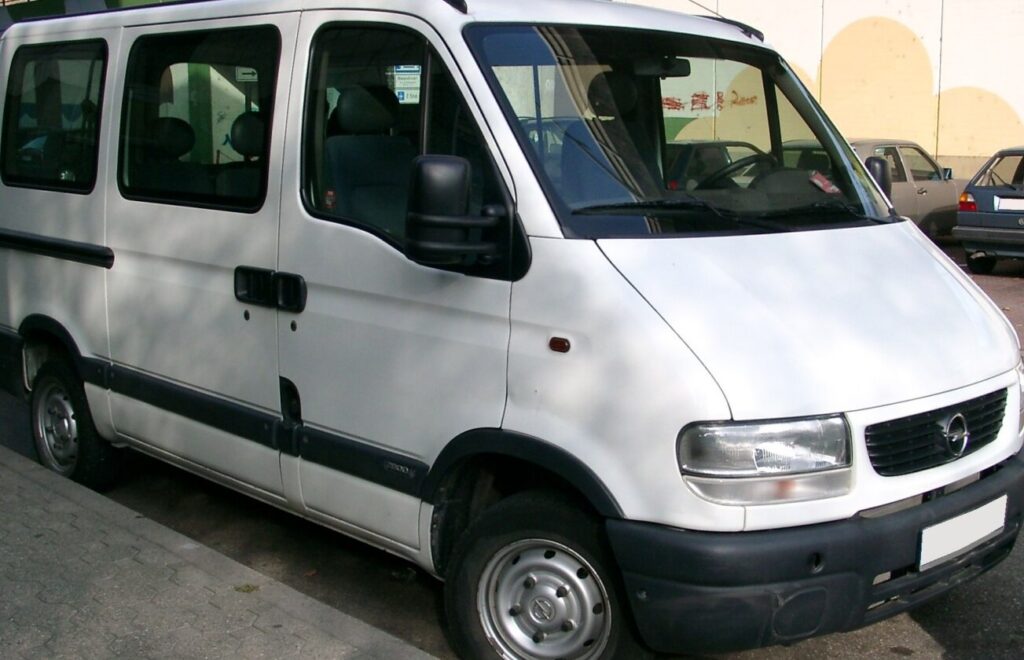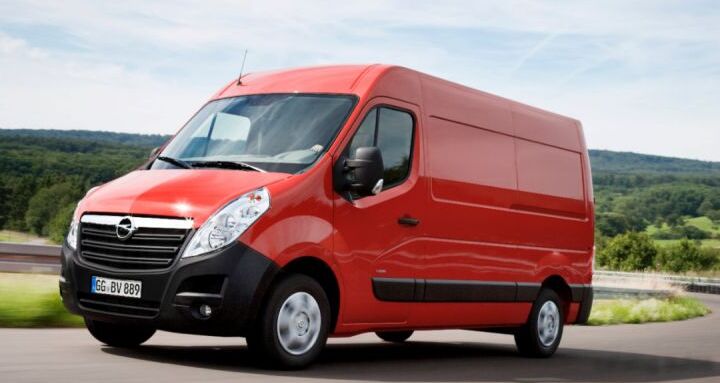
The Opel Movano B 2.3 CDTI Turbo, producing 110 horsepower, was a commercially-focused light commercial vehicle produced from 2010 to 2019. Part of the second generation Movano (B-platform), it served as Opel’s offering in the large van segment, competing with vehicles like the Ford Transit, Mercedes-Benz Sprinter, and Volkswagen Crafter. This particular variant, with its 2.3-liter turbodiesel engine and six-speed manual transmission, represented a mid-range option within the Movano B lineup, balancing affordability with reasonable performance and fuel economy for commercial applications. The Movano was also sold under the Renault and Nissan brands, due to the Renault-Nissan-Mitsubishi Alliance, and shared many components with those vehicles.
Technical Specifications
| Brand | Opel |
| Model | Movano |
| Generation | Movano B |
| Type (Engine) | 2.3 CDTI Turbo (110 Hp) |
| Start of production | 2010 |
| End of production | 2019 |
| Powertrain Architecture | Internal Combustion engine |
| Body type | Minivan |
| Seats | 3 |
| Doors | 5 |
| Fuel consumption (urban) | 9.2-8.9 l/100 km (25.6 – 26.4 US mpg) |
| Fuel consumption (extra urban) | 7.4-7.0 l/100 km (31.8 – 33.6 US mpg) |
| Fuel consumption (combined) | 8.0-7.8 l/100 km (29.4 – 30.2 US mpg) |
| CO2 emissions | 213-201 g/km |
| Fuel Type | Diesel |
| Emission standard | Euro 5 |
| Power | 110 Hp @ 3500 rpm |
| Torque | 285 Nm @ 1250-2000 rpm (210.21 lb.-ft. @ 1250-2000 rpm) |
| Engine layout | Front, Transverse |
| Engine Model/Code | M9T-870 |
| Engine displacement | 2298 cm3 (140.23 cu. in.) |
| Number of cylinders | 4 |
| Engine configuration | Inline |
| Compression ratio | 16:1 |
| Number of valves per cylinder | 4 |
| Fuel injection system | Diesel Commonrail |
| Engine aspiration | Turbocharger, Intercooler |
| Engine oil capacity | 8 l (8.45 US qt | 7.04 UK qt) |
| Trunk (boot) space – minimum | 8000 l (282.52 cu. ft.) |
| Trunk (boot) space – maximum | 17000 l (600.35 cu. ft.) |
| Fuel tank capacity | 80 l (21.13 US gal | 17.6 UK gal) |
| Permitted trailer load with brakes (12%) | 2500 kg (5511.56 lbs.) |
| Permitted trailer load without brakes | 750 kg (1653.47 lbs.) |
| Length | 5048 mm (198.74 in.) |
| Width | 2070 mm (81.5 in.) |
| Width including mirrors | 2470 mm (97.24 in.) |
| Height | 2307-2500 mm (90.83 – 98.43 in.) |
| Wheelbase | 3182 mm (125.28 in.) |
| Front track | 1750 mm (68.9 in.) |
| Rear (Back) track | 1730 mm (68.11 in.) |
| Minimum turning circle | 12.00 m (39.37 ft.) |
| Drivetrain Architecture | Front wheel drive |
| Number of gears | 6 |
| Type of gearbox | Manual transmission |
| Front brakes | Disc |
| Assisting systems | ABS (Anti-lock braking system) |
| Steering type | Steering rack and pinion |
Powertrain & Engine Architecture
The heart of the Movano B 2.3 CDTI Turbo 110 was the M9T-870 engine, a 2.3-liter inline-four cylinder diesel. This engine was part of a family of engines developed by Renault and utilized across several models within the Renault-Nissan Alliance. It featured a common rail direct fuel injection system, delivering fuel at extremely high pressure for improved combustion efficiency and reduced emissions. A turbocharger with an intercooler was employed to boost power output, providing increased air intake to the engine. The engine’s 16:1 compression ratio was typical for a diesel engine of this era. The six-speed manual transmission was a standard offering, chosen for its durability and cost-effectiveness in commercial applications. While an automated manual transmission (AMT) was available on some Movano B models, it was less common with the 110 hp engine.
Driving Characteristics
The 110 horsepower output of this Movano variant positioned it as a workhorse, rather than a performance vehicle. Acceleration was modest, but adequate for typical commercial duties. The engine produced a respectable 285 Nm (210 lb-ft) of torque, available from a low 1250 rpm, which provided good pulling power for hauling loads. The six-speed manual transmission allowed for efficient highway cruising, while the lower gears provided sufficient grunt for navigating urban environments and tackling inclines. Compared to the higher-output versions of the 2.3 CDTI (120 hp, 150 hp), the 110 hp model offered a more economical driving experience, albeit with reduced performance. The gear ratios were tuned for maximizing fuel efficiency and providing a usable powerband for everyday driving.
Equipment & Trim Levels
The Movano B 2.3 CDTI Turbo 110 was generally offered in a relatively basic trim level, reflecting its commercial focus. Standard equipment typically included power steering, a driver’s airbag, ABS brakes, and a basic audio system. Interior upholstery was typically durable cloth. Options included air conditioning, electric windows, a passenger airbag, and upgraded audio systems. The Movano B was available in a variety of body styles, including panel vans, crew cabs, and chassis cabs, allowing for customization to suit specific business needs. The dashboard layout was functional and straightforward, prioritizing practicality over aesthetics.
Chassis & Braking
The Movano B featured a robust ladder-frame chassis, providing a solid foundation for carrying heavy loads. The front suspension utilized independent coil springs, while the rear suspension employed leaf springs. This configuration prioritized load-carrying capacity and durability. Front brakes were ventilated discs, providing adequate stopping power. Rear brakes were typically drums, a cost-saving measure common in commercial vehicles of this class. The steering system was a rack and pinion setup, offering reasonable precision and feedback. Stabilizer bars were fitted to reduce body roll during cornering, although the Movano B was not designed for sporty handling.
Market Reception & Comparison
The Opel Movano B 2.3 CDTI Turbo 110 was generally well-received in the commercial vehicle market. Critics praised its practicality, load-carrying capacity, and relatively low operating costs. However, some reviewers noted that the engine could feel underpowered when fully loaded, and the interior was somewhat basic compared to some competitors. Compared to the more powerful Movano variants, the 110 hp model offered better fuel economy and lower purchase price, making it an attractive option for businesses prioritizing cost-effectiveness. The 1.9 TDI Volkswagen Crafter offered a similar level of economy, but the Movano generally provided more interior space.
Legacy
The Opel Movano B 2.3 CDTI Turbo 110 has proven to be a relatively reliable powertrain in the used vehicle market. The M9T-870 engine, while not without its potential issues (such as turbocharger wear and injector problems), is generally considered durable when properly maintained. Regular oil changes and adherence to the manufacturer’s service schedule are crucial for ensuring long-term reliability. Today, these vans are still commonly found in service, particularly among small businesses and tradespeople. Their affordability and practicality continue to make them a viable option for those seeking a dependable and spacious light commercial vehicle.