
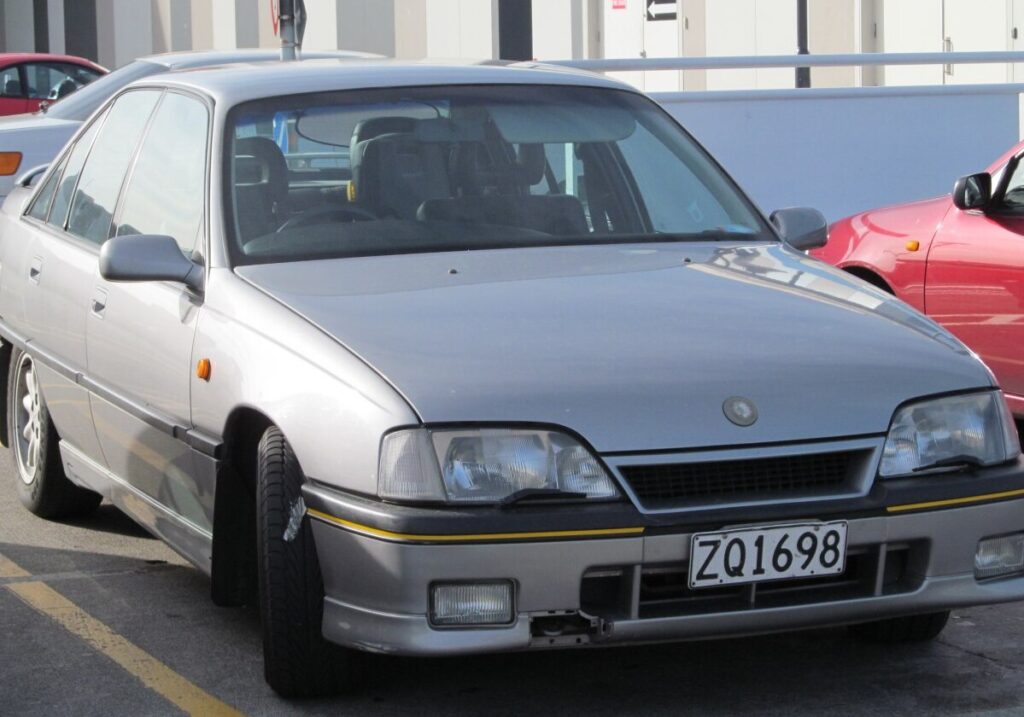
The Opel Omega A 1.8 S, produced between 1987 and 1989, represented the entry point into the Omega A range, Opel’s replacement for the long-running Commodore. Positioned as a large family sedan, the Omega A aimed to offer a more modern and sophisticated alternative to its predecessor, competing with vehicles like the Ford Granada and Peugeot 604 in the European market. The 1.8 S variant, equipped with an 88 horsepower engine and typically a manual transmission (though automatics were available), was designed for buyers prioritizing fuel efficiency and affordability within the Omega lineup. It served as a practical and comfortable option for families and those covering long distances.
Technical Specifications
| Brand | Opel |
| Model | Omega |
| Generation | Omega A |
| Type (Engine) | 1.8 S (88 Hp) |
| Start of production | 1987 |
| End of production | 1989 |
| Powertrain Architecture | Internal Combustion engine |
| Body type | Sedan |
| Seats | 5 |
| Doors | 4 |
| Fuel consumption (urban) | 9.8 l/100 km (24 US mpg, 28.8 UK mpg, 10.2 km/l) |
| Fuel consumption (extra urban) | 5.6 l/100 km (42 US mpg, 50.4 UK mpg, 17.9 km/l) |
| Fuel consumption (combined) | 7.1 l/100 km (33.1 US mpg, 39.8 UK mpg, 14.1 km/l) |
| Fuel Type | Petrol (Gasoline) |
| Acceleration 0 – 100 km/h | 14 sec |
| Acceleration 0 – 62 mph | 14 sec |
| Acceleration 0 – 60 mph | 13.3 sec |
| Maximum speed | 183 km/h (113.71 mph) |
| Weight-to-power ratio | 13.8 kg/Hp, 72.4 Hp/tonne |
| Weight-to-torque ratio | 8.5 kg/Nm, 117.7 Nm/tonne |
| Power | 88 Hp @ 5200 rpm |
| Power per litre | 49 Hp/l |
| Torque | 143 Nm @ 3200 rpm (105.47 lb.-ft. @ 3200 rpm) |
| Engine layout | Front, Longitudinal |
| Engine Model/Code | E18NVR |
| Engine displacement | 1796 cm3 (109.6 cu. in.) |
| Number of cylinders | 4 |
| Engine configuration | Inline |
| Cylinder Bore | 84.8 mm (3.34 in.) |
| Piston Stroke | 79.5 mm (3.13 in.) |
| Compression ratio | 9.2:1 |
| Number of valves per cylinder | 2 |
| Fuel injection system | Carburettor |
| Engine aspiration | Naturally aspirated engine |
| Valvetrain | OHC |
| Engine oil capacity | 4.5 l (4.76 US qt | 3.96 UK qt) |
| Coolant | 6.4 l (6.76 US qt | 5.63 UK qt) |
| Kerb Weight | 1215 kg (2678.62 lbs.) |
| Max. weight | 1770 kg (3902.18 lbs.) |
| Max load | 555 kg (1223.57 lbs.) |
| Trunk (boot) space – minimum | 520 l (18.36 cu. ft.) |
| Trunk (boot) space – maximum | 870 l (30.72 cu. ft.) |
| Fuel tank capacity | 75 l (19.81 US gal | 16.5 UK gal) |
| Length | 4740 mm (186.61 in.) |
| Width | 1760 mm (69.29 in.) |
| Height | 1445 mm (56.89 in.) |
| Wheelbase | 2730 mm (107.48 in.) |
| Front track | 1445 mm (56.89 in.) |
| Rear (Back) track | 1460 mm (57.48 in.) |
| Drivetrain Architecture | The Internal combustion engine (ICE) drives the rear wheels of the vehicle. |
| Drive wheel | Rear wheel drive |
| Number of gears and type of gearbox | 5 gears, manual transmission |
| Front suspension | Spring Strut |
| Rear suspension | Wishbone |
| Front brakes | Ventilated discs |
| Rear brakes | Disc |
| Assisting systems | ABS (Anti-lock braking system) |
| Steering type | Steering rack and pinion |
| Power steering | Hydraulic Steering |
| Tires size | 185/70 R14 |
| Wheel rims size | 14 |
Powertrain & Engine Architecture
The 1.8 S Omega A utilized the E18NVR engine, a 1796cc inline-four cylinder petrol engine. This engine was a relatively simple design, featuring a single overhead camshaft (OHC) and two valves per cylinder. Crucially, it employed a carburettor fuel delivery system, a common feature for vehicles of this era, rather than fuel injection. This contributed to its lower cost but also impacted its overall efficiency and responsiveness compared to later, fuel-injected Opel engines. The engine produced 88 horsepower at 5200 rpm and 143 Nm (105.47 lb-ft) of torque at 3200 rpm. While not a powerhouse, it was considered adequate for comfortable cruising and everyday driving. The engine was mounted longitudinally in the front of the vehicle, driving the rear wheels. The available transmission was primarily a five-speed manual, though a three-speed automatic transmission was also offered, albeit less common. The automatic transmission, while providing convenience, noticeably reduced acceleration and increased fuel consumption.
Driving Characteristics
The 1.8 S Omega A offered a comfortable, if not particularly sporty, driving experience. With 88 horsepower, acceleration was modest, taking around 14 seconds to reach 62 mph (100 km/h). The carbureted engine delivered power in a relatively linear fashion, lacking the punch of the later fuel-injected versions or the higher-displacement engines like the 2.0 or 2.6-liter options. The manual transmission allowed for better control and responsiveness, while the automatic version prioritized ease of use. The rear-wheel-drive layout provided balanced handling, but the relatively soft suspension tuning emphasized comfort over outright cornering ability. The Omega A 1.8 S was best suited for long-distance cruising and everyday commuting, rather than spirited driving.
Equipment & Trim Levels
The 1.8 S trim level was considered the base model in the Omega A range. Standard equipment typically included cloth upholstery, basic instrumentation, and manual windows and door locks. Power steering was usually standard, but air conditioning and central locking were often optional extras. The interior design was functional and straightforward, prioritizing practicality over luxury. Optional extras could include upgraded audio systems, sunroofs, and more comfortable seating. The exterior styling was relatively understated, with minimal chrome trim and a focus on aerodynamic efficiency.
Chassis & Braking
The Omega A featured a relatively conventional chassis design for the time. The front suspension utilized MacPherson strut springs, while the rear suspension employed a semi-independent wishbone setup. This configuration provided a comfortable ride, but wasn’t particularly sophisticated. Braking was initially equipped with ventilated discs on the front wheels and solid discs on the rear. Anti-lock braking system (ABS) was available as an option, enhancing safety. The steering was a rack-and-pinion system with hydraulic power assistance, providing relatively light and precise steering feel.
Market Reception & Comparison
The Opel Omega A 1.8 S was generally well-received as an affordable and practical family sedan. Critics praised its spacious interior, comfortable ride, and reasonable fuel economy. However, the 1.8-liter engine was often criticized for being underpowered, particularly when paired with the automatic transmission. Compared to the higher-spec Omega A models, such as the 2.0 or 2.6-liter versions, the 1.8 S offered significantly less performance. The 2.0-liter engine provided a noticeable boost in power and torque, while the 2.6-liter engine offered a more luxurious and refined driving experience. The 1.8 S was positioned as a value-oriented option, appealing to buyers who prioritized affordability and fuel efficiency over performance.
Legacy
The Opel Omega A 1.8 S, while not the most sought-after variant, remains a relatively reliable and affordable classic car. The E18NVR engine is known for its durability, although regular maintenance is essential to prevent issues such as carburetor problems and oil leaks. Parts availability can be challenging, but many components are still available through specialist suppliers. Today, the Omega A 1.8 S represents a piece of automotive history, offering a glimpse into the design and engineering of the late 1980s. It’s a practical and comfortable classic that can still provide years of reliable service with proper care.
