
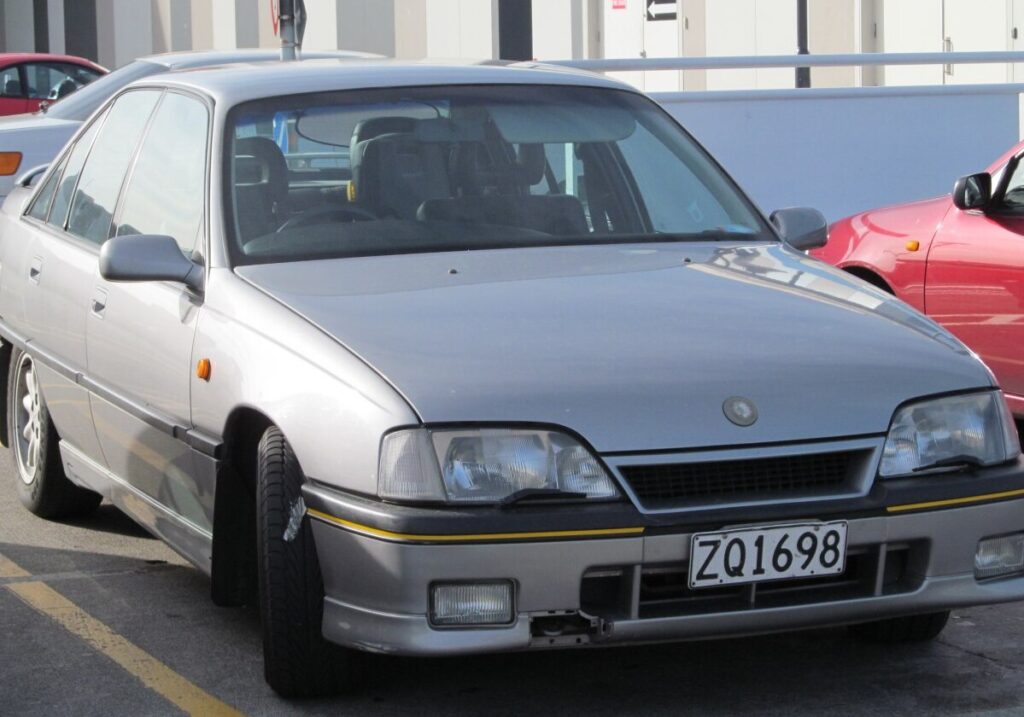
The Opel Omega A 1.8i, produced between 1986 and 1987, represented the entry point into Opel’s flagship sedan range. Positioned within the first generation (Omega A) of the model, which spanned from 1986 to 1994, the 1.8i served as a more affordable and fuel-efficient alternative to the higher-specification engines offered, such as the 2.0 and 2.3-liter variants. It was primarily marketed in Europe as a comfortable and spacious family saloon, offering a blend of practicality and reasonable performance. The Omega A was a significant model for Opel, replacing the long-running Opel Rekord, and aimed to compete with established executive cars like the Ford Granada and BMW 5 Series.
Technical Specifications
| Brand | Opel |
| Model | Omega |
| Generation | Omega A |
| Type (Engine) | 1.8i (115 Hp) |
| Start of production | 1986 |
| End of production | 1987 |
| Powertrain Architecture | Internal Combustion engine |
| Body type | Sedan |
| Seats | 5 |
| Doors | 4 |
| Fuel consumption (urban) | 10.5 l/100 km (22.4 US mpg, 26.9 UK mpg, 9.5 km/l) |
| Fuel consumption (extra urban) | 5.8 l/100 km (40.6 US mpg, 48.7 UK mpg, 17.2 km/l) |
| Fuel consumption (combined) | 7.7 l/100 km (30.5 US mpg, 36.7 UK mpg, 13 km/l) |
| Fuel Type | Petrol (Gasoline) |
| Acceleration 0 – 100 km/h | 13 sec |
| Acceleration 0 – 62 mph | 13 sec |
| Acceleration 0 – 60 mph | 12.4 sec |
| Maximum speed | 187 km/h (116.2 mph) |
| Weight-to-power ratio | 10.7 kg/Hp, 93.1 Hp/tonne |
| Weight-to-torque ratio | 7.7 kg/Nm, 129.6 Nm/tonne |
| Power | 115 Hp @ 5600 rpm |
| Power per litre | 64 Hp/l |
| Torque | 160 Nm @ 4600 rpm (118.01 lb.-ft. @ 4600 rpm) |
| Engine layout | Front, Longitudinal |
| Engine Model/Code | 18SEH |
| Engine displacement | 1796 cm3 (109.6 cu. in.) |
| Number of cylinders | 4 |
| Engine configuration | Inline |
| Cylinder Bore | 84.8 mm (3.34 in.) |
| Piston Stroke | 79.5 mm (3.13 in.) |
| Compression ratio | 10:1 |
| Number of valves per cylinder | 2 |
| Fuel injection system | Multi-port manifold injection |
| Engine aspiration | Naturally aspirated engine |
| Valvetrain | SOHC |
| Engine oil capacity | 4.5 l (4.76 US qt | 3.96 UK qt) |
| Coolant capacity | 6.4 l (6.76 US qt | 5.63 UK qt) |
| Kerb Weight | 1235 kg (2722.71 lbs.) |
| Max. weight | 1795 kg (3957.3 lbs.) |
| Max load | 560 kg (1234.59 lbs.) |
| Trunk (boot) space – minimum | 520 l (18.36 cu. ft.) |
| Trunk (boot) space – maximum | 870 l (30.72 cu. ft.) |
| Fuel tank capacity | 75 l (19.81 US gal | 16.5 UK gal) |
| Length | 4740 mm (186.61 in.) |
| Width | 1760 mm (69.29 in.) |
| Height | 1445 mm (56.89 in.) |
| Wheelbase | 2730 mm (107.48 in.) |
| Front track | 1445 mm (56.89 in.) |
| Rear track | 1460 mm (57.48 in.) |
| Drivetrain Architecture | Rear wheel drive |
| Drive wheel | Rear wheel drive |
| Number of gears | 5 gears, manual transmission |
| Front suspension | Spring Strut |
| Rear suspension | Wishbone |
| Front brakes | Ventilated discs |
| Rear brakes | Disc |
| Assisting systems | ABS (Anti-lock braking system) |
| Tires size | 185/65 R14 |
| Wheel rims size | 14 |
Powertrain & Engine Architecture
The Opel Omega A 1.8i was powered by the 18SEH engine, an inline four-cylinder, naturally aspirated gasoline engine displacing 1796 cc (109.6 cubic inches). This engine featured a single overhead camshaft (SOHC) valvetrain with two valves per cylinder. Fuel delivery was managed by a multi-port fuel injection system, a relatively modern technology for the time, contributing to improved fuel efficiency and smoother operation compared to carbureted engines. The 18SEH engine produced 115 horsepower at 5600 rpm and 160 Nm (118 lb-ft) of torque at 4600 rpm. The engine was mounted longitudinally in the front of the vehicle, driving the rear wheels. The standard transmission for this variant was a five-speed manual gearbox, although a four-speed automatic transmission was also available as an option. The automatic transmission, while offering convenience, did impact acceleration and fuel economy.
Driving Characteristics
The 1.8i Omega A offered a comfortable, rather than sporty, driving experience. Acceleration was adequate for everyday driving, with a 0-60 mph time of around 12.4 seconds, but it was noticeably slower than the 2.0 and 2.3-liter models. The five-speed manual transmission allowed drivers to keep the engine in its optimal power band, while the optional automatic transmission provided smoother shifts but at the expense of responsiveness. The rear-wheel-drive layout provided balanced handling, but the relatively soft suspension tuning prioritized ride comfort over sharp cornering. Compared to the more powerful Omega variants, the 1.8i felt less strained during highway cruising, and its lighter weight contributed to slightly better fuel economy.
Equipment & Trim Levels
The 1.8i Omega A typically came with a fairly basic level of equipment, reflecting its position as the entry-level model. Standard features generally included central locking, power steering, and cloth upholstery. Optional extras included electric windows, a sunroof, and upgraded audio systems. Interior trim was generally functional and durable, with a focus on practicality rather than luxury. The dashboard layout was straightforward and easy to use, with clearly labeled controls. Higher trim levels, available with the larger engines, offered more luxurious features such as leather upholstery, wood trim, and more advanced audio systems.
Chassis & Braking
The Omega A featured a traditional body-on-frame construction, providing a robust and durable chassis. Front suspension utilized a MacPherson strut setup, while the rear employed a multi-link wishbone suspension. Brakes were ventilated discs at the front and solid discs at the rear, providing adequate stopping power for the vehicle’s weight and performance. An Anti-lock Braking System (ABS) was available as an option, enhancing safety by preventing wheel lockup during hard braking. The 1.8i model typically rode on 14-inch wheels with 185/65 R14 tires.
Market Reception & Comparison
The Opel Omega A 1.8i was generally well-received as a practical and affordable family saloon. Critics praised its spacious interior, comfortable ride, and reasonable fuel economy. However, it was often criticized for its relatively modest performance compared to its rivals and higher-specification Omega variants. Compared to the 2.0 and 2.3-liter models, the 1.8i offered a lower purchase price and better fuel economy, but at the cost of acceleration and overall refinement. The automatic transmission option was seen as a compromise, offering convenience but sacrificing performance. The Omega A 1.8i appealed to buyers who prioritized practicality and value over outright performance.
Legacy
The 18SEH engine, while not known for being particularly high-performance, proved to be a relatively reliable and durable unit. Omega A 1.8i models are now considered classic cars, and well-maintained examples are sought after by enthusiasts. The engine’s simplicity and readily available parts contribute to its continued usability. However, like all older vehicles, they are susceptible to age-related issues such as corrosion and wear and tear on rubber components. The Omega A 1.8i remains a testament to Opel’s commitment to building comfortable and practical family cars, and it holds a place in automotive history as a significant model in the company’s lineup.
