
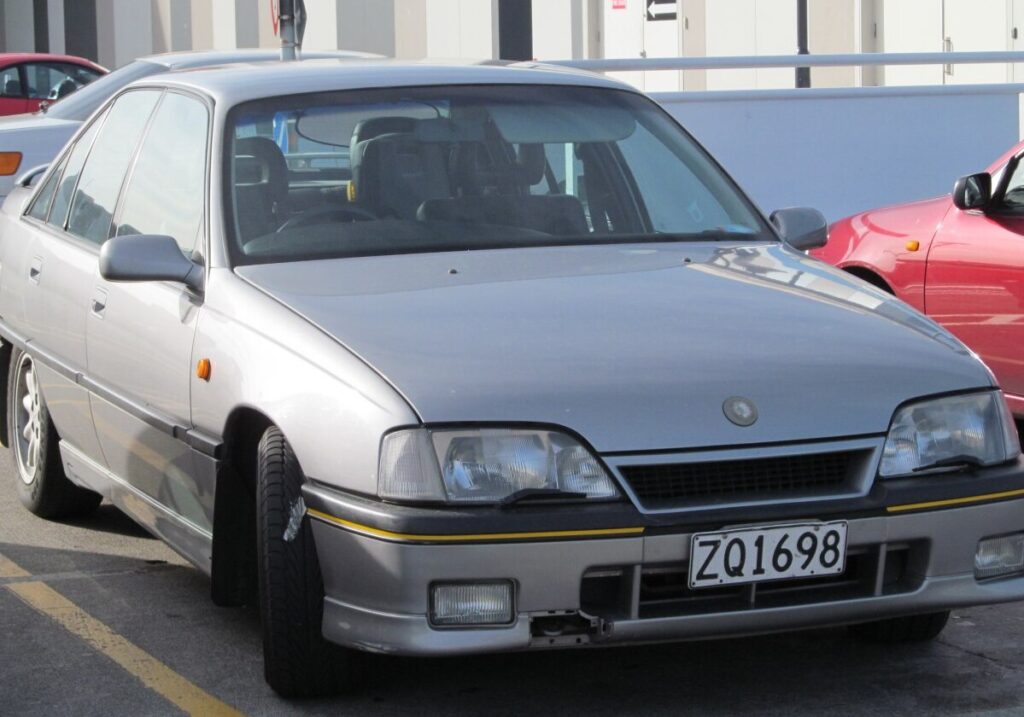
The Opel Omega A 1.8i N CAT (82 hp) was a variant of the first-generation Opel Omega, produced between 1986 and 1987. Positioned as the entry-level model in the Omega A range, it offered a more affordable option compared to the larger-engined versions. The Omega A, launched in 1986, was a significant model for Opel, intended to replace the aging Opel Rekord and Commodore. It represented a move upmarket for the brand, offering a more spacious and technologically advanced vehicle. The 1.8i N CAT served as a practical and economical choice for buyers prioritizing fuel efficiency and everyday usability over outright performance.
Technical Specifications
| Brand | Opel |
| Model | Omega |
| Generation | Omega A |
| Type (Engine) | 1.8i N CAT (82 Hp) |
| Start of production | 1986 |
| End of production | 1987 |
| Powertrain Architecture | Internal Combustion engine |
| Body type | Sedan |
| Seats | 5 |
| Doors | 4 |
| Fuel consumption (urban) | 9.8 l/100 km (24 US mpg, 28.8 UK mpg, 10.2 km/l) |
| Fuel consumption (extra urban) | 5.6 l/100 km (42 US mpg, 50.4 UK mpg, 17.9 km/l) |
| Fuel consumption (combined) | 7.8 l/100 km (30.2 US mpg, 36.2 UK mpg, 12.8 km/l) |
| Fuel Type | Petrol (Gasoline) |
| Acceleration 0 – 100 km/h | 14 sec |
| Acceleration 0 – 62 mph | 14 sec |
| Acceleration 0 – 60 mph | 13.3 sec |
| Maximum speed | 183 km/h (113.71 mph) |
| Weight-to-power ratio | 14.8 kg/Hp, 67.5 Hp/tonne |
| Weight-to-torque ratio | 9 kg/Nm, 111.1 Nm/tonne |
| Power | 82 Hp @ 5200 rpm |
| Power per litre | 45.7 Hp/l |
| Torque | 135 Nm @ 3200 rpm (99.57 lb.-ft. @ 3200 rpm) |
| Engine layout | Front, Longitudinal |
| Engine Model/Code | 18NV |
| Engine displacement | 1796 cm3 (109.6 cu. in.) |
| Number of cylinders | 4 |
| Engine configuration | Inline |
| Cylinder Bore | 84.8 mm (3.34 in.) |
| Piston Stroke | 79.5 mm (3.13 in.) |
| Compression ratio | 10:1 |
| Number of valves per cylinder | 2 |
| Fuel injection system | Single-point injection |
| Engine aspiration | Naturally aspirated engine |
| Valvetrain | OHC |
| Engine oil capacity | 4.5 l (4.76 US qt | 3.96 UK qt) |
| Coolant capacity | 6.4 l (6.76 US qt | 5.63 UK qt) |
| Kerb Weight | 1215 kg (2678.62 lbs.) |
| Max. weight | 1770 kg (3902.18 lbs.) |
| Max load | 555 kg (1223.57 lbs.) |
| Trunk (boot) space – minimum | 520 l (18.36 cu. ft.) |
| Trunk (boot) space – maximum | 870 l (30.72 cu. ft.) |
| Fuel tank capacity | 70 l (18.49 US gal | 15.4 UK gal) |
| Length | 4740 mm (186.61 in.) |
| Width | 1760 mm (69.29 in.) |
| Height | 1445 mm (56.89 in.) |
| Wheelbase | 2730 mm (107.48 in.) |
| Front track | 1445 mm (56.89 in.) |
| Rear track | 1460 mm (57.48 in.) |
| Drivetrain Architecture | Rear wheel drive |
| Number of gears | 5 |
| Gearbox type | Manual transmission |
| Front suspension | Spring Strut |
| Rear suspension | Wishbone |
| Front brakes | Ventilated discs |
| Rear brakes | Disc |
| Assisting systems | ABS (Anti-lock braking system) |
| Steering type | Steering rack and pinion |
| Power steering | Hydraulic Steering |
| Tires size | 185/70 R15 |
| Wheel rims size | 6J x 15 |
Powertrain & Engine Architecture
The Opel Omega A 1.8i N CAT was powered by the 18NV engine, a 1.8-liter inline-four cylinder gasoline engine. This engine featured a single overhead camshaft (OHC) valvetrain with two valves per cylinder. The ‘N CAT’ designation indicated the presence of a catalytic converter, a relatively new technology at the time aimed at reducing harmful emissions. Fuel delivery was handled by a single-point fuel injection system, which was less sophisticated than the multi-point injection systems found in higher-spec Omega models. This system injected fuel into the intake manifold rather than directly into the cylinders. The engine produced 82 horsepower at 5200 rpm and 135 Nm (99.57 lb-ft) of torque at 3200 rpm. The engine was mounted longitudinally in the front of the vehicle, driving the rear wheels.
Driving Characteristics
The 1.8i N CAT Omega A offered modest performance. Acceleration from 0 to 60 mph took around 13.3 seconds, and the top speed was approximately 113.71 mph. Compared to the more powerful Omega variants, such as the 2.0-liter or 2.3-liter models, the 1.8i felt noticeably slower. The five-speed manual transmission helped to make the most of the engine’s power, but the relatively low torque output meant that frequent gear changes were necessary, especially when overtaking or climbing hills. The rear-wheel drive configuration provided a balanced driving experience, but the relatively narrow tires (185/70 R15) limited grip in cornering. The suspension, while comfortable, was not particularly sporty.
Equipment & Trim Levels
The 1.8i N CAT was typically equipped with basic trim levels. Standard features included cloth upholstery, a simple dashboard layout, and manual windows and door locks. Power steering was usually included, but air conditioning and central locking were often optional extras. The interior was functional and durable, but lacked the luxury appointments found in higher-spec Omega models. The exterior featured steel wheels with hubcaps, and relatively basic exterior trim.
Chassis & Braking
The Omega A featured a traditional body-on-frame construction. The front suspension utilized a MacPherson strut design, while the rear suspension employed a multi-link wishbone setup. The braking system consisted of ventilated disc brakes at the front and disc brakes at the rear. Anti-lock braking system (ABS) was available as an option, enhancing safety. The Omega A’s chassis was designed to provide a comfortable ride and stable handling, but it was not particularly lightweight. The curb weight of the 1.8i N CAT was approximately 1215 kg (2678.62 lbs).
Market Reception & Comparison
The Opel Omega A 1.8i N CAT was generally well-received as an affordable and practical family sedan. Critics praised its spacious interior, comfortable ride, and relatively good fuel economy (around 30.2 US mpg combined). However, it was often criticized for its lack of performance compared to other Omega models. The 1.8i N CAT appealed to buyers who prioritized economy and practicality over sporty driving dynamics. Compared to the 2.0-liter and 2.3-liter Omega variants, the 1.8i offered lower running costs but sacrificed performance. The 1.9-liter diesel Omega, while slower, offered even better fuel economy.
Legacy
The Opel Omega A 1.8i N CAT, while not the most sought-after variant, remains a relatively reliable and affordable classic car. The 18NV engine is known for its durability, although regular maintenance is essential. Parts availability can be a challenge, but many components are still available through specialist suppliers. Today, the Omega A 1.8i N CAT represents a piece of Opel’s history, offering a glimpse into the automotive landscape of the late 1980s. It’s a car that appeals to enthusiasts looking for a classic European sedan with a simple and robust mechanical design.
