
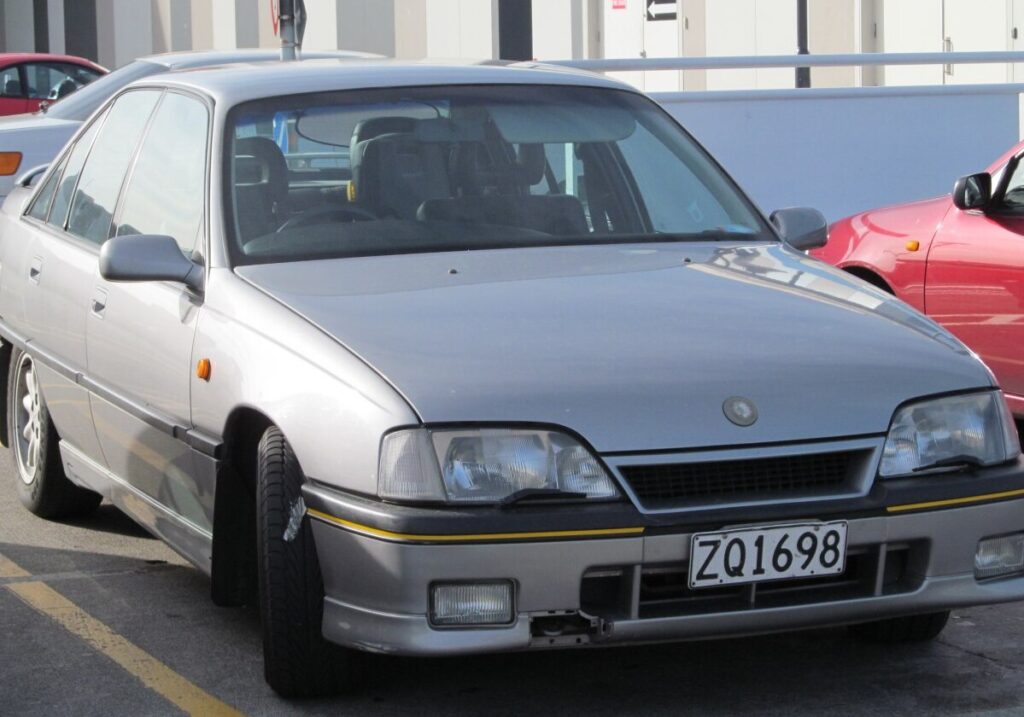
The Opel Omega A 2.0i (122 hp) was a mid-range variant of the first-generation Opel Omega, produced between 1986 and 1987. Positioned within the Omega A lineup – which aimed to replace the aging Opel Rekord and Commodore – the 2.0i offered a balance between performance and affordability. It served as a more accessible alternative to the higher-specification 2.3 and 3.0-liter models, appealing to buyers seeking a comfortable and spacious family sedan with reasonable power. This model was primarily sold in European markets, representing Opel’s attempt to compete in the executive car segment against rivals like the Ford Granada and BMW 5 Series.
Technical Specifications
| Brand | Opel |
| Model | Omega |
| Generation | Omega A |
| Type (Engine) | 2.0i (122 Hp) |
| Start of production | 1986 |
| End of production | 1987 |
| Powertrain Architecture | Internal Combustion engine |
| Body type | Sedan |
| Seats | 5 |
| Doors | 4 |
| Fuel Type | Petrol (Gasoline) |
| Acceleration 0 – 100 km/h | 10 sec |
| Acceleration 0 – 62 mph | 10 sec |
| Acceleration 0 – 60 mph | 9.5 sec |
| Maximum speed | 200 km/h (124.27 mph) |
| Weight-to-power ratio | 10.1 kg/Hp, 99 Hp/tonne |
| Weight-to-torque ratio | 7 kg/Nm, 142 Nm/tonne |
| Power | 122 Hp @ 5400 rpm |
| Power per litre | 61.1 Hp/l |
| Torque | 175 Nm @ 2600 rpm (129.07 lb.-ft. @ 2600 rpm) |
| Maximum engine speed | 6400 rpm |
| Engine Model/Code | 20SE |
| Engine displacement | 1998 cm3 (121.93 cu. in.) |
| Number of cylinders | 4 |
| Engine configuration | Inline |
| Cylinder Bore | 86 mm (3.39 in.) |
| Piston Stroke | 86 mm (3.39 in.) |
| Compression ratio | 10:1 |
| Number of valves per cylinder | 2 |
| Fuel injection system | Multi-port manifold injection |
| Engine aspiration | Naturally aspirated engine |
| Valvetrain | SOHC |
| Engine oil capacity | 4.5 l (4.76 US qt | 3.96 UK qt) |
| Coolant | 6.4 l (6.76 US qt | 5.63 UK qt) |
| Kerb Weight | 1232 kg (2716.1 lbs) |
| Max. weight | 1730 kg (3814 lbs) |
| Max load | 498 kg (1097.9 lbs) |
| Trunk (boot) space – minimum | 520 l (18.36 cu. ft.) |
| Trunk (boot) space – maximum | 870 l (30.72 cu. ft.) |
| Fuel tank capacity | 75 l (19.81 US gal | 16.5 UK gal) |
| Permitted trailer load with brakes (12%) | 1400 kg (3086.47 lbs) |
| Permitted trailer load without brakes | 600 kg (1322.77 lbs) |
| Length | 4740 mm (186.61 in.) |
| Width | 1760 mm (69.29 in.) |
| Height | 1445 mm (56.89 in.) |
| Wheelbase | 2730 mm (107.48 in.) |
| Front track | 1445 mm (56.89 in.) |
| Rear (Back) track | 1460 mm (57.48 in.) |
| Minimum turning circle | 10.8 m (35.43 ft.) |
| Drivetrain Architecture | Rear wheel drive |
| Number of gears and type of gearbox | 5 gears, manual transmission |
| Front brakes | Ventilated discs |
| Rear brakes | Disc |
| Tires size | 185/70 R14 |
| Wheel rims size | 14 |
Introduction
The Opel Omega A, launched in 1986, represented a significant step forward for Opel in the executive car segment. Replacing the Rekord and Commodore, the Omega A was built on the GM V platform (also known as the 1HX0/A3 platform), shared with other GM vehicles like the Saab 9000 and Vauxhall Carlton. The 2.0i model, powered by the 20SE engine, was introduced as a more affordable option, targeting buyers who desired the Omega’s spaciousness and comfort but didn’t require the performance of the larger-displacement engines. Production of this specific variant lasted until 1987, before being superseded by updated models within the Omega A range.
Powertrain & Engine Architecture
The heart of the Omega A 2.0i was the 20SE engine, a 1998cc inline-four cylinder gasoline engine. This engine featured a single overhead camshaft (SOHC) valvetrain operating two valves per cylinder. Fuel delivery was handled by a multi-port fuel injection system, contributing to improved efficiency and smoother power delivery compared to earlier carbureted Opel engines. The 20SE engine was known for its relative simplicity and durability. The engine produced 122 horsepower at 5400 rpm and 175 Nm (129 lb-ft) of torque at 2600 rpm. The Omega A 2.0i was exclusively offered with a five-speed manual transmission, providing drivers with full control over the engine’s power. This transmission was chosen to balance fuel economy and performance, offering a reasonable driving experience for everyday use.
Driving Characteristics
The Omega A 2.0i, with its 122 hp and five-speed manual transmission, offered a respectable, though not particularly sporty, driving experience. Acceleration from 0 to 60 mph took around 9.5 seconds, and it had a top speed of 200 km/h (124 mph). The engine provided adequate power for highway cruising and overtaking, but it wasn’t designed for rapid acceleration. The five-speed gearbox was well-matched to the engine’s characteristics, allowing drivers to keep the engine in its optimal power band. Compared to the 2.3 and 3.0-liter versions, the 2.0i felt noticeably less powerful, especially at higher speeds. However, the lighter weight of the 2.0i model (1232 kg) partially compensated for the power deficit, resulting in slightly better handling and fuel economy.
Equipment & Trim Levels
The Omega A 2.0i typically came with a fairly standard level of equipment for a car in its class. Standard features included central locking, power steering, and a basic stereo system. Interior upholstery was typically cloth, with a relatively simple dashboard layout. Optional extras included electric windows, a sunroof, and upgraded audio systems. The trim level was generally considered to be a step above the base models but below the more luxurious 2.3 and 3.0-liter variants. The focus was on providing a comfortable and practical interior rather than lavish features.
Chassis & Braking
The Omega A featured a rear-wheel-drive layout, contributing to its balanced handling characteristics. The suspension consisted of MacPherson struts at the front and a semi-trailing arm suspension at the rear. The 2.0i model was equipped with ventilated disc brakes at the front and solid disc brakes at the rear, providing adequate stopping power for its weight class. Stabilizer bars were fitted to both the front and rear axles to reduce body roll during cornering. The suspension was tuned for comfort, providing a smooth ride over most road surfaces.
Market Reception & Comparison
The Opel Omega A 2.0i was generally well-received by automotive critics as a practical and comfortable family sedan. It was praised for its spacious interior, smooth ride, and reasonable fuel economy. However, some critics noted that the 2.0-liter engine lacked the power and refinement of the larger-displacement engines. Compared to the 2.3 and 3.0-liter models, the 2.0i offered a more affordable entry point into the Omega A range, but it came at the cost of performance. Fuel economy was a strong point, making it an attractive option for drivers who prioritized efficiency. Reliability was generally good, although routine maintenance was essential to ensure long-term durability.
Legacy
The Opel Omega A 2.0i, while not the most powerful or prestigious variant of the Omega A, remains a fondly remembered car among enthusiasts. The 20SE engine proved to be a reliable and durable unit, and many examples are still on the road today. In the used car market, the 2.0i models are often more affordable than the higher-specification variants, making them an attractive option for those seeking a classic Opel sedan. The Omega A, in general, is considered a well-built and comfortable car that offered a compelling alternative to its rivals in the executive car segment. The 2.0i variant, with its balance of affordability and practicality, played a significant role in the Omega A’s success.
