
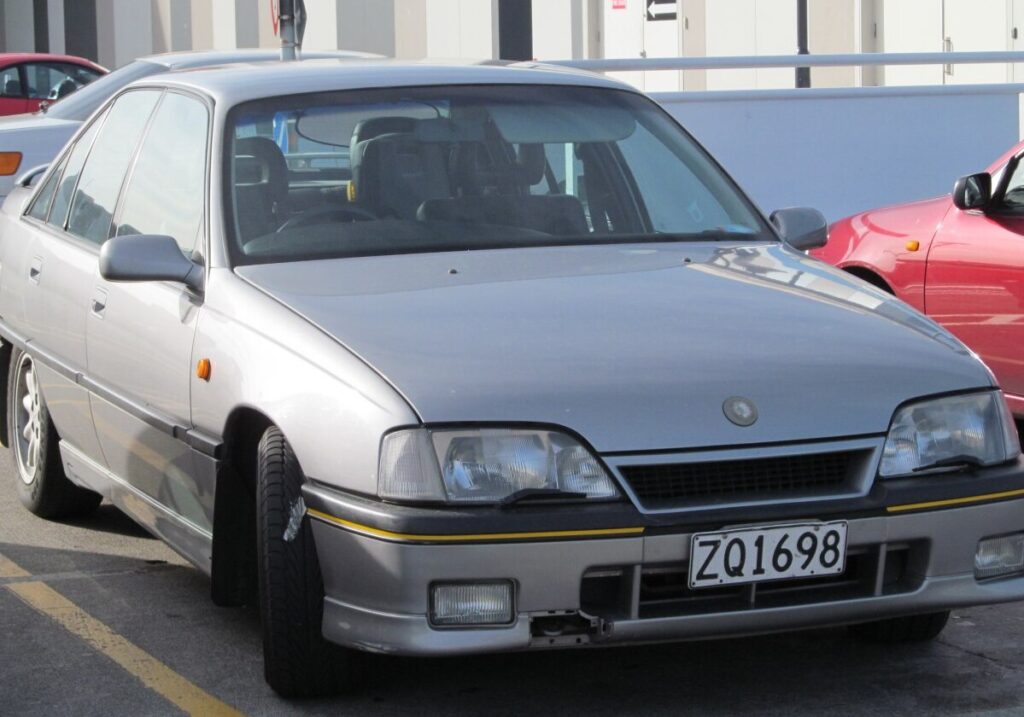
The Opel Omega A 2.0i CAT, produced between 1986 and 1993, represented a significant step forward for Opel’s flagship sedan. Positioned as a mid-range offering within the Omega A lineup, it aimed to balance performance and economy for the discerning European driver. This variant, equipped with the C20NE engine and a four-speed automatic transmission, provided a comfortable and refined driving experience, appealing to those prioritizing ease of use over outright sportiness. The Omega A itself was a replacement for the Opel Rekord, intended to compete with established executive cars like the Ford Granada and BMW 5 Series.
Technical Specifications
| Brand | Opel |
| Model | Omega |
| Generation | Omega A |
| Type (Engine) | 2.0i CAT (115 Hp) |
| Start of production | 1986 |
| End of production | 1993 |
| Powertrain Architecture | Internal Combustion engine |
| Body type | Sedan |
| Seats | 5 |
| Doors | 4 |
| Fuel consumption (urban) | 11.9 l/100 km (19.8 US mpg) |
| Fuel consumption (extra urban) | 6.3 l/100 km (37.3 US mpg) |
| Fuel consumption (combined) | 8.1 l/100 km (29 US mpg) |
| Fuel Type | Petrol (Gasoline) |
| Acceleration 0 – 100 km/h | 11.5 sec |
| Acceleration 0 – 62 mph | 11.5 sec |
| Acceleration 0 – 60 mph | 10.9 sec |
| Maximum speed | 195 km/h (121.17 mph) |
| Weight-to-power ratio | 11.3 kg/Hp |
| Weight-to-torque ratio | 7.4 kg/Nm |
| Power | 115 Hp @ 5400 rpm |
| Torque | 175 Nm @ 2600 rpm (129.07 lb.-ft. @ 2600 rpm) |
| Maximum engine speed | 6400 rpm |
| Engine layout | Front, Longitudinal |
| Engine Model/Code | C20NE |
| Engine displacement | 1998 cm3 (121.93 cu. in.) |
| Number of cylinders | 4 |
| Engine configuration | Inline |
| Cylinder Bore | 86 mm (3.39 in.) |
| Piston Stroke | 86 mm (3.39 in.) |
| Compression ratio | 9.2:1 |
| Number of valves per cylinder | 2 |
| Fuel injection system | Multi-port manifold injection |
| Engine aspiration | Naturally aspirated |
| Engine oil capacity | 4.5 l (4.76 US qt | 3.96 UK qt) |
| Coolant capacity | 6.4 l (6.76 US qt | 5.63 UK qt) |
| Kerb Weight | 1295 kg (2854.99 lbs.) |
| Max. weight | 1925 kg (4243.9 lbs.) |
| Max load | 630 kg (1388.91 lbs.) |
| Trunk (boot) space – minimum | 520 l (18.36 cu. ft.) |
| Trunk (boot) space – maximum | 870 l (30.72 cu. ft.) |
| Fuel tank capacity | 75 l (19.81 US gal | 16.5 UK gal) |
| Length | 4740 mm (186.61 in.) |
| Width | 1760 mm (69.29 in.) |
| Height | 1445 mm (56.89 in.) |
| Wheelbase | 2730 mm (107.48 in.) |
| Front track | 1450 mm (57.09 in.) |
| Rear track | 1470 mm (57.87 in.) |
| Drivetrain Architecture | Rear wheel drive |
| Number of gears | 4 (automatic) |
| Front suspension | Spring Strut |
| Rear suspension | Wishbone |
| Front brakes | Ventilated discs |
| Rear brakes | Disc |
| Assisting systems | ABS (Anti-lock braking system), Hydraulic Power Steering |
| Tires size | 195/65 R15 |
| Wheel rims size | 7J x 15 |
Powertrain & Engine Architecture
The heart of the Omega A 2.0i CAT was the C20NE engine, a 1998cc inline-four cylinder unit. This engine featured a cast iron block and an aluminum cylinder head, employing a single overhead camshaft (SOHC) valvetrain with two valves per cylinder. Fuel delivery was handled by Bosch multi-port fuel injection, contributing to improved efficiency and reduced emissions compared to earlier carbureted Opel engines. The “CAT” designation indicates the presence of a catalytic converter, a crucial component for meeting increasingly stringent emissions regulations in Europe. Paired with this engine was a four-speed automatic transmission, offering smooth and convenient gear changes. This transmission, while not known for its sportiness, was reliable and well-suited to the Omega’s grand touring character. The engine’s longitudinal mounting allowed for a rear-wheel-drive configuration, a traditional layout favored for its handling balance.
Driving Characteristics
The 2.0i CAT automatic offered a comfortable, if not particularly exhilarating, driving experience. With 115 horsepower and 175 Nm (129 lb-ft) of torque, acceleration was adequate for everyday driving, taking around 11.5 seconds to reach 62 mph. The automatic transmission, while providing convenience, did sap some performance compared to the available five-speed manual gearbox. Gear ratios were optimized for fuel economy and smooth cruising rather than rapid acceleration. The rear-wheel-drive layout provided a balanced feel, although it lacked the agility of front-wheel-drive competitors. The suspension, tuned for comfort, absorbed bumps effectively, making it a pleasant long-distance cruiser. Compared to the more powerful 2.3-liter and 3.0-liter Omega A variants, the 2.0i CAT prioritized fuel efficiency and affordability.
Equipment & Trim Levels
The 2.0i CAT typically came with a reasonable level of standard equipment. This included central locking, electric front windows, and a basic stereo system. Interior upholstery was typically cloth, with options for upgraded velour or leather available. Dashboard design was functional and straightforward, reflecting the car’s focus on practicality. Optional extras included air conditioning, a sunroof, and upgraded sound systems. The trim level often dictated the availability of these options, with higher-spec models offering more features as standard.
Chassis & Braking
The Omega A featured a robust chassis with independent suspension at the front using MacPherson struts and a multi-link wishbone setup at the rear. This configuration provided a good balance of ride comfort and handling. Braking was accomplished via ventilated discs at the front and solid discs at the rear. Anti-lock braking system (ABS) was standard, enhancing safety by preventing wheel lockup during hard braking. Power steering was also standard, making the car easier to maneuver at low speeds. Stabilizer bars were fitted front and rear to reduce body roll during cornering.
Market Reception & Comparison
The Opel Omega A 2.0i CAT was generally well-received by automotive critics as a comfortable and practical executive car. It was praised for its spacious interior, smooth ride, and reasonable fuel economy. However, it was often criticized for its somewhat bland styling and lack of sporting pretensions. Compared to the more powerful Omega variants, the 2.0i CAT offered a more affordable entry point into the Omega range, appealing to buyers who prioritized value and efficiency. Fuel economy was competitive for its class, averaging around 29 US mpg on the combined cycle. Reliability was generally good, although the automatic transmission could require more frequent servicing than the manual gearbox.
Legacy
The Opel Omega A 2.0i CAT, while not the most iconic version of the Omega A, remains a popular choice among classic car enthusiasts. The C20NE engine is known for its durability and relatively simple maintenance requirements. Parts availability is generally good, making it a viable option for those looking for a classic executive car. Today, these Omegas can be found in good condition, offering a comfortable and stylish driving experience at an affordable price. The combination of rear-wheel drive, a reliable engine, and a comfortable interior has ensured its continued appeal in the used car market.
