
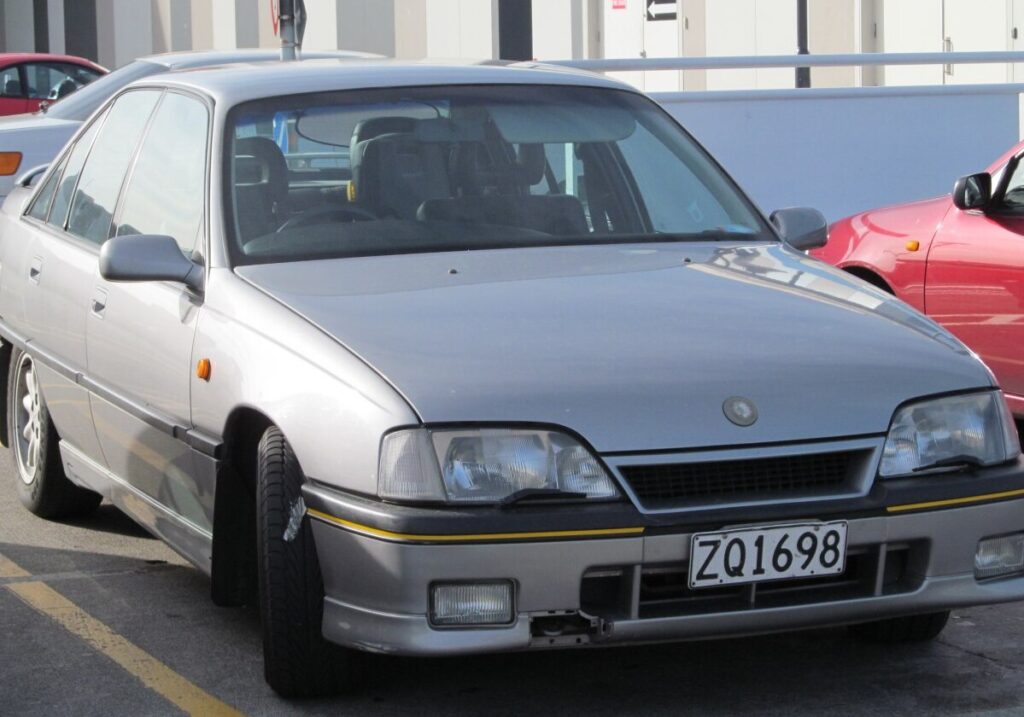
The Opel Omega A 2.0i CAT Automatic, produced between 1986 and 1993, represented a mid-range offering within the first generation (Omega A) of Opel’s flagship sedan. Positioned as a comfortable and practical family car, it aimed to provide a balance between performance and fuel economy. This variant, powered by the C20NE engine and paired with a four-speed automatic transmission, was a popular choice in European markets, particularly for drivers prioritizing ease of use over outright sportiness. The Omega A, internally designated as the 164, was a significant departure from the Rekord model it replaced, offering a more modern design and improved technology.
Technical Specifications
| Brand | Opel |
| Model | Omega |
| Generation | Omega A |
| Type (Engine) | 2.0i CAT (115 Hp) Automatic |
| Start of production | 1986 |
| End of production | 1993 |
| Powertrain Architecture | Internal Combustion engine |
| Body type | Sedan |
| Seats | 5 |
| Doors | 4 |
| Fuel consumption (urban) | 12.1 l/100 km (19.4 US mpg, 23.3 UK mpg, 8.3 km/l) |
| Fuel consumption (extra urban) | 6.3 l/100 km (37.3 US mpg, 44.8 UK mpg, 15.9 km/l) |
| Fuel consumption (combined) | 7.9 l/100 km (29.8 US mpg, 35.8 UK mpg, 12.7 km/l) |
| Fuel Type | Petrol (Gasoline) |
| Acceleration 0 – 100 km/h | 12.5 sec |
| Acceleration 0 – 62 mph | 12.5 sec |
| Acceleration 0 – 60 mph | 11.9 sec |
| Maximum speed | 190 km/h (118.06 mph) |
| Weight-to-power ratio | 11.3 kg/Hp, 88.8 Hp/tonne |
| Weight-to-torque ratio | 7.6 kg/Nm, 131.3 Nm/tonne |
| Power | 115 Hp @ 5400 rpm |
| Power per litre | 57.6 Hp/l |
| Torque | 170 Nm @ 2600 rpm (125.39 lb.-ft. @ 2600 rpm) |
| Engine layout | Front, Longitudinal |
| Engine Model/Code | C20NE |
| Engine displacement | 1998 cm3 (121.93 cu. in.) |
| Number of cylinders | 4 |
| Engine configuration | Inline |
| Cylinder Bore | 86 mm (3.39 in.) |
| Piston Stroke | 86 mm (3.39 in.) |
| Compression ratio | 9.2:1 |
| Number of valves per cylinder | 2 |
| Fuel injection system | Multi-port manifold injection |
| Engine aspiration | Naturally aspirated engine |
| Valvetrain | SOHC |
| Engine oil capacity | 4.5 l (4.76 US qt | 3.96 UK qt) |
| Coolant capacity | 6.4 l (6.76 US qt | 5.63 UK qt) |
| Kerb Weight | 1295 kg (2854.99 lbs.) |
| Max. weight | 1925 kg (4243.9 lbs.) |
| Max load | 630 kg (1388.91 lbs.) |
| Trunk (boot) space – minimum | 520 l (18.36 cu. ft.) |
| Trunk (boot) space – maximum | 870 l (30.72 cu. ft.) |
| Fuel tank capacity | 75 l (19.81 US gal | 16.5 UK gal) |
| Length | 4740 mm (186.61 in.) |
| Width | 1760 mm (69.29 in.) |
| Height | 1445 mm (56.89 in.) |
| Wheelbase | 2730 mm (107.48 in.) |
| Front track | 1450 mm (57.09 in.) |
| Rear track | 1470 mm (57.87 in.) |
| Drivetrain Architecture | Rear wheel drive |
| Drive wheel | Rear wheel drive |
| Number of gears | 4 |
| Gearbox type | Automatic transmission |
| Front suspension | Spring Strut |
| Rear suspension | Wishbone |
| Front brakes | Ventilated discs |
| Rear brakes | Disc |
| Assisting systems | ABS (Anti-lock braking system), Hydraulic Steering |
| Tires size | 195/65 R15 |
| Wheel rims size | 7J x 15 |
Powertrain & Engine Architecture
The heart of the Omega A 2.0i CAT Automatic is the C20NE engine, a 1998cc inline-four cylinder unit. This engine featured a cast iron block and an aluminum cylinder head, employing a single overhead camshaft (SOHC) design with two valves per cylinder. The “CAT” designation indicates the presence of a catalytic converter, a feature increasingly common in the late 1980s and early 1990s to meet tightening emissions regulations. Fuel delivery was managed by Bosch Motronic multi-port fuel injection, providing precise control over the air-fuel mixture. The C20NE was known for its relative simplicity and durability, though it wasn’t a particularly high-performance engine. The four-speed automatic transmission, a GM-sourced unit, was chosen for its smooth operation and convenience, appealing to drivers who prioritized comfort over sporty driving dynamics. This transmission featured electronic control, offering adaptive shifting based on driving conditions.
Driving Characteristics
The 2.0i Automatic Omega A offered a comfortable, if not exhilarating, driving experience. With 115 horsepower and 170 Nm (125 lb-ft) of torque, acceleration was adequate for everyday driving, with a 0-60 mph time of around 11.9 seconds. The automatic transmission, while smooth, did detract from the engine’s available power, resulting in a slightly sluggish feel compared to the five-speed manual version. Gear ratios were optimized for fuel efficiency and cruising comfort rather than rapid acceleration. The rear-wheel-drive layout provided balanced handling, but the relatively soft suspension tuning prioritized ride quality over sharp cornering. Compared to the higher-performance 2.3-liter and 2.6-liter inline-six engines available in the Omega A range, the 2.0i Automatic was noticeably less powerful, but it offered significantly better fuel economy.
Equipment & Trim Levels
The 2.0i CAT Automatic typically came with a reasonable level of standard equipment. This included central locking, electric front windows, power steering, and an adjustable steering column. Interior upholstery was typically cloth, with options for upgraded velour or leather available. Dashboard design was functional and straightforward, with clear instrumentation. Optional extras included a sunroof, air conditioning, and a more advanced audio system. The trim level often dictated the exterior detailing, with chrome accents and alloy wheels being available on higher-spec models. The Omega A aimed for a comfortable and well-equipped interior, though it didn’t reach the luxury levels of some of its competitors.
Chassis & Braking
The Omega A featured a traditional body-on-frame construction, providing a robust and durable chassis. Front suspension utilized MacPherson struts, while the rear employed a semi-independent twist beam setup. This suspension configuration prioritized ride comfort over handling precision. Braking was handled by ventilated discs at the front and solid discs at the rear, providing adequate stopping power for the vehicle’s weight and performance. Anti-lock braking system (ABS) was available as an option, enhancing safety in emergency braking situations. The steering was hydraulically assisted, making it light and easy to maneuver, particularly at low speeds.
Market Reception & Comparison
The Opel Omega A 2.0i CAT Automatic was generally well-received by automotive critics as a practical and comfortable family sedan. It was praised for its spacious interior, smooth ride, and reasonable fuel economy. However, it was often criticized for its lack of sporting character and its somewhat dated design compared to newer competitors. Compared to other trims in the Omega A lineup, the 2.0i Automatic offered the best fuel economy but the lowest performance. The 2.3-liter and 2.6-liter models provided significantly more power, but at the expense of fuel efficiency. The Omega A competed with other large sedans such as the Ford Granada, Volvo 740, and BMW 5 Series.
Legacy
The C20NE engine and the associated four-speed automatic transmission proved to be relatively reliable powertrains. While not without their quirks, these components were generally durable and capable of high mileage with proper maintenance. Today, the Omega A 2.0i CAT Automatic is becoming increasingly sought after by classic car enthusiasts, particularly those looking for a comfortable and affordable vintage sedan. Parts availability is generally good, although some specific trim pieces may be difficult to find. The car represents a significant era in Opel’s history, marking a transition towards more modern design and technology. Its enduring appeal lies in its blend of practicality, comfort, and classic styling.
