
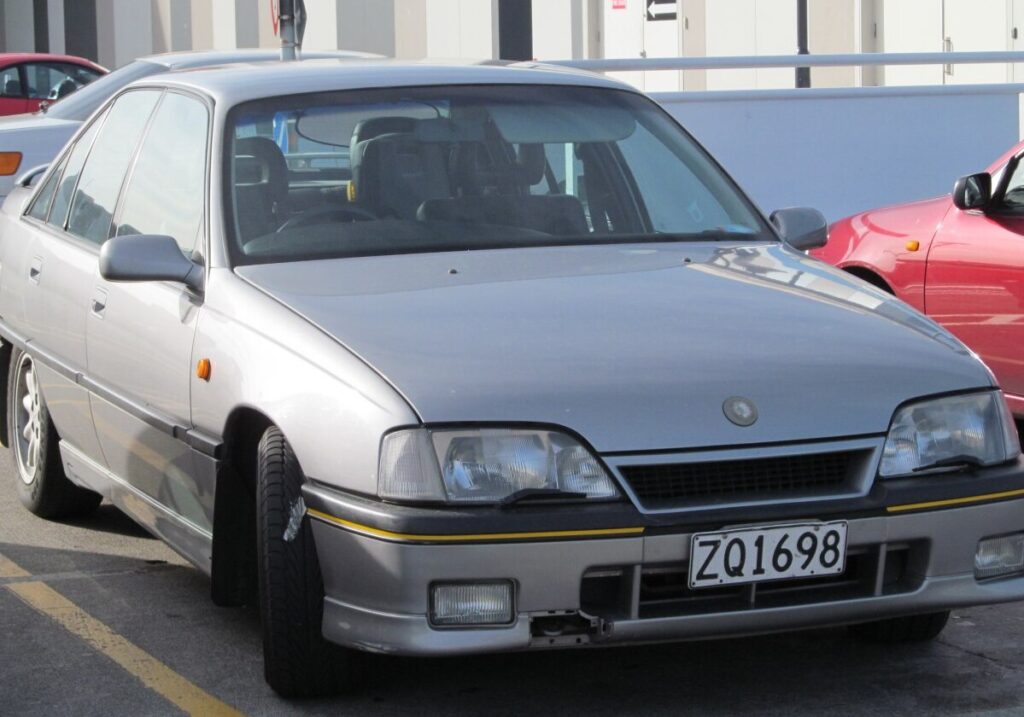
The Opel Omega A 2.0i CAT (99 hp) was a variant of the Omega A model produced between July 1990 and 1992. Positioned as an entry-level to mid-range offering within the Omega A lineup, it provided a more affordable and fuel-conscious alternative to the higher-performance and larger-engined versions. The Omega A, launched in 1986, represented Opel’s flagship sedan, intended to replace the Rekord and Commodore models, and compete with rivals like the Ford Granada and BMW 5 Series. This 2.0i CAT model aimed to broaden the Omega’s appeal by offering a balance of practicality, comfort, and reasonable running costs.
Technical Specifications
| Brand | Opel |
| Model | Omega |
| Generation | Omega A |
| Type (Engine) | 2.0i CAT (99 Hp) |
| Start of production | July, 1990 |
| End of production | 1992 |
| Powertrain Architecture | Internal Combustion engine |
| Body type | Sedan |
| Seats | 5 |
| Doors | 4 |
| Fuel Type | Petrol (Gasoline) |
| Maximum speed | 190 km/h (118.06 mph) |
| Weight-to-power ratio | 12.5 kg/Hp, 80.2 Hp/tonne |
| Weight-to-torque ratio | 7.3 kg/Nm, 137.7 Nm/tonne |
| Power | 99 Hp @ 5200 rpm |
| Power per litre | 49.5 Hp/l |
| Torque | 170 Nm @ 2600 rpm (125.39 lb.-ft. @ 2600 rpm) |
| Maximum engine speed | 6400 rpm |
| Engine Model/Code | C20NEJ |
| Engine displacement | 1998 cm3 (121.93 cu. in.) |
| Number of cylinders | 4 |
| Engine configuration | Inline |
| Cylinder Bore | 86 mm (3.39 in.) |
| Piston Stroke | 86 mm (3.39 in.) |
| Compression ratio | 9.2:1 |
| Number of valves per cylinder | 2 |
| Fuel injection system | Multi-port manifold injection |
| Engine aspiration | Naturally aspirated engine |
| Valvetrain | SOHC |
| Engine oil capacity | 4 l (4.23 US qt | 3.52 UK qt) |
| Coolant | 6 l (6.34 US qt | 5.28 UK qt) |
| Kerb Weight | 1235 kg (2722.71 lbs) |
| Max. weight | 1790 kg (3946.27 lbs) |
| Max load | 555 kg (1223.57 lbs) |
| Trunk (boot) space – minimum | 520 l (18.36 cu. ft.) |
| Trunk (boot) space – maximum | 870 l (30.72 cu. ft.) |
| Fuel tank capacity | 75 l (19.81 US gal | 16.5 UK gal) |
| Length | 4740 mm (186.61 in.) |
| Width | 1760 mm (69.29 in.) |
| Height | 1445 mm (56.89 in.) |
| Wheelbase | 2730 mm (107.48 in.) |
| Front track | 1445 mm (56.89 in.) |
| Rear (Back) track | 1460 mm (57.48 in.) |
| Minimum turning circle (turning diameter) | 10.8 m (35.43 ft.) |
| Drivetrain Architecture | The Internal combustion engine (ICE) drives the rear wheels of the vehicle. |
| Drive wheel | Rear wheel drive |
| Number of gears and type of gearbox | 5 gears, manual transmission |
| Front brakes | Ventilated discs |
| Rear brakes | Disc |
| Tires size | 195/65 R15 |
| Wheel rims size | 15 |
Powertrain & Engine Architecture
The heart of the Omega A 2.0i CAT was the C20NEJ engine, a 1998cc inline-four cylinder petrol engine. This engine featured a single overhead camshaft (SOHC) valvetrain operating two valves per cylinder. The “CAT” designation indicates the presence of a catalytic converter, a relatively new technology at the time, aimed at reducing harmful emissions. Fuel delivery was handled by a multi-port fuel injection system, providing improved efficiency and throttle response compared to earlier carbureted Opel engines. The engine produced 99 horsepower at 5200 rpm and 170 Nm (125 lb-ft) of torque at 2600 rpm. The engine’s relatively modest output was typical for this displacement in the early 1990s, prioritizing fuel economy and smooth operation over outright performance. The 5-speed manual transmission was the standard offering, providing a reasonable spread of gears for both city driving and highway cruising.
Driving Characteristics
The 2.0i CAT Omega A offered a comfortable and refined driving experience, but wasn’t particularly sporty. Acceleration was adequate for everyday driving, but the 99 hp engine didn’t provide brisk performance. The 0-60 mph time was estimated to be around 11-12 seconds. The five-speed manual transmission allowed drivers to keep the engine in its optimal power band, but the engine lacked the low-end torque of larger displacement alternatives. Compared to the 2.3-liter or 2.6-liter inline-six engines available in other Omega A models, the 2.0i CAT felt noticeably less powerful. However, it offered better fuel economy and was more forgiving to drive in congested traffic. The rear-wheel-drive configuration provided balanced handling, although it wasn’t as nimble as front-wheel-drive competitors.
Equipment & Trim Levels
The 2.0i CAT typically came with a reasonable level of standard equipment. This included central locking, power steering, and a basic stereo system. Interior upholstery was typically cloth, with a relatively simple dashboard layout. Optional extras included electric windows, a sunroof, and upgraded audio systems. The trim level was generally considered to be a step above the base models, offering a slightly more refined interior and additional convenience features. The Omega A aimed for a comfortable and practical interior, rather than a luxurious one, and the 2.0i CAT reflected this philosophy.
Chassis & Braking
The Omega A featured a traditional body-on-frame construction, providing a robust and durable chassis. The suspension consisted of MacPherson struts at the front and a semi-trailing arm suspension at the rear. The 2.0i CAT model typically used ventilated disc brakes at the front and solid disc brakes at the rear, providing adequate stopping power for its weight and performance. Stabilizer bars were fitted to both the front and rear axles to reduce body roll during cornering. The suspension was tuned for comfort, prioritizing a smooth ride over sharp handling.
Market Reception & Comparison
The Opel Omega A 2.0i CAT was generally well-received as a practical and affordable family sedan. Critics praised its comfortable ride, spacious interior, and reasonable fuel economy. However, it was often criticized for its lack of performance compared to its larger-engined siblings and competitors. Compared to the 2.3-liter and 2.6-liter Omega A models, the 2.0i CAT offered significantly lower running costs but at the expense of performance. It was a popular choice for drivers who prioritized practicality and economy over outright speed.
Legacy
The Opel Omega A 2.0i CAT, while not the most sought-after variant, remains a relatively reliable and affordable classic car. The C20NEJ engine is known for its durability, and parts availability is generally good. However, like all cars of this age, it is susceptible to rust and age-related wear and tear. Today, the Omega A 2.0i CAT is appreciated by enthusiasts for its classic styling, comfortable ride, and relatively simple mechanicals. It represents a bygone era of large, rear-wheel-drive sedans, and offers a unique driving experience compared to modern cars. The car’s enduring appeal lies in its blend of practicality, comfort, and affordability, making it a viable option for classic car enthusiasts on a budget.
