
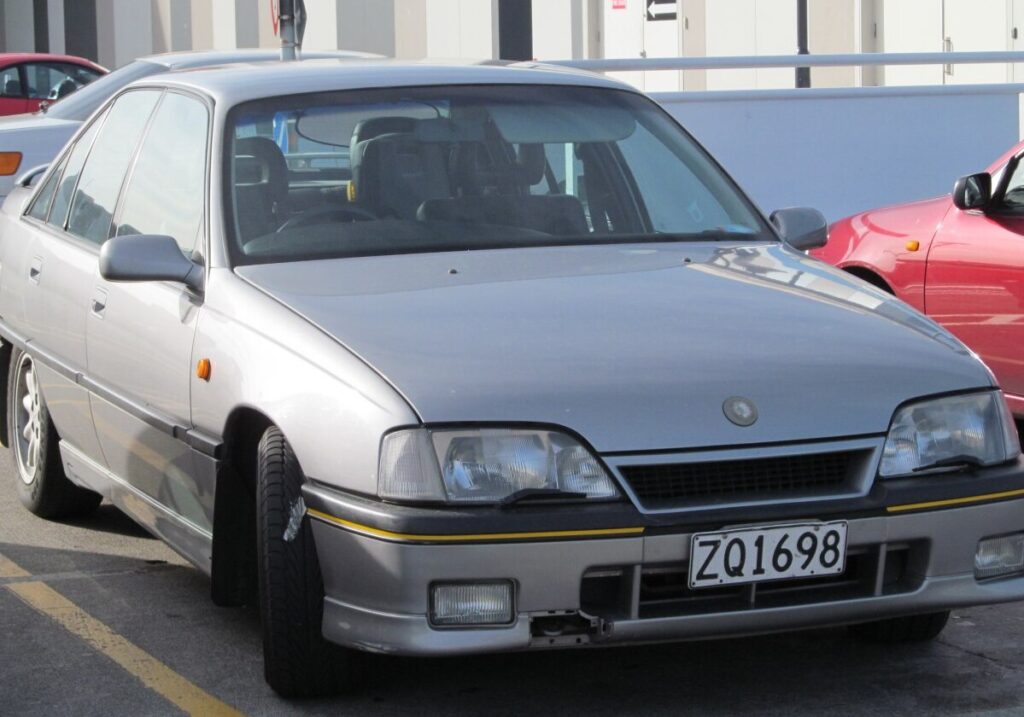
The Opel Omega A 2.3 TD, producing 90 horsepower, was a diesel-powered variant of the first-generation Omega, manufactured between 1986 and 1988. Positioned as an economy-focused option within the Omega A range, it catered to drivers prioritizing fuel efficiency and long-distance comfort over outright performance. This model played a significant role in Opel’s European lineup, offering a spacious and relatively affordable large sedan. It was a direct competitor to vehicles like the Ford Granada and Peugeot 604, offering a blend of practicality and a more refined driving experience than some of its contemporaries.
Technical Specifications
| Brand | Opel |
| Model | Omega |
| Generation | Omega A |
| Type (Engine) | 2.3 TD (90 Hp) |
| Start of production | 1986 |
| End of production | 1988 |
| Powertrain Architecture | Internal Combustion engine |
| Body type | Sedan |
| Seats | 5 |
| Doors | 4 |
| Fuel Type | Diesel |
| Acceleration 0 – 100 km/h | 14.5 sec |
| Acceleration 0 – 62 mph | 14.5 sec |
| Acceleration 0 – 60 mph | 13.8 sec |
| Maximum speed | 176 km/h (109.36 mph) |
| Weight-to-power ratio | 14.5 kg/Hp, 69 Hp/tonne |
| Weight-to-torque ratio | 6.9 kg/Nm, 145.7 Nm/tonne |
| Power | 90 Hp @ 4200 rpm |
| Power per litre | 39.8 Hp/l |
| Torque | 190 Nm @ 2200 rpm (140.14 lb.-ft. @ 2200 rpm) |
| Maximum engine speed | 4600 rpm |
| Engine Model/Code | 23YDT |
| Engine displacement | 2260 cm3 (137.91 cu. in.) |
| Number of cylinders | 4 |
| Engine configuration | Inline |
| Cylinder Bore | 92 mm (3.62 in.) |
| Piston Stroke | 85 mm (3.35 in.) |
| Compression ratio | 23:1 |
| Number of valves per cylinder | 2 |
| Fuel injection system | Precombustion chamber injection |
| Engine aspiration | Turbocharger, Intercooler |
| Valvetrain | SOHC |
| Engine oil capacity | 5.5 l (5.81 US qt | 4.84 UK qt) |
| Coolant | 10.9 l (11.52 US qt | 9.59 UK qt) |
| Kerb Weight | 1304 kg (2874.83 lbs) |
| Max. weight | 1815 kg (4001.39 lbs) |
| Max load | 511 kg (1126.56 lbs) |
| Trunk (boot) space – minimum | 520 l (18.36 cu. ft.) |
| Trunk (boot) space – maximum | 870 l (30.72 cu. ft.) |
| Fuel tank capacity | 75 l (19.81 US gal | 16.5 UK gal) |
| Permitted trailer load with brakes (12%) | 1300 kg (2866.01 lbs) |
| Permitted trailer load without brakes | 600 kg (1322.77 lbs) |
| Length | 4740 mm (186.61 in.) |
| Width | 1760 mm (69.29 in.) |
| Height | 1445 mm (56.89 in.) |
| Wheelbase | 2730 mm (107.48 in.) |
| Front track | 1445 mm (56.89 in.) |
| Rear (Back) track | 1460 mm (57.48 in.) |
| Minimum turning circle | 10.8 m (35.43 ft.) |
| Drivetrain Architecture | Rear wheel drive |
| Number of gears and type of gearbox | 5 gears, manual transmission |
| Front brakes | Ventilated discs |
| Rear brakes | Disc |
Powertrain & Engine Architecture
The heart of the Omega A 2.3 TD was the 23YDT engine, a 2.3-liter inline-four cylinder diesel. This engine utilized precombustion chamber injection, a common diesel technology of the era, which involved injecting fuel into a small pre-chamber within the cylinder head before the main combustion chamber. This aided in more complete combustion, particularly during cold starts. The engine was turbocharged and intercooled, boosting power output to 90 horsepower and 190 Nm (140 lb-ft) of torque. The single overhead camshaft (SOHC) valvetrain operated two valves per cylinder. The five-speed manual transmission was the standard offering, providing a relatively long-legged gearing setup optimized for highway cruising and fuel economy.
Driving Characteristics
The 2.3 TD Omega A wasn’t designed for rapid acceleration. Its 0-60 mph time of around 13.8 seconds reflects its focus on efficiency rather than performance. However, the engine’s torque output provided adequate pulling power for everyday driving and overtaking maneuvers, especially when downshifted. The manual transmission, while not particularly sporty, offered precise shifts. The long gear ratios contributed to a relaxed driving experience on the open road, but could feel somewhat sluggish in city traffic. Compared to the gasoline-powered Omega variants, the 2.3 TD offered significantly better fuel economy, making it a popular choice for high-mileage drivers.
Equipment & Trim Levels
The 2.3 TD typically came with a fairly basic level of equipment, reflecting its position as an entry-level or mid-range model. Standard features generally included cloth upholstery, central locking, and power steering. Air conditioning and electric windows were often optional extras. Interior trim was functional and durable, prioritizing practicality over luxury. The dashboard layout was typical of Opel designs of the period, with a clear and straightforward instrument cluster. Higher trim levels, if selected, could add features like upgraded audio systems and more comfortable seating.
Chassis & Braking
The Omega A featured a rear-wheel-drive layout, contributing to balanced handling characteristics. The suspension consisted of MacPherson struts at the front and a semi-trailing arm setup at the rear. The 2.3 TD model typically used ventilated disc brakes at the front and solid discs at the rear, providing adequate stopping power for its weight class. Stabilizer bars were fitted to both the front and rear axles to reduce body roll during cornering. The chassis was designed to provide a comfortable ride, absorbing bumps and imperfections in the road surface effectively.
Market Reception & Comparison
The Opel Omega A 2.3 TD was generally well-received by automotive critics as a practical and economical large sedan. Its fuel efficiency was a major selling point, particularly in Europe where diesel fuel was often cheaper than gasoline. However, its performance was often criticized as being somewhat lackluster compared to its gasoline-powered counterparts. Compared to the more powerful Omega variants, such as the 2.0 or 2.3-liter gasoline engines, the 2.3 TD offered significantly lower running costs but at the expense of acceleration and overall driving excitement. It was often seen as a sensible choice for fleet operators and private buyers who prioritized value and reliability.
Legacy
The 23YDT engine, while not known for being particularly sophisticated, proved to be relatively durable and reliable. Properly maintained examples can still be found on the road today. The Omega A 2.3 TD has developed a modest following among classic car enthusiasts who appreciate its simplicity and practicality. In the used car market, these models are typically affordable and represent a good value for those seeking a spacious and comfortable classic sedan. While not a performance icon, the Omega A 2.3 TD remains a testament to Opel’s commitment to providing practical and economical transportation during the 1980s.
