
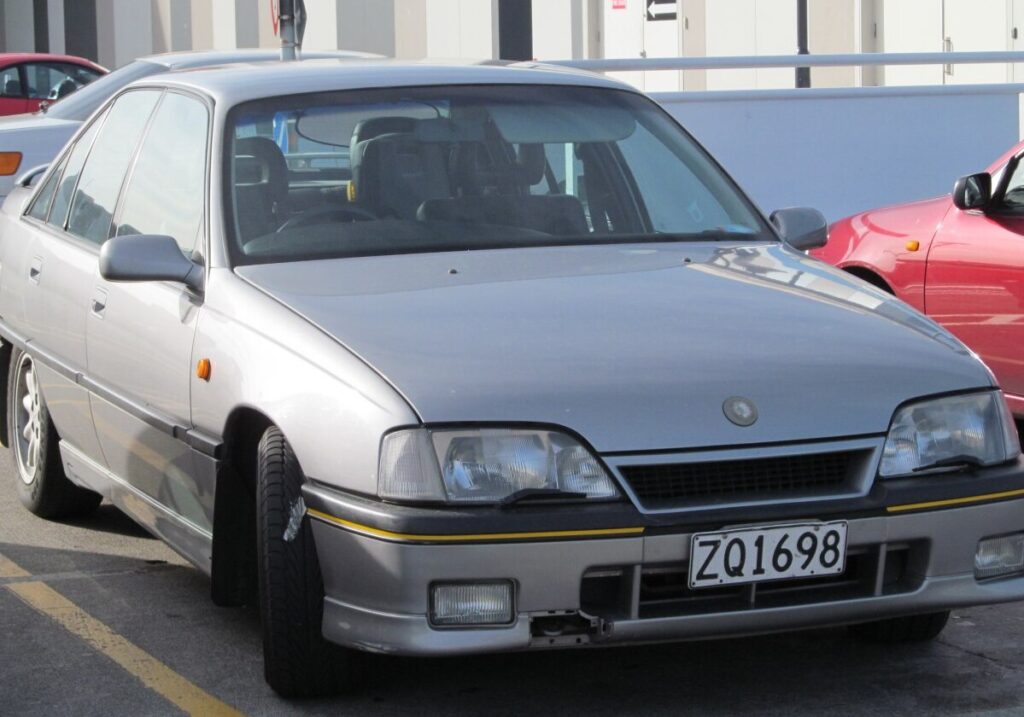
The Opel Omega A 3.6 24V Lotus CAT, produced from July 1990 to 1992, represents a high-performance variant of the Omega A, Opel’s flagship sedan. This model was designed to showcase Opel’s engineering capabilities and compete with luxury performance cars of the era. The “Lotus” designation refers to the involvement of Lotus in the development of the chassis and suspension tuning, aiming for improved handling and ride quality. Positioned as the top-of-the-line Omega A, it offered a significant performance upgrade over the more common four and six-cylinder models. It was primarily sold in European markets, representing a niche offering within Opel’s lineup.
Technical Specifications
| Brand | Opel |
| Model | Omega |
| Generation | Omega A |
| Type (Engine) | 3.6 24V Lotus CAT (377 Hp) |
| Start of production | July, 1990 |
| End of production | 1992 |
| Powertrain Architecture | Internal Combustion engine |
| Body type | Sedan |
| Seats | 5 |
| Doors | 4 |
| Fuel consumption (urban) | 16.1 l/100 km (14.6 US mpg, 17.5 UK mpg, 6.2 km/l) |
| Fuel consumption (extra urban) | 8.1 l/100 km (29 US mpg, 34.9 UK mpg, 12.3 km/l) |
| Fuel consumption (combined) | 10.3 l/100 km (22.8 US mpg, 27.4 UK mpg, 9.7 km/l) |
| Fuel Type | Petrol (Gasoline) |
| Acceleration 0 – 100 km/h | 5.4 sec |
| Acceleration 0 – 62 mph | 5.4 sec |
| Acceleration 0 – 60 mph | 5.1 sec |
| Maximum speed | 282 km/h (175.23 mph) |
| Weight-to-power ratio | 4.5 kg/Hp, 223.1 Hp/tonne |
| Weight-to-torque ratio | 3 kg/Nm, 336.1 Nm/tonne |
| Power | 377 Hp @ 5500 rpm |
| Power per litre | 104.3 Hp/l |
| Torque | 568 Nm @ 4200 rpm (418.94 lb.-ft. @ 4200 rpm) |
| Engine layout | Front, Longitudinal |
| Engine Model/Code | C36GET |
| Engine displacement | 3615 cm3 (220.6 cu. in.) |
| Number of cylinders | 6 |
| Engine configuration | Inline |
| Cylinder Bore | 95 mm (3.74 in.) |
| Piston Stroke | 85 mm (3.35 in.) |
| Compression ratio | 8.2:1 |
| Number of valves per cylinder | 4 |
| Fuel injection system | Multi-port manifold injection |
| Engine aspiration | Twin-Turbo, Intercooler |
| Engine oil capacity | 8 l (8.45 US qt | 7.04 UK qt) |
| Coolant capacity | 10.25 l (10.83 US qt | 9.02 UK qt) |
| Kerb Weight | 1690 kg (3725.81 lbs.) |
| Max. weight | 2110 kg (4651.75 lbs.) |
| Max load | 420 kg (925.94 lbs.) |
| Trunk (boot) space – minimum | 520 l (18.36 cu. ft.) |
| Trunk (boot) space – maximum | 865 l (30.55 cu. ft.) |
| Fuel tank capacity | 75 l (19.81 US gal | 16.5 UK gal) |
| Length | 4770 mm (187.8 in.) |
| Width | 1810 mm (71.26 in.) |
| Height | 1435 mm (56.5 in.) |
| Wheelbase | 2730 mm (107.48 in.) |
| Front track | 1490 mm (58.66 in.) |
| Rear (Back) track | 1535 mm (60.43 in.) |
| Drivetrain Architecture | Rear wheel drive |
| Number of gears | 6 |
| Gearbox type | Manual transmission |
| Front suspension | Spring Strut |
| Rear suspension | Wishbone |
| Front brakes | Disc |
| Rear brakes | Disc |
| Assisting systems | ABS (Anti-lock braking system), Hydraulic Power Steering |
| Tires size | 235/45 R17; 265/40 R17 |
| Wheel rims size | 17 |
INTRODUCTION
The Opel Omega A 3.6 24V Lotus CAT was a limited-production, high-performance version of the Omega A, built between 1990 and 1992. It was designed to be a statement of Opel’s engineering prowess, offering a blend of luxury and exhilarating performance. The Omega A itself was a large, executive sedan intended to compete with models like the BMW 5 Series and Mercedes-Benz E-Class. The Lotus-tuned variant aimed to provide a more engaging driving experience than its competitors, particularly in terms of handling. The “CAT” in the name refers to the catalytic converter, indicating compliance with emissions regulations.
Powertrain & Engine Architecture
The heart of the Omega A 3.6 24V Lotus CAT is the C36GET engine, a 3.6-liter inline-six cylinder engine. This engine is notable for its twin-turbocharged setup with an intercooler, which significantly boosts power output. The engine utilizes multi-port fuel injection for precise fuel delivery. The 24-valve configuration (four valves per cylinder) enhances breathing and contributes to the engine’s high specific output. The engine produces 377 horsepower at 5500 rpm and a substantial 568 Nm (418.94 lb-ft) of torque at 4200 rpm. The engine is longitudinally mounted, driving the rear wheels. The six-speed manual transmission was the only transmission option, designed to handle the engine’s considerable power and provide precise gear changes. The engine’s oil capacity is 8 liters, and it requires a specific oil specification to ensure optimal performance and longevity.
Driving Characteristics
The Omega A 3.6 24V Lotus CAT delivers a markedly different driving experience compared to the standard Omega A models. The twin-turbocharged engine provides strong acceleration, with a 0-60 mph time of around 5.1 seconds and a top speed of 282 km/h (175.23 mph). The six-speed manual transmission allows for precise control over the engine’s power band. The Lotus-tuned suspension, featuring upgraded springs and dampers, reduces body roll and improves handling responsiveness. While the Omega A is a large sedan, the Lotus modifications make it feel surprisingly agile. The power delivery is characterized by a slight turbo lag, typical of turbocharged engines of that era, but once the turbos spool up, the acceleration is relentless. Compared to the naturally aspirated six-cylinder Omega models, the 3.6 24V offers a significantly more potent and engaging driving experience.
Equipment & Trim Levels
As the flagship model, the Omega A 3.6 24V Lotus CAT came generously equipped. Standard features included leather upholstery, power-adjustable front seats, air conditioning, a high-quality sound system, and electric windows and mirrors. The interior trim was typically finished with wood veneer accents. Optional extras included a sunroof, upgraded sound system components, and a more comprehensive trip computer. The exterior featured unique styling cues, such as a subtle rear spoiler and distinctive alloy wheels. The overall interior ambiance was focused on providing a luxurious and comfortable environment for both the driver and passengers.
Chassis & Braking
The Omega A 3.6 24V Lotus CAT benefited from significant chassis upgrades developed in collaboration with Lotus. The suspension system utilizes a spring strut setup at the front and a wishbone configuration at the rear. The suspension geometry was optimized for improved handling and reduced body roll. The braking system features disc brakes on all four wheels, providing ample stopping power. An Anti-lock Braking System (ABS) was standard, enhancing safety and control during hard braking. The car rides on 17-inch alloy wheels fitted with 235/45 R17 front and 265/40 R17 rear tires, providing excellent grip and stability.
Market Reception & Comparison
The Opel Omega A 3.6 24V Lotus CAT was generally well-received by automotive critics, who praised its performance, handling, and luxurious interior. However, its high price and limited availability meant it remained a relatively rare sight on the roads. Compared to other Omega A variants, the 3.6 24V offered a substantial performance advantage, but at the cost of increased fuel consumption. The fuel economy figures of 10.3 l/100 km (22.8 US mpg) combined are considerably higher than those of the four-cylinder models. Reliability was generally good, although the complex twin-turbocharged engine required careful maintenance. The car was often compared to rivals like the BMW 535i and Mercedes-Benz 300E, offering a compelling alternative with its unique blend of performance and luxury.
Legacy
The Opel Omega A 3.6 24V Lotus CAT remains a sought-after classic car among enthusiasts. Its rarity, combined with its impressive performance and unique engineering, has made it a collectible item. The C36GET engine, while complex, is known to be durable when properly maintained. Today, finding a well-preserved example can be challenging, and prices have been steadily increasing. The Omega A 3.6 24V Lotus CAT represents a high point in Opel’s engineering history, showcasing the brand’s ability to create a truly exceptional performance sedan.
