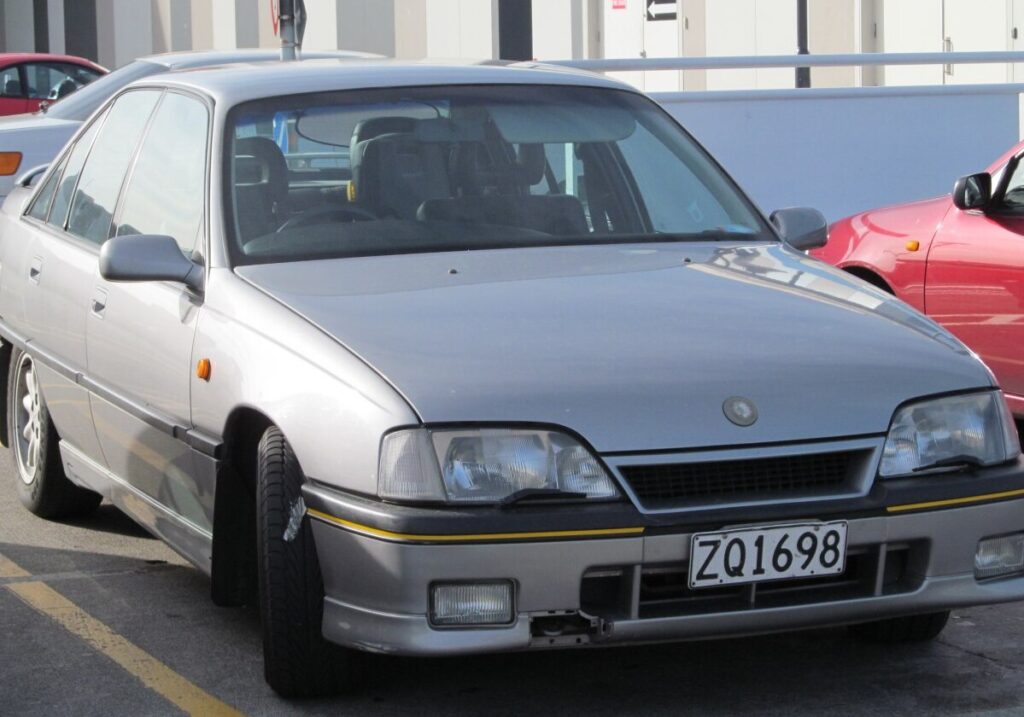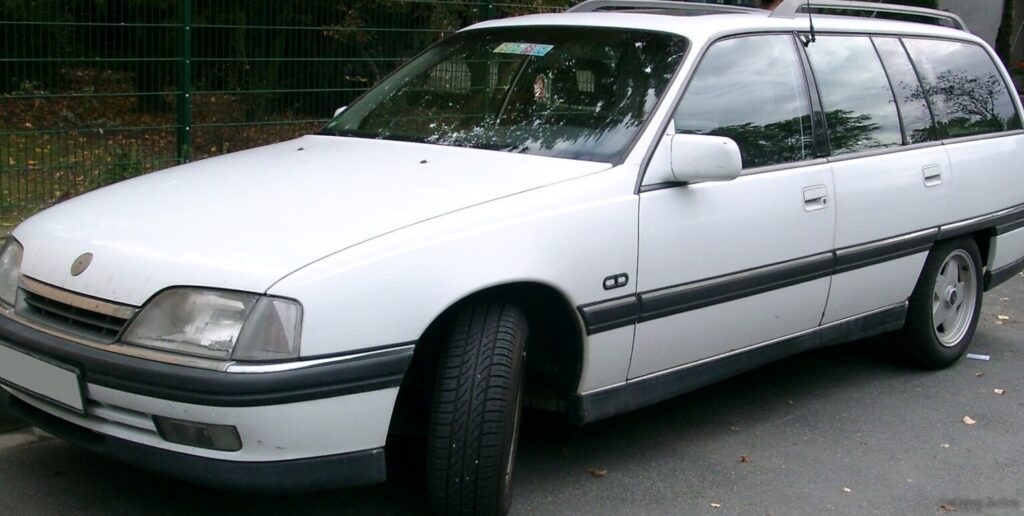
The Opel Omega A Caravan 1.8 (90 hp) was a station wagon produced between 1986 and 1987, representing an entry-level offering within the broader Omega A range. Positioned as a practical family vehicle, it aimed to provide spaciousness and affordability within Opel’s lineup. This variant utilized the 18SV engine, a naturally aspirated four-cylinder, and was typically paired with a five-speed manual transmission, though automatic options were available. The Omega A itself was a significant model for Opel, intended to replace the aging Commodore and provide a more modern, internationally competitive vehicle, particularly in the European market.
Technical Specifications
| Brand | Opel |
| Model | Omega |
| Generation | Omega A Caravan |
| Type (Engine) | 1.8 (90 Hp) |
| Start of production | 1986 |
| End of production | 1987 |
| Powertrain Architecture | Internal Combustion engine |
| Body type | Station wagon (estate) |
| Seats | 5 |
| Doors | 5 |
| Fuel Type | Petrol (Gasoline) |
| Acceleration 0 – 100 km/h | 15 sec |
| Acceleration 0 – 62 mph | 15 sec |
| Acceleration 0 – 60 mph | 14.3 sec |
| Maximum speed | 175 km/h (108.74 mph) |
| Weight-to-power ratio | 13.8 kg/Hp, 72.6 Hp/tonne |
| Weight-to-torque ratio | 8.4 kg/Nm, 119.4 Nm/tonne |
| Power | 90 Hp @ 5200 rpm |
| Power per litre | 50.1 Hp/l |
| Torque | 148 Nm @ 3400 rpm (109.16 lb.-ft. @ 3400 rpm) |
| Maximum engine speed | 6400 rpm |
| Engine Model/Code | 18SV |
| Engine displacement | 1796 cm3 (109.6 cu. in.) |
| Number of cylinders | 4 |
| Engine configuration | Inline |
| Cylinder Bore | 84.8 mm (3.34 in.) |
| Piston Stroke | 79.5 mm (3.13 in.) |
| Compression ratio | 10:1 |
| Number of valves per cylinder | 2 |
| Fuel injection system | Carburettor |
| Engine aspiration | Naturally aspirated engine |
| Valvetrain | SOHC |
| Engine oil capacity | 4.5 l (4.76 US qt | 3.96 UK qt) |
| Coolant | 6.4 l (6.76 US qt | 5.63 UK qt) |
| Kerb Weight | 1240 kg (2733.73 lbs) |
| Max. weight | 1840 kg (4056.51 lbs) |
| Max load | 600 kg (1322.77 lbs) |
| Trunk (boot) space – minimum | 540 l (19.07 cu. ft.) |
| Trunk (boot) space – maximum | 1850 l (65.33 cu. ft.) |
| Fuel tank capacity | 70 l (18.49 US gal | 15.4 UK gal) |
| Length | 4770 mm (187.8 in.) |
| Width | 1760 mm (69.29 in.) |
| Height | 1480 mm (58.27 in.) |
| Wheelbase | 2730 mm (107.48 in.) |
| Front track | 1450 mm (57.09 in.) |
| Rear (Back) track | 1465 mm (57.68 in.) |
| Minimum turning circle | 10.8 m (35.43 ft.) |
| Drivetrain Architecture | Rear wheel drive |
| Number of gears | 5 gears, manual transmission |
| Front brakes | Ventilated discs |
| Rear brakes | Disc |
Powertrain & Engine Architecture
The heart of the Omega A Caravan 1.8 was the 18SV engine, a 1.8-liter inline four-cylinder. This engine utilized a single overhead camshaft (SOHC) valvetrain with two valves per cylinder. Fuel delivery was managed by a carburetor, a relatively common setup for the time, but increasingly being replaced by fuel injection in more modern vehicles. The 18SV was known for its simplicity and relative ease of maintenance. The five-speed manual transmission offered a decent spread of gears, though it wasn’t particularly sporty. An optional three-speed automatic transmission was also available, but it significantly impacted performance and fuel economy. The engine’s 90 horsepower output was considered modest, even for the mid-1980s, but it was sufficient for everyday driving and hauling loads.
Driving Characteristics
The 1.8-liter Omega A Caravan, particularly with the manual transmission, offered a reasonably comfortable driving experience. Acceleration was not its strong suit, taking around 15 seconds to reach 62 mph. The carburetor could sometimes lead to a slight delay in throttle response. The automatic transmission further dulled performance, making the car feel sluggish, especially when fully loaded. The rear-wheel-drive layout provided a balanced feel, but the suspension was tuned more for comfort than handling. Compared to the more powerful Omega variants, such as those equipped with the 2.0-liter or 2.3-liter engines, the 1.8 felt noticeably underpowered. However, it offered a more economical option for buyers prioritizing fuel efficiency and practicality.
Equipment & Trim Levels
The 1.8-liter Omega A Caravan typically came with a fairly basic level of equipment. Standard features included cloth upholstery, a simple dashboard layout, and manual windows and door locks. Power steering was often an optional extra. The interior was functional and spacious, reflecting the car’s role as a family vehicle. Optional extras could include a sunroof, upgraded audio systems, and more comfortable seating. The trim level was generally considered the entry-level offering, with higher trims featuring more luxurious appointments and additional features.
Chassis & Braking
The Omega A Caravan featured a conventional rear-wheel-drive chassis with independent suspension at the front and a solid axle at the rear. The front suspension utilized MacPherson struts, while the rear employed leaf springs. Braking was provided by ventilated discs at the front and discs at the rear. The braking system was adequate for the car’s weight and performance, but it lacked the sophistication of more modern systems. Stabilizer bars were fitted to both the front and rear axles to reduce body roll, but the car still exhibited noticeable lean in corners.
Market Reception & Comparison
The Opel Omega A Caravan 1.8 was generally well-received as a practical and affordable station wagon. Critics acknowledged its spacious interior and comfortable ride, but noted its lack of performance. Compared to other station wagons in its class, such as the Ford Sierra Estate or the Volvo 240 Estate, the Omega offered a good balance of price, space, and comfort. However, it didn’t excel in any particular area. The 1.8-liter engine was considered adequate for most drivers, but those seeking more power often opted for the higher-spec engines. Fuel economy was reasonable for the time, but the automatic transmission significantly reduced efficiency.
Legacy
The Opel Omega A Caravan 1.8, while not a particularly groundbreaking vehicle, remains a popular choice among classic car enthusiasts and those seeking a reliable and affordable station wagon. The 18SV engine is known for its durability and relative simplicity, making it relatively easy to maintain. However, parts availability can be a challenge, particularly for less common components. Today, these Omegas are often found in the used car market at very affordable prices, making them an attractive option for those looking for a classic family vehicle. The combination of a spacious interior, comfortable ride, and relatively simple mechanicals has ensured its continued appeal.