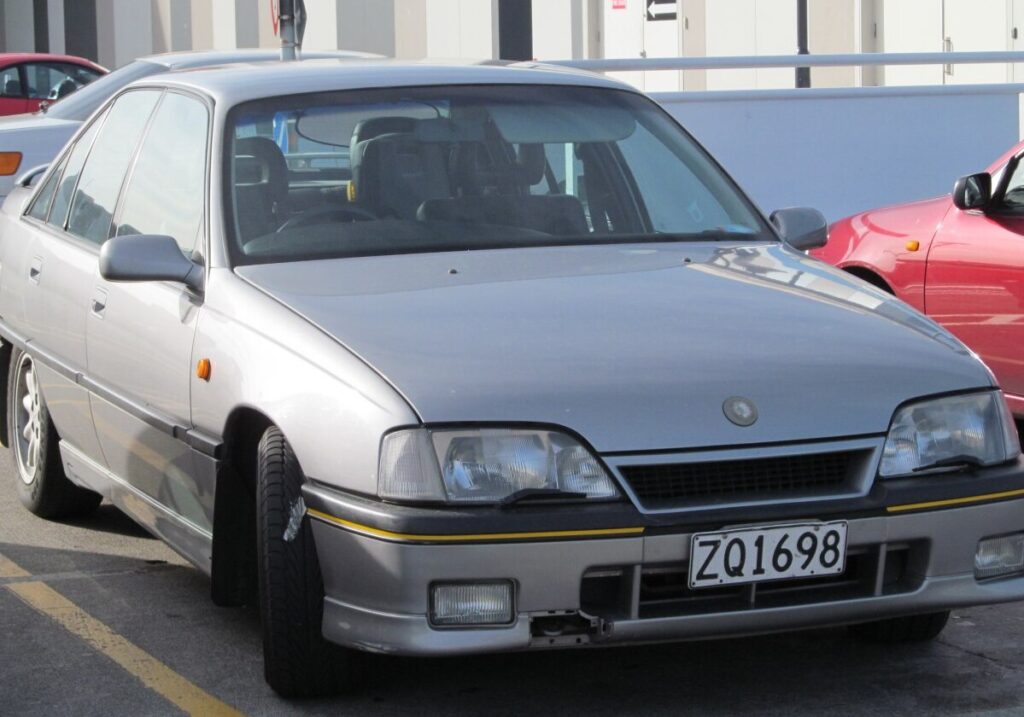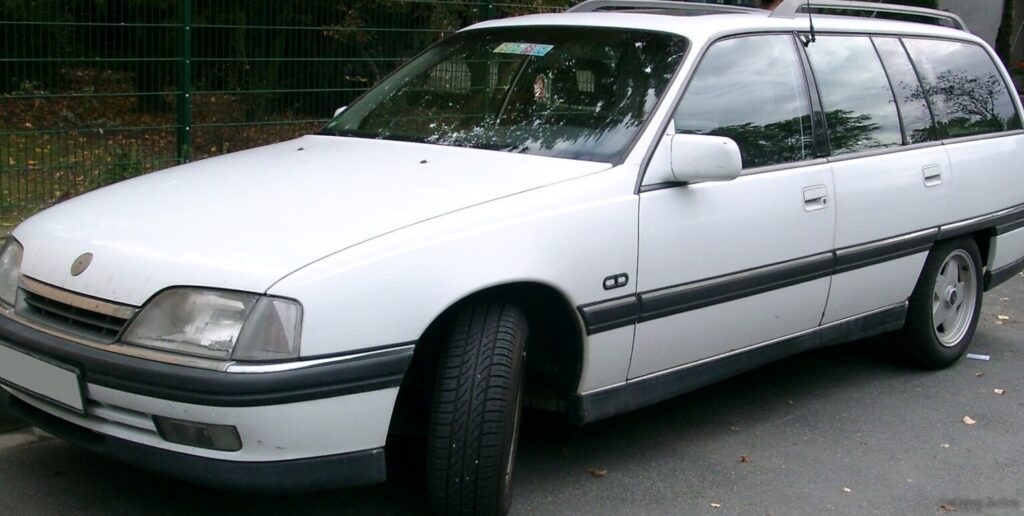
The Opel Omega A Caravan 1.8 N CAT (82 hp) was a station wagon produced between 1986 and 1987, representing an entry-level offering within the broader Omega A range. Positioned as a practical family vehicle, it aimed to provide affordability and reasonable fuel economy within the traditionally rear-wheel drive Opel lineup. This variant served as a stepping stone into the Omega A series, offering a more accessible price point compared to the more powerful and technologically advanced versions. It was part of the first generation (Omega A) which ran from 1986-1994, and the Caravan body style was a key component of its appeal in European markets where estate cars were highly popular.
Technical Specifications
| Brand | Opel |
| Model | Omega |
| Generation | Omega A Caravan |
| Type (Engine) | 1.8 N CAT (82 Hp) |
| Start of production | 1986 |
| End of production | 1987 |
| Powertrain Architecture | Internal Combustion engine |
| Body type | Station wagon (estate) |
| Seats | 5 |
| Doors | 5 |
| Fuel consumption (urban) | 10.1 l/100 km (23.3 US mpg / 28 UK mpg / 9.9 km/l) |
| Fuel consumption (extra urban) | 6.1 l/100 km (38.6 US mpg / 46.3 UK mpg / 16.4 km/l) |
| Fuel consumption (combined) | 7.8 l/100 km (30.2 US mpg / 36.2 UK mpg / 12.8 km/l) |
| Fuel Type | Petrol (Gasoline) |
| Acceleration 0 – 100 km/h | 14 sec |
| Acceleration 0 – 62 mph | 14 sec |
| Acceleration 0 – 60 mph | 13.3 sec |
| Maximum speed | 183 km/h (113.71 mph) |
| Weight-to-power ratio | 15 kg/Hp, 66.7 Hp/tonne |
| Weight-to-torque ratio | 9.1 kg/Nm, 109.8 Nm/tonne |
| Power | 82 Hp @ 5200 rpm |
| Power per litre | 45.7 Hp/l |
| Torque | 135 Nm @ 3200 rpm (99.57 lb.-ft. @ 3200 rpm) |
| Engine layout | Front, Longitudinal |
| Engine Model/Code | 18NV |
| Engine displacement | 1796 cm3 (109.6 cu. in.) |
| Number of cylinders | 4 |
| Engine configuration | Inline |
| Cylinder Bore | 84.8 mm (3.34 in.) |
| Piston Stroke | 79.5 mm (3.13 in.) |
| Compression ratio | 10:1 |
| Number of valves per cylinder | 2 |
| Fuel injection system | Single-point injection |
| Engine aspiration | Naturally aspirated |
| Engine oil capacity | 4.5 l (4.76 US qt | 3.96 UK qt) |
| Coolant capacity | 6.4 l (6.76 US qt | 5.63 UK qt) |
| Kerb Weight | 1230 kg (2711.69 lbs.) |
| Max. weight | 1865 kg (4111.62 lbs.) |
| Max load | 635 kg (1399.94 lbs.) |
| Trunk (boot) space – minimum | 520 l (18.36 cu. ft.) |
| Trunk (boot) space – maximum | 1850 l (65.33 cu. ft.) |
| Fuel tank capacity | 70 l (18.49 US gal | 15.4 UK gal) |
| Length | 4770 mm (187.8 in.) |
| Width | 1760 mm (69.29 in.) |
| Height | 1480 mm (58.27 in.) |
| Wheelbase | 2730 mm (107.48 in.) |
| Front track | 1460 mm (57.48 in.) |
| Rear track | 1475 mm (58.07 in.) |
| Drivetrain Architecture | Rear wheel drive |
| Number of gears | 5 gears, manual transmission |
| Front suspension | Spring Strut |
| Rear suspension | Wishbone |
| Front brakes | Ventilated discs |
| Rear brakes | Disc |
| Assisting systems | ABS (Anti-lock braking system), Hydraulic Steering |
| Tires size | 195/65 R15 |
| Wheel rims size | 15 |
Powertrain & Engine Architecture
The Omega A Caravan 1.8 N CAT was powered by the 18NV engine, an inline four-cylinder gasoline engine displacing 1796 cc. This engine featured a single-point fuel injection system, a relatively simple setup for the time, prioritizing cost-effectiveness over outright performance. The ‘N’ designation indicated a reduced compression ratio to accommodate lower octane fuels commonly available in European markets. The ‘CAT’ suffix denoted the inclusion of a catalytic converter, a feature increasingly mandated by emissions regulations. The engine produced 82 horsepower at 5200 rpm and 135 Nm (99.57 lb-ft) of torque at 3200 rpm. The engine’s valvetrain employed two valves per cylinder, a common configuration for engines of this era. The transmission was a five-speed manual, providing a reasonable spread of gears for both economy and acceleration. The engine was mounted longitudinally in the front of the vehicle, driving the rear wheels – a traditional layout for Opel at the time.
Driving Characteristics
The 1.8-liter engine, paired with the five-speed manual transmission, provided adequate, but not exhilarating, performance. Acceleration from 0 to 60 mph took approximately 13.3 seconds, and top speed was around 113.71 mph. The power delivery was relatively linear, but the engine felt strained at higher speeds or when carrying a full load. Compared to the higher-output versions of the Omega A, such as those equipped with the 2.0-liter or 2.3-liter engines, the 1.8 felt noticeably slower. The manual transmission offered a more engaging driving experience than the optional automatic, allowing the driver to better utilize the engine’s limited power. The rear-wheel drive configuration provided a balanced feel, but also required careful throttle control in slippery conditions. The gear ratios were tuned for a balance between fuel economy and usability, with a relatively tall fifth gear for highway cruising.
Equipment & Trim Levels
The 1.8 N CAT Caravan typically represented the base trim level for the Omega A range. Standard equipment included basic cloth upholstery, a simple dashboard layout, and manual windows and door locks. Power steering was often included, but air conditioning and central locking were usually optional extras. The interior was functional and durable, prioritizing practicality over luxury. Optional extras could include upgraded stereo systems, sunroofs, and more comfortable seating. The exterior trim was relatively understated, with minimal chrome accents. The Caravan body style itself was a key feature, offering a large and versatile cargo area.
Chassis & Braking
The Omega A Caravan featured a traditional chassis layout with a spring strut front suspension and a wishbone rear suspension. The suspension was tuned for comfort, providing a relatively smooth ride, but it wasn’t particularly sporty. Braking was provided by ventilated discs at the front and discs at the rear. An anti-lock braking system (ABS) was often included as standard equipment, enhancing safety. The 1.8 N CAT variant, being the entry-level model, typically had a slightly smaller stabilizer bar compared to the higher-spec versions. The curb weight of around 1230 kg (2711.69 lbs) contributed to the car’s relatively modest performance.
Market Reception & Comparison
The Opel Omega A Caravan 1.8 N CAT was generally well-received as a practical and affordable family vehicle. Critics praised its spacious interior, large cargo area, and reasonable fuel economy. However, the engine’s lack of power was a common criticism. Compared to other trims in the Omega A lineup, the 1.8 N CAT offered the lowest price point but also the least amount of performance. It competed with other mid-size station wagons from manufacturers like Ford, Volkswagen, and Peugeot. The 1.8’s fuel economy was competitive for its time, achieving around 30.2 US mpg on the combined cycle. Reliability was generally good, although the single-point fuel injection system could require occasional maintenance.
Legacy
The Opel Omega A Caravan 1.8 N CAT, while not the most powerful or technologically advanced version of the Omega A, remains a popular choice among classic car enthusiasts and those seeking a practical and affordable vintage station wagon. The 18NV engine is known for its durability, and parts availability is generally good. Today, these cars are often found in well-maintained condition, serving as reliable and comfortable transportation. The Omega A Caravan, in general, is remembered as a spacious and versatile vehicle that offered a good balance of practicality and affordability. The 1.8 N CAT variant represents an accessible entry point into the Omega A ownership experience.