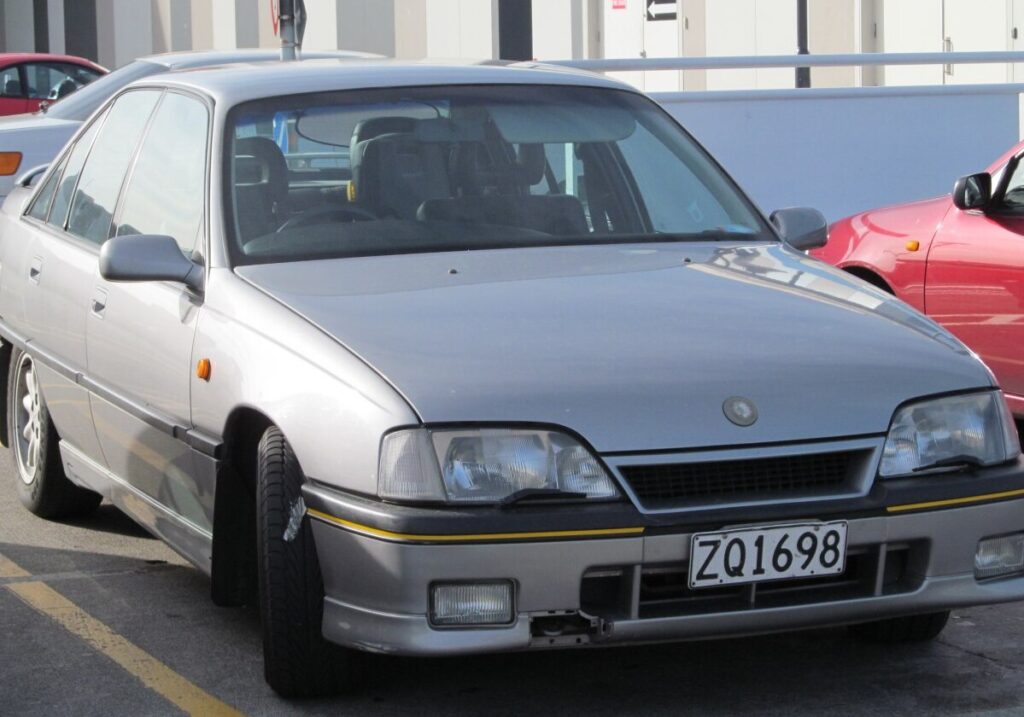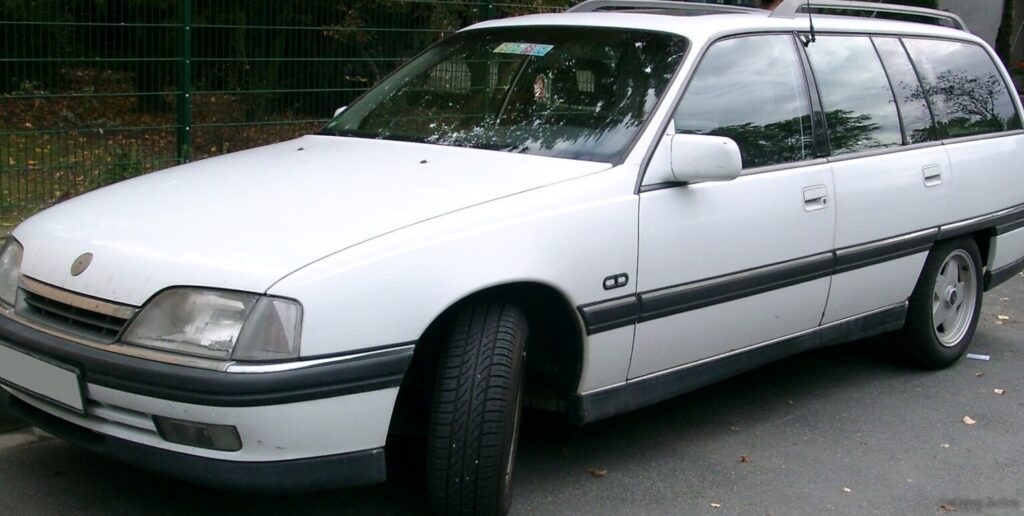
The Opel Omega A Caravan 2.0i CAT, produced from July 1990 to 1993, was a significant offering in Opel’s lineup, representing a blend of practicality, comfort, and moderate performance within the large family car segment. Positioned as a mid-range variant of the Omega A Caravan (estate) series, it catered to buyers seeking a spacious and capable vehicle without the expense of the higher-performance or luxury-appointed models. This particular version, equipped with the 2.0-liter inline-four engine and a catalytic converter (“CAT” designation), was primarily sold in European markets, offering a balance between fuel efficiency and usable power. It was part of the first generation (Omega A) which utilized the GM V platform, shared with other models like the Saab 9000 and Vauxhall Carlton.
Technical Specifications
| Brand | Opel |
| Model | Omega |
| Generation | Omega A Caravan |
| Type (Engine) | 2.0i CAT (100 Hp) |
| Start of production | July, 1990 |
| End of production | 1993 |
| Powertrain Architecture | Internal Combustion engine |
| Body type | Station wagon (estate) |
| Seats | 5 |
| Doors | 5 |
| Fuel Type | Petrol (Gasoline) |
| Maximum speed | 180 km/h (111.85 mph) |
| Weight-to-power ratio | 12.7 kg/Hp, 79.1 Hp/tonne |
| Weight-to-torque ratio | 8 kg/Nm, 124.9 Nm/tonne |
| Power | 100 Hp @ 5200 rpm |
| Power per litre | 50.1 Hp/l |
| Torque | 158 Nm @ 2600 rpm (116.53 lb.-ft. @ 2600 rpm) |
| Maximum engine speed | 6400 rpm |
| Engine Model/Code | C20NEF |
| Engine displacement | 1998 cm3 (121.93 cu. in.) |
| Number of cylinders | 4 |
| Engine configuration | Inline |
| Cylinder Bore | 86 mm (3.39 in.) |
| Piston Stroke | 86 mm (3.39 in.) |
| Compression ratio | 9.2:1 |
| Number of valves per cylinder | 2 |
| Fuel injection system | Multi-port manifold injection |
| Engine aspiration | Naturally aspirated engine |
| Valvetrain | SOHC |
| Engine oil capacity | 4.5 l (4.76 US qt | 3.96 UK qt) |
| Coolant | 6 l (6.34 US qt | 5.28 UK qt) |
| Kerb Weight | 1265 kg (2788.85 lbs) |
| Max. weight | 1885 kg (4155.71 lbs) |
| Max load | 620 kg (1366.87 lbs) |
| Trunk (boot) space – minimum | 540 l (19.07 cu. ft.) |
| Trunk (boot) space – maximum | 1850 l (65.33 cu. ft.) |
| Fuel tank capacity | 70 l (18.49 US gal | 15.4 UK gal) |
| Length | 4770 mm (187.8 in.) |
| Width | 1760 mm (69.29 in.) |
| Height | 1480 mm (58.27 in.) |
| Wheelbase | 2730 mm (107.48 in.) |
| Front track | 1450 mm (57.09 in.) |
| Rear (Back) track | 1465 mm (57.68 in.) |
| Minimum turning circle | 10.8 m (35.43 ft.) |
| Drivetrain Architecture | Rear wheel drive |
| Number of gears | 5 gears, manual transmission |
| Front brakes | Ventilated discs |
| Rear brakes | Disc |
Powertrain & Engine Architecture
The heart of the Omega A Caravan 2.0i CAT was the C20NEF engine, a 1998cc inline-four cylinder unit. This engine was a member of Opel’s “E” family of engines, known for their robustness and relatively simple design. It featured a single overhead camshaft (SOHC) operating two valves per cylinder. Fuel delivery was handled by Bosch multi-port fuel injection, contributing to improved fuel efficiency and reduced emissions compared to earlier carbureted Opel engines. The catalytic converter, a key component of the “CAT” designation, further reduced harmful exhaust gases, meeting increasingly stringent European emissions standards. The engine produced 100 horsepower at 5200 rpm and 158 Nm (116.53 lb-ft) of torque at 2600 rpm. The five-speed manual transmission was the standard offering, providing a reasonable balance between performance and economy.
Driving Characteristics
The 2.0i CAT variant of the Omega A Caravan offered a comfortable, rather than sporty, driving experience. With 100 horsepower propelling a relatively heavy vehicle (approximately 2789 lbs), acceleration was adequate for everyday driving but not particularly brisk. The five-speed manual transmission allowed drivers to keep the engine in its optimal power band, but overtaking maneuvers required careful planning. Compared to the more powerful 2.4 or 3.0-liter versions of the Omega, the 2.0i felt noticeably less responsive. However, it offered superior fuel economy and lower running costs. The rear-wheel-drive configuration provided balanced handling, although it lacked the all-weather capability of front-wheel-drive alternatives. The suspension was tuned for comfort, absorbing bumps and imperfections in the road effectively.
Equipment & Trim Levels
The 2.0i CAT trim typically included features such as central locking, power steering, and a basic stereo system. Interior upholstery was generally cloth, with a durable and practical design. Optional extras included electric windows, a sunroof, and upgraded audio systems. The dashboard layout was functional and straightforward, prioritizing ease of use over stylistic flair. The Caravan estate body style offered a generous 540-1850 liter luggage capacity, making it ideal for families and those requiring ample cargo space. The specific trim level could vary slightly depending on the market, with some countries offering additional standard features.
Chassis & Braking
The Omega A Caravan featured a traditional body-on-frame construction, providing a robust and durable chassis. The front suspension utilized independent MacPherson struts, while the rear employed a solid axle with coil springs. Braking was handled by ventilated discs at the front and solid discs at the rear, providing adequate stopping power for the vehicle’s weight and performance. Anti-lock braking system (ABS) was often available as an optional extra, enhancing safety in emergency braking situations. Stabilizer bars were fitted to both the front and rear axles to reduce body roll during cornering.
Market Reception & Comparison
The Opel Omega A Caravan 2.0i CAT was generally well-received by automotive critics as a practical and reliable family car. It was praised for its spacious interior, comfortable ride, and reasonable fuel economy. However, some reviewers noted its lack of outright performance compared to rivals. Compared to the higher-specification Omega models, the 2.0i CAT offered a more affordable entry point into the range, appealing to budget-conscious buyers. Against competitors like the Ford Sierra Estate and Volkswagen Passat Variant, the Omega A Caravan offered a compelling combination of space, comfort, and value. The 1.8L and 2.0L models were often seen as the sensible choices, prioritizing economy and practicality over outright performance.
Legacy
The Opel Omega A Caravan 2.0i CAT, while not the most exciting variant in the Omega A lineup, proved to be a durable and dependable vehicle. The C20NEF engine is known for its longevity, and well-maintained examples can still be found on the road today. In the used car market, these Omegas are appreciated for their affordability and practicality. While parts availability may be becoming more challenging, the engine’s simplicity and robustness make it relatively easy to maintain. The Omega A Caravan, in all its variants, represents a significant chapter in Opel’s history, embodying the brand’s commitment to building spacious, comfortable, and reliable family cars.