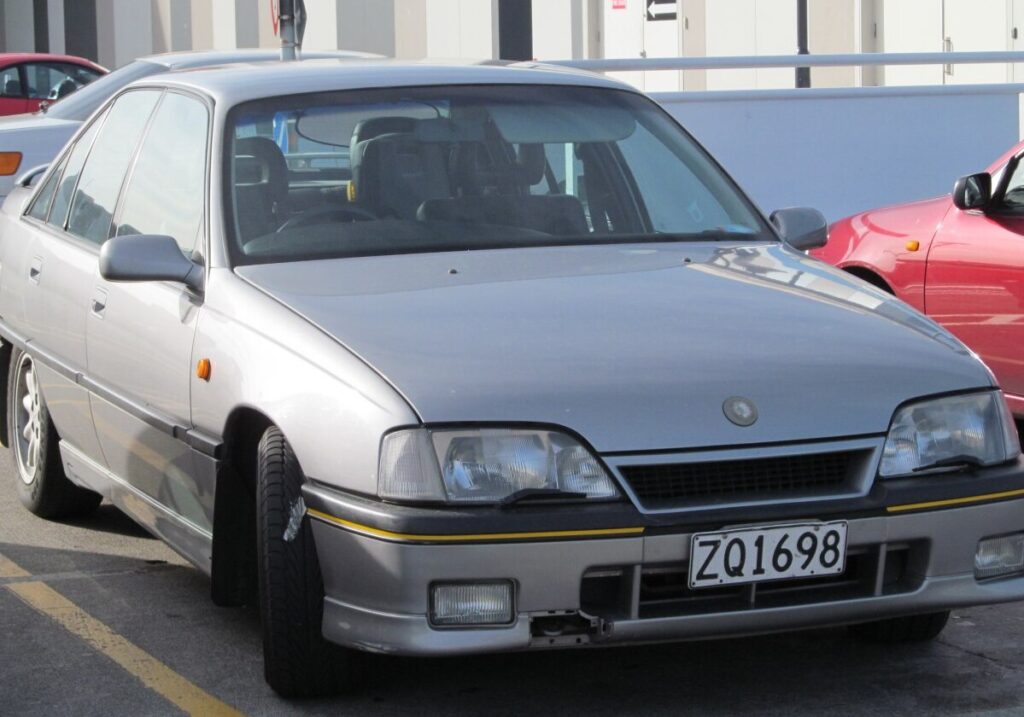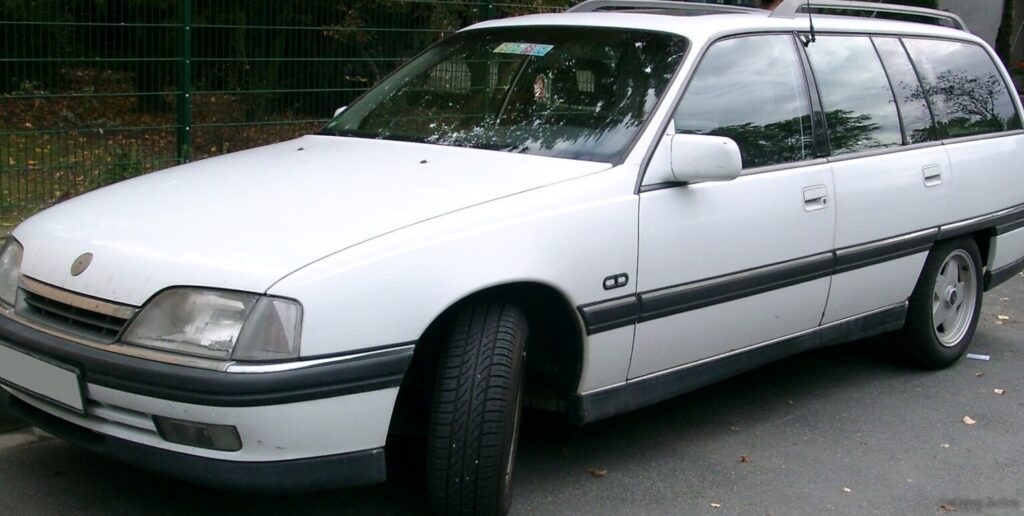
The Opel Omega A Caravan 2.0i CAT Automatic, produced between 1986 and 1993, represented a practical and comfortable offering within Opel’s flagship model range. Positioned as a mid-range variant of the Omega A Caravan (estate), it catered to buyers seeking a spacious family vehicle with the convenience of an automatic transmission. This model occupied a space between the more basic, lower-powered engines and the higher-performance, six-cylinder options. It was primarily sold in European markets, where large, comfortable estates were highly valued for family transport and long-distance travel.
Technical Specifications
| Brand | Opel |
| Model | Omega |
| Generation | Omega A Caravan |
| Type (Engine) | 2.0i CAT (115 Hp) Automatic |
| Start of production | 1986 |
| End of production | 1993 |
| Powertrain Architecture | Internal Combustion engine |
| Body type | Station wagon (estate) |
| Seats | 5 |
| Doors | 5 |
| Fuel consumption (urban) | 11.8 l/100 km (19.9 US mpg, 23.9 UK mpg, 8.5 km/l) |
| Fuel consumption (extra urban) | 6.4 l/100 km (36.8 US mpg, 44.1 UK mpg, 15.6 km/l) |
| Fuel consumption (combined) | 8.3 l/100 km (28.3 US mpg, 34 UK mpg, 12 km/l) |
| Fuel Type | Petrol (Gasoline) |
| Acceleration 0 – 100 km/h | 14 sec |
| Acceleration 0 – 62 mph | 14 sec |
| Acceleration 0 – 60 mph | 13.3 sec |
| Maximum speed | 180 km/h (111.85 mph) |
| Weight-to-power ratio | 11 kg/Hp, 90.9 Hp/tonne |
| Weight-to-torque ratio | 7.4 kg/Nm, 134.4 Nm/tonne |
| Power | 115 Hp @ 5400 rpm |
| Power per litre | 57.6 Hp/l |
| Torque | 170 Nm @ 2600 rpm (125.39 lb.-ft. @ 2600 rpm) |
| Engine layout | Front, Longitudinal |
| Engine Model/Code | C20NE |
| Engine displacement | 1998 cm3 (121.93 cu. in.) |
| Number of cylinders | 4 |
| Engine configuration | Inline |
| Cylinder Bore | 86 mm (3.39 in.) |
| Piston Stroke | 86 mm (3.39 in.) |
| Compression ratio | 9.2:1 |
| Number of valves per cylinder | 2 |
| Fuel injection system | Multi-port manifold injection |
| Engine aspiration | Naturally aspirated engine |
| Valvetrain | OHC |
| Engine oil capacity | 4.5 l (4.76 US qt | 3.96 UK qt) |
| Coolant capacity | 6.4 l (6.76 US qt | 5.63 UK qt) |
| Kerb Weight | 1265 kg (2788.85 lbs.) |
| Max. weight | 1885 kg (4155.71 lbs.) |
| Max load | 620 kg (1366.87 lbs.) |
| Trunk (boot) space – minimum | 540 l (19.07 cu. ft.) |
| Trunk (boot) space – maximum | 1850 l (65.33 cu. ft.) |
| Fuel tank capacity | 70 l (18.49 US gal | 15.4 UK gal) |
| Length | 4770 mm (187.8 in.) |
| Width | 1760 mm (69.29 in.) |
| Height | 1480 mm (58.27 in.) |
| Wheelbase | 2730 mm (107.48 in.) |
| Front track | 1450 mm (57.09 in.) |
| Rear track | 1465 mm (57.68 in.) |
| Drivetrain Architecture | Rear wheel drive |
| Drive wheel | Rear wheel drive |
| Number of gears | 4 |
| Gearbox type | Automatic transmission |
| Front suspension | Spring Strut |
| Rear suspension | Wishbone |
| Front brakes | Ventilated discs |
| Rear brakes | Disc |
| Assisting systems | ABS (Anti-lock braking system) |
| Steering type | Steering rack and pinion |
| Power steering | Hydraulic Steering |
| Tires size | 195/65 R15 |
| Wheel rims size | 7J x 15 |
INTRODUCTION
The Opel Omega A, launched in 1986, was intended to replace the aging Opel Commodore and Rekord models, offering a more modern and sophisticated package. The Caravan (estate) version provided increased practicality without sacrificing the Omega’s comfort and refinement. The 2.0i CAT Automatic variant, powered by the C20NE engine, was a popular choice for those prioritizing ease of driving and fuel efficiency over outright performance. The “CAT” designation refers to the catalytic converter fitted to the exhaust system, complying with increasingly stringent emissions regulations of the time. This model was a mainstay of the Omega A lineup throughout its production run, ending in 1993 with the arrival of the Omega B.
Powertrain & Engine Architecture
The heart of the Omega A Caravan 2.0i CAT Automatic is the C20NE engine, a 1998cc inline-four cylinder unit. This engine featured a cast iron block and an aluminum cylinder head, employing a single overhead camshaft (OHC) design operating two valves per cylinder. Fuel delivery was handled by Bosch Motronic multi-port fuel injection, providing precise control over the air-fuel mixture for improved efficiency and reduced emissions. The catalytic converter, integral to the “CAT” designation, further minimized harmful exhaust gases. The engine produced 115 horsepower at 5400 rpm and 170 Nm (125 lb-ft) of torque at 2600 rpm. Paired with this engine was a four-speed automatic transmission, offering smooth and convenient gear changes. This transmission, while not known for its sportiness, was reliable and well-suited to the Omega’s intended role as a comfortable cruiser.
Driving Characteristics
The 2.0i Automatic Omega A Caravan offered a relaxed and comfortable driving experience. Acceleration was adequate, with a 0-60 mph time of around 13.3 seconds, but it wasn’t designed for rapid performance. The automatic transmission, while smooth, did result in some power loss compared to the available five-speed manual gearbox. Gear ratios were optimized for fuel economy and cruising comfort rather than spirited driving. The engine felt most at home in the mid-range, providing sufficient torque for overtaking maneuvers on the highway. Compared to the more powerful 2.3 and 3.0-liter six-cylinder Omega variants, the 2.0i felt noticeably less responsive, but it offered a significant improvement in fuel economy.
Equipment & Trim Levels
The 2.0i CAT Automatic typically came equipped with a reasonable level of standard features. Interior appointments included cloth upholstery, power windows, central locking, and a basic stereo system. Higher trim levels, often denoted by additional options packages, could add features such as electric sunroof, upgraded sound systems, and more luxurious interior trim. Air conditioning was a popular optional extra. The dashboard layout was functional and straightforward, prioritizing ease of use over stylistic flair. The Caravan’s defining feature, of course, was its spacious cargo area, offering ample room for luggage and other cargo.
Chassis & Braking
The Omega A Caravan featured a MacPherson strut front suspension and a semi-trailing arm rear suspension. This setup provided a comfortable ride, absorbing bumps and imperfections in the road effectively. The 2.0i variant typically used ventilated disc brakes at the front and solid discs at the rear. Anti-lock braking system (ABS) was often included as standard equipment, enhancing safety by preventing wheel lockup during hard braking. Steering was rack and pinion, providing precise and responsive control. The Omega A Caravan’s chassis was designed to prioritize comfort and stability over sporty handling.
Market Reception & Comparison
The Opel Omega A Caravan 2.0i CAT Automatic was generally well-received by automotive critics as a practical and comfortable family car. It was praised for its spacious interior, comfortable ride, and reasonable fuel economy. However, some critics noted its lack of sporting pretensions and the somewhat sluggish performance of the automatic transmission. Compared to other estates in its class, such as the Ford Sierra Estate and the Volvo 240 Estate, the Omega A Caravan offered a more modern and refined driving experience. The 2.0i variant represented a good value proposition, offering a balance of features and affordability.
Legacy
The Opel Omega A Caravan 2.0i CAT Automatic has proven to be a relatively reliable vehicle, with many examples still on the road today. The C20NE engine is known for its durability, although regular maintenance is essential to prevent issues such as oil leaks and timing chain wear. The automatic transmission, while not particularly sophisticated, is generally robust. In the used car market, these Omegas are appreciated for their classic styling, spaciousness, and affordability. They represent a piece of automotive history, offering a glimpse into a time when large, comfortable estates were a popular choice for families.