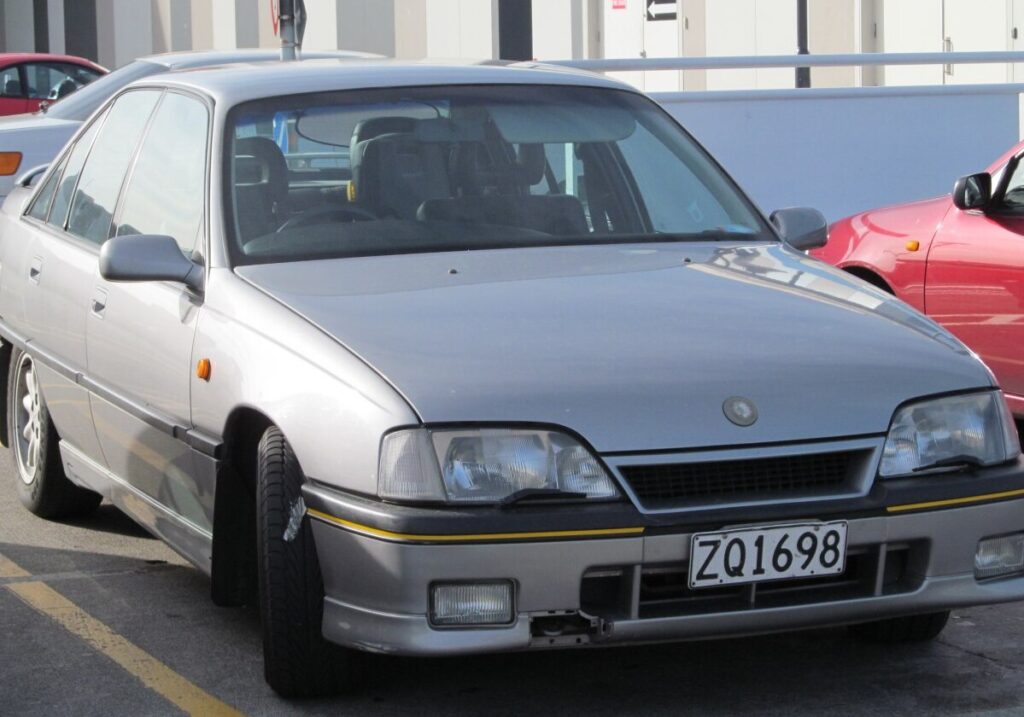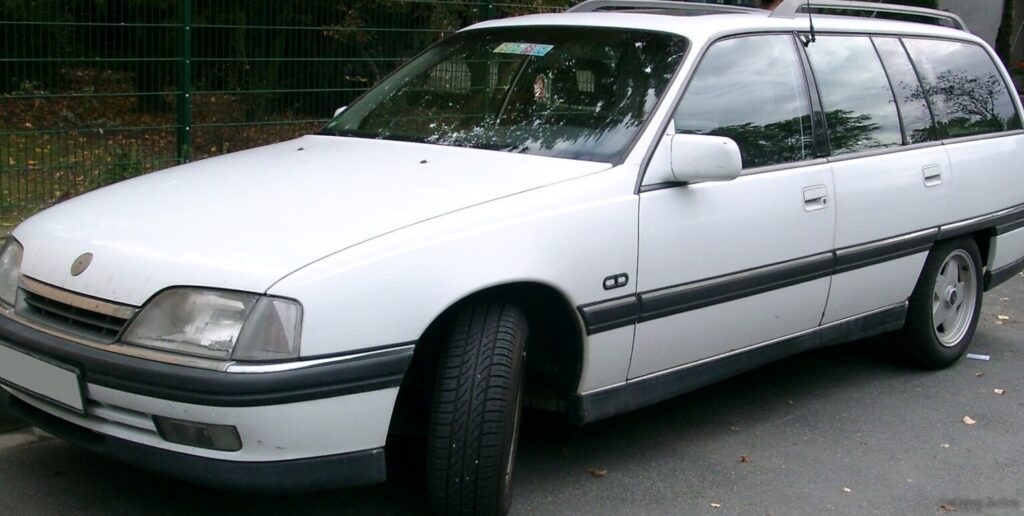
The Opel Omega A Caravan 2.3 D CAT, produced from 1986 to 1993, represented a practical and economical offering within the Omega A range. Positioned as a diesel-powered variant of Opel’s large family car, the 2.3 D CAT (Catalytic Converter) was aimed at buyers prioritizing fuel efficiency and load-carrying capacity over outright performance. This model, a station wagon (estate) body style, served as a workhorse for families and businesses alike, particularly in European markets where diesel engines were favored for their economy. It was a key part of the first generation (Omega A) which aimed to replace the aging Opel Commodore and Rekord models, offering a more modern and spacious alternative.
Technical Specifications
| Brand | Opel |
| Model | Omega |
| Generation | Omega A Caravan |
| Type (Engine) | 2.3 D CAT (73 Hp) |
| Start of production | 1986 |
| End of production | 1993 |
| Powertrain Architecture | Internal Combustion engine |
| Body type | Station wagon (estate) |
| Seats | 5 |
| Doors | 5 |
| Fuel consumption (urban) | 7.9 l/100 km (29.8 US mpg) |
| Fuel consumption (extra urban) | 5.4 l/100 km (43.6 US mpg) |
| Fuel consumption (combined) | 7.5 l/100 km (31.4 US mpg) |
| Fuel Type | Diesel |
| Acceleration 0 – 100 km/h | 20.5 sec |
| Acceleration 0 – 62 mph | 20.5 sec |
| Acceleration 0 – 60 mph | 19.5 sec |
| Maximum speed | 155 km/h (96.31 mph) |
| Weight-to-power ratio | 18.8 kg/Hp |
| Weight-to-torque ratio | 9.9 kg/Nm |
| Power | 73 Hp @ 4400 rpm |
| Power per litre | 32.3 Hp/l |
| Torque | 138 Nm @ 2400 rpm (101.78 lb.-ft. @ 2400 rpm) |
| Maximum engine speed | 4800 rpm |
| Engine layout | Front, Longitudinal |
| Engine Model/Code | 23YD |
| Engine displacement | 2260 cm3 (137.91 cu. in.) |
| Number of cylinders | 4 |
| Engine configuration | Inline |
| Cylinder Bore | 92 mm (3.62 in.) |
| Piston Stroke | 85 mm (3.35 in.) |
| Compression ratio | 23:1 |
| Number of valves per cylinder | 2 |
| Fuel injection system | Precombustion chamber injection |
| Engine aspiration | Naturally aspirated |
| Valvetrain | SOHC |
| Engine oil capacity | 5.5 l (5.81 US qt | 4.84 UK qt) |
| Coolant capacity | 10.9 l (11.52 US qt | 9.59 UK qt) |
| Kerb Weight | 1370 kg (3020.33 lbs.) |
| Max. weight | 1990 kg (4387.2 lbs.) |
| Max load | 620 kg (1366.87 lbs.) |
| Trunk (boot) space – minimum | 540 l (19.07 cu. ft.) |
| Trunk (boot) space – maximum | 1850 l (65.33 cu. ft.) |
| Fuel tank capacity | 70 l (18.49 US gal | 15.4 UK gal) |
| Length | 4770 mm (187.8 in.) |
| Width | 1760 mm (69.29 in.) |
| Height | 1448 mm (57.01 in.) |
| Wheelbase | 2730 mm (107.48 in.) |
| Front track | 1445 mm (56.89 in.) |
| Rear track | 1460 mm (57.48 in.) |
| Minimum turning circle | 10.8 m (35.43 ft.) |
| Drivetrain Architecture | Rear wheel drive |
| Number of gears | 5 gears, manual transmission |
| Front suspension | Spring Strut |
| Rear suspension | Wishbone |
| Front brakes | Ventilated discs |
| Rear brakes | Disc |
| Assisting systems | ABS (Anti-lock braking system), Hydraulic Steering |
| Tires size | 195/65 R15 |
| Wheel rims size | 6J x 15 |
Powertrain & Engine Architecture
The heart of the Omega A Caravan 2.3 D CAT was the 23YD engine, a 2.3-liter inline-four diesel. This engine utilized precombustion chamber injection, a common diesel technology of the era. This system involved injecting fuel into a small pre-chamber within the cylinder head, where it partially combusted before igniting the main charge in the cylinder. This design aided in smoother combustion and reduced engine noise compared to direct injection systems. The engine featured a single overhead camshaft (SOHC) valvetrain, operating two valves per cylinder. The catalytic converter, denoted by the “CAT” in the model name, was a crucial addition for reducing harmful emissions, becoming increasingly important in European regulations. The 5-speed manual transmission was the standard offering, providing a relatively long-legged gearing setup optimized for fuel economy rather than rapid acceleration.
Driving Characteristics
The 2.3 D CAT Omega Caravan was not designed for spirited driving. With only 73 horsepower, acceleration was leisurely, taking over 20 seconds to reach 60 mph. The focus was on providing adequate power for comfortable cruising and hauling loads. The manual transmission’s gear ratios were spaced to maximize fuel efficiency, meaning frequent downshifts were necessary when encountering hills or overtaking. Compared to the more powerful gasoline-powered Omega variants (like the 2.0 or 2.6-liter engines), the diesel offered significantly less performance. However, it excelled in fuel economy, achieving around 31.4 US mpg in combined driving, a substantial advantage over its petrol counterparts. The rear-wheel-drive configuration provided a balanced feel, but the relatively soft suspension tuning prioritized ride comfort over sharp handling.
Equipment & Trim Levels
The 2.3 D CAT Omega Caravan typically came with a fairly basic level of equipment. Standard features included power steering, central locking, and a basic stereo system. Interior upholstery was typically cloth, with a durable and practical design. Optional extras included electric windows, a sunroof, and upgraded audio systems. The trim level was generally considered entry-level within the Omega A range, appealing to buyers seeking a functional and affordable family vehicle. The dashboard layout was functional and straightforward, prioritizing ease of use over aesthetic flair.
Chassis & Braking
The Omega A Caravan’s chassis featured a MacPherson strut front suspension and a semi-trailing arm rear suspension. This setup provided a comfortable ride, but wasn’t particularly sporty. The 2.3 D CAT models typically used ventilated disc brakes at the front and disc brakes at the rear, providing adequate stopping power for the vehicle’s weight and performance. Anti-lock braking system (ABS) was available as an option, enhancing safety. The suspension was tuned to handle the additional weight of the diesel engine and the potential for heavy loads in the cargo area. Stabilizer bars were fitted to both axles to reduce body roll during cornering.
Market Reception & Comparison
The Opel Omega A Caravan 2.3 D CAT was well-received in markets where diesel engines were popular, such as Germany, the Netherlands, and the UK. Critics praised its fuel economy and spaciousness, but noted its lack of performance. Compared to other Omega A variants, the 2.3 D CAT offered the lowest purchase price and the best fuel efficiency. However, it lagged behind in terms of acceleration and overall driving enjoyment. The 2.0-liter gasoline engine offered a better balance of performance and economy, while the larger 2.6-liter and 3.0-liter engines provided significantly more power but at the cost of fuel consumption. Reliability was generally good, although diesel engines of this era could be prone to issues with fuel injection pumps and glow plugs.
Legacy
The Opel Omega A Caravan 2.3 D CAT remains a relatively common sight on European roads today, testament to its durability and practicality. The 23YD engine, while not known for its refinement, proved to be a robust and long-lasting unit when properly maintained. In the used car market, these models are typically affordable and represent a good value for buyers seeking a spacious and economical estate car. However, potential buyers should be aware of the age-related issues common to vehicles of this era, such as rust and wear and tear on suspension components. The Omega A Caravan, in all its variants, holds a place in automotive history as a practical and reliable family car that served a generation of drivers.